
Tüm Yazılar
Remote Greenhouse Monitoring Systems
With the advancement of technology in today's agriculture, farmers and greenhouse operators are turning to smart solutions to make their production more efficient. Remote greenhouse monitoring systems represent one of the important steps in this direction. These systems are technologies that continuously monitor variables in the greenhouse environment and provide this data to farmers instantly.
Remote greenhouse monitoring systems continuously measure important parameters such as temperature, humidity, CO2 levels, light levels, and soil moisture. This information allows farmers or operators to observe greenhouse conditions in real-time and intervene when necessary. For example, by integrating with automatic irrigation systems, irrigation can be started or the temperature inside the greenhouse can be adjusted when soil moisture levels fall below a certain threshold.
Remote greenhouse monitoring systems also stand out with their data collection and analysis capacities. These systems can store past data, analyze trends, and provide valuable information for future production planning. Additionally, through mobile applications or web interfaces, users can monitor and manage greenhouse conditions from anywhere. These advanced technologies provide a strong foundation for sustainable agricultural practices for farmers, while becoming an important tool for increasing product yield and quality. Remote greenhouse monitoring systems are an important step that will contribute to making agriculture even smarter and more efficient in the future.
Technological Infrastructure and Sensors
The technological infrastructure and sensors used, which form the basis of remote greenhouse monitoring systems, are one of the cornerstones of modern agriculture. The following sensors are generally used in these systems:
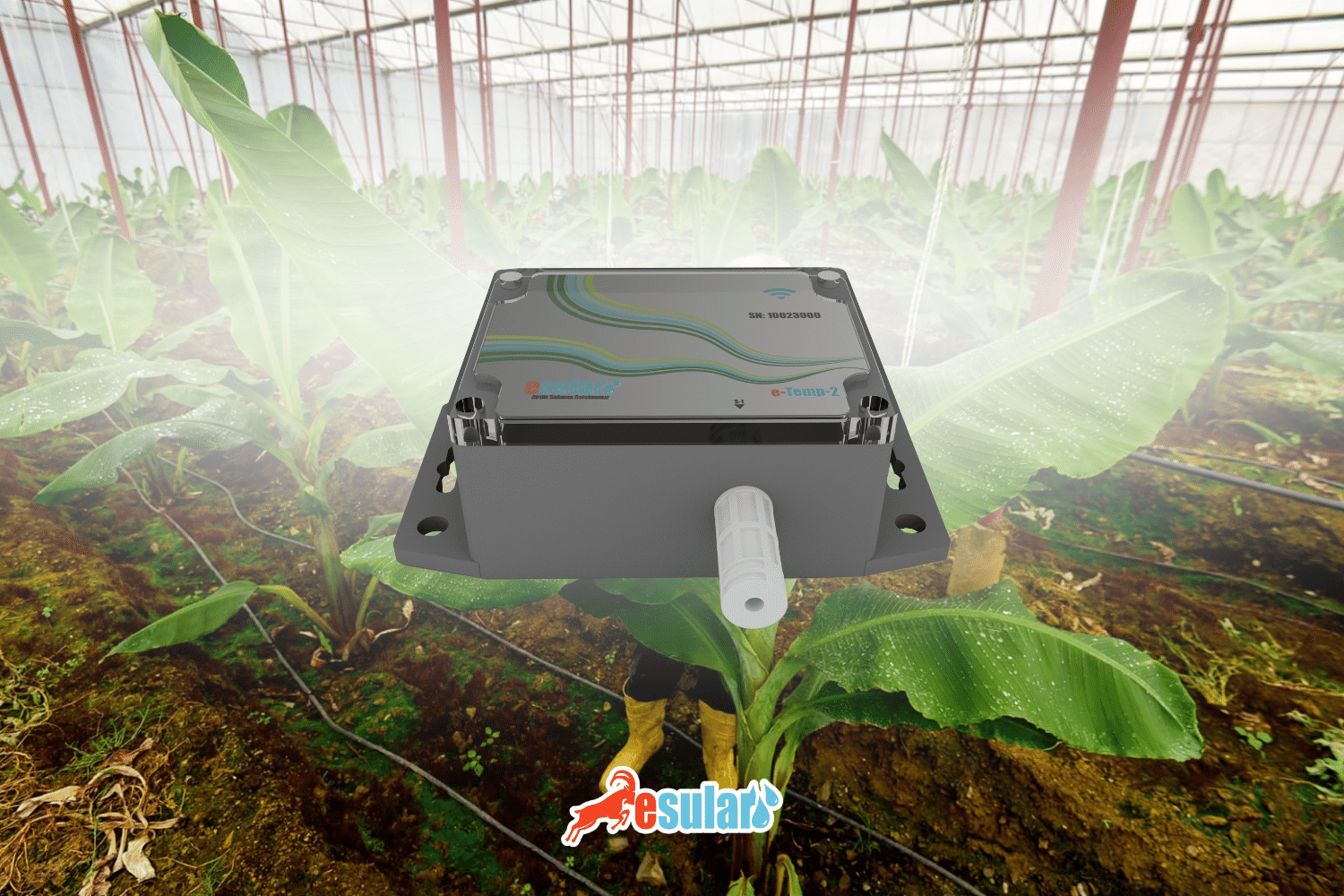
Temperature and Humidity Sensors: Continuously measures the temperature and humidity levels inside the greenhouse. This data helps in providing suitable conditions for plant development.
CO2 Sensors: Monitors CO2 levels, which are important for the photosynthesis efficiency of plants. When necessary, ventilation systems are automatically adjusted to optimize CO2 levels.
Light Sensors: Monitors the light levels required for the photosynthesis process of plants. Lighting systems can be automatically adjusted depending on daylight.
Soil Moisture Sensors: Determines when automatic irrigation systems will be activated by measuring the moisture level in the soil. This way, water consumption is optimized and water waste is prevented.
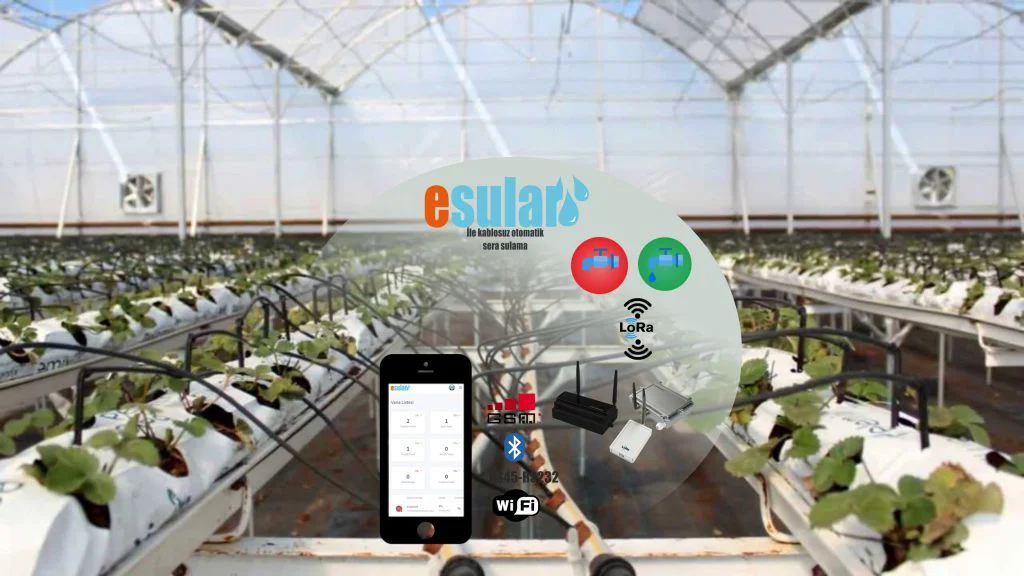
The technological infrastructure includes hardware and software systems that collect and process data coming from these sensors. Wireless communication protocols (for example Wi-Fi or LoRa) and power management solutions are also important elements of this infrastructure.
Key Monitored Parameters
Remote greenhouse monitoring systems monitor various important parameters and ensure continuous tracking of these parameters:
Temperature and Humidity: Temperature and humidity levels inside the greenhouse are of critical importance for plant health. These parameters are continuously monitored in terms of preventing diseases and promoting plant growth.
CO2 Levels: CO2 levels required for the photosynthesis process for plants are monitored. Providing sufficient CO2 is important for plant yield.
Light Levels: It is important to provide suitable light levels for the growth and development processes of plants. Light sensors ensure that lighting systems are automatically adjusted.
Soil Moisture Levels: Soil moisture levels are monitored to determine the irrigation needs of plants. Automatic irrigation systems work according to soil moisture levels, providing water savings.
Continuous monitoring of these parameters and the instant transmission of data to the user provide a great advantage to farmers and greenhouse operators in making correct decisions.
Automatic Control and Intervention Systems
Remote greenhouse monitoring systems direct automatic control and intervention systems based on the measured data:
Environmental Control: It is the system that continuously monitors and manages environmental conditions inside the greenhouse. Typically, it controls temperature, humidity, light intensity, and CO2 levels. This data is used to provide ideal conditions for the healthy growth of plants.
Window and Door Control: It is the system that ensures automatic opening and closing of windows and doors to optimize ventilation and temperature control inside the greenhouse. This is used to lower the temperature inside the greenhouse on hot days or to improve ventilation on cold days.
Irrigation Control: It is the automatic irrigation system that ensures water is given according to the needs of the plants. It adjusts irrigation time and amount using soil moisture sensors or plant stress sensors. This provides water savings and ensures plants remain at ideal moisture levels.
Fertilization Automation: It is the system that automatically manages the application of fertilizer according to the nutritional needs of the plants. It determines the correct amount and composition of fertilizer based on data such as soil analysis or plant leaf analysis.
Energy Management: It is the system that optimizes the energy used inside the greenhouse. It controls the operation times and efficiency of energy-consuming elements such as lighting, irrigation pumps, heating, and cooling systems. This reduces energy costs and increases the sustainability of greenhouse enterprises.
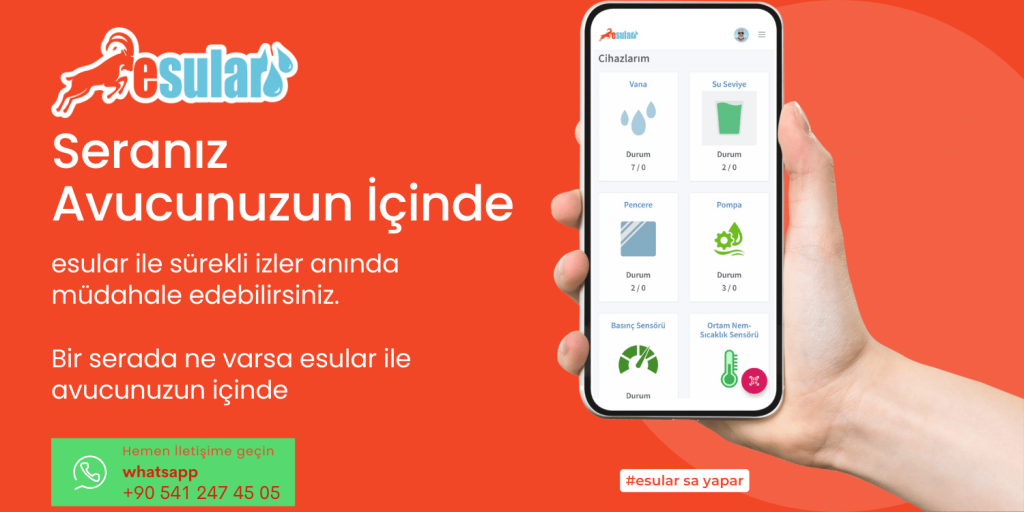
Remote Monitoring and Control: It is the system that provides remote access to greenhouse automation systems and makes it possible to monitor and manage operations remotely. Through mobile applications or web-based interfaces, users can monitor greenhouse conditions at any time and from anywhere, and intervene when necessary.
These systems are of critical importance for increasing efficiency, improving product quality, and lowering operating costs in modern greenhouse management. Each works in an integrated manner to support the healthy and productive growth of plants.
Advantages of Remote Greenhouse Monitoring Systems
- Continuously monitors and controls environmental parameters, reduces the need for manual intervention, and provides labor savings.
- Optimizes plant development by performing 24/7 continuous monitoring and adjustments, ensuring continuous efficiency.
- Reduces time spent on routine tasks, allowing farmers to focus on more strategic work.
- Provides optimum environmental conditions needed by plants, resulting in higher quality products.
- Plant health is protected thanks to the rapid detection and control of pests and diseases.
- Product quality is increased by providing the correct amount of nutrients.
- Automatic irrigation and energy efficiency optimize water and energy use.
- Precise fertilization and pesticide application minimize chemical use, reducing environmental pollution.
- Efficient water and energy use lowers greenhouse gas emissions.
- Efficient use of resources such as water, energy, and fertilizer lowers costs.
- Better managed production processes reduce waste and provide cost savings.
- Production can be carried out throughout the year regardless of climate conditions.
- Real-time data monitoring and analysis, offering instant intervention opportunities, makes production processes more controlled.
- The increase in product quality and production speed ensures a rapid response to market demand, increasing competitiveness.
- Rapid adaptation to modern agricultural practices provides an advantage in the market.
Remote greenhouse monitoring and automation systems contribute to the creation of an economically and environmentally sustainable agricultural model by providing efficiency, quality, sustainability, and cost savings in agricultural production.
Remote Greenhouse Monitoring Technology with Esular
As Esular, with our remote greenhouse monitoring technology, we enable our farmers to track and control their greenhouses in real-time from wherever they wish. While critical data such as temperature, humidity, light level, and CO2 density can be monitored instantly through our mobile applications and web-based interfaces, possible problems can be intervened quickly with our automatic warning and notification systems. Furthermore, we contribute to the optimization of agricultural processes with our data collection, analysis, and reporting features. We offer significant advantages to our farmers with energy and water savings, labor efficiency, and sustainable agricultural practices. If you also want to digitize your greenhouses and benefit from all the conveniences brought by modern agriculture, you can contact us.
Yorumlar