
Tüm Yazılar
How is Tobacco Cultivation Done?
Tobacco cultivation has been an important source of income for people throughout history. This plant, whose origins trace back to America, has various cultural and commercial uses worldwide. Turkey holds an important position in tobacco production, and tobacco cultivation is carried out extensively in various regions. Tobacco is grown in regions with different climate and soil characteristics such as the Aegean, Black Sea, Thrace, and Eastern Anatolia. Turkish tobacco is in demand worldwide, especially for its fine-leaved and aromatic structure. Turkey's position in tobacco production makes a significant contribution to the country's economy, and thousands of farmers earn their living through tobacco farming. However, the health risks associated with tobacco use should not be ignored. Tobacco products such as cigarettes, cigars, and hookahs have serious effects on health, and it is important for societies to become aware of this issue. As health awareness increases, more effective steps can be taken to prevent the harms associated with tobacco use and to combat tobacco.
What are the Tobacco Varieties?
Tobacco is a plant known for its different types and characteristics. Here are some commonly known tobacco varieties:
Virginia Tobacco: Named after the US state of Virginia, this tobacco variety is known for its bright yellowish-orange leaves. It has a good aroma and burning characteristic.
Burley Tobacco: Having a greener color compared to Virginia, Burley tobacco grows in more loamy soils.
Oriental Tobacco: Grown in warm climate regions such as the Balkans, Turkey, and the Middle East, this tobacco variety has small and tough leaves. It gains an aromatic flavor after being dried in the sun and is generally used in Turkish cigarettes.
Maryland Tobacco: Named after the US state of Maryland, this tobacco variety is known for its light-colored leaves. It is especially preferred as pipe tobacco.
Havana Tobacco: This is the tobacco variety grown in Cuba and used in cigar making.
Oriental Tobacco: Grown in Eastern Mediterranean countries such as Turkey and Greece, this tobacco variety is known for its small leaves and intense aroma. It is mostly used as hookah tobacco.
Where Does Tobacco Grow?
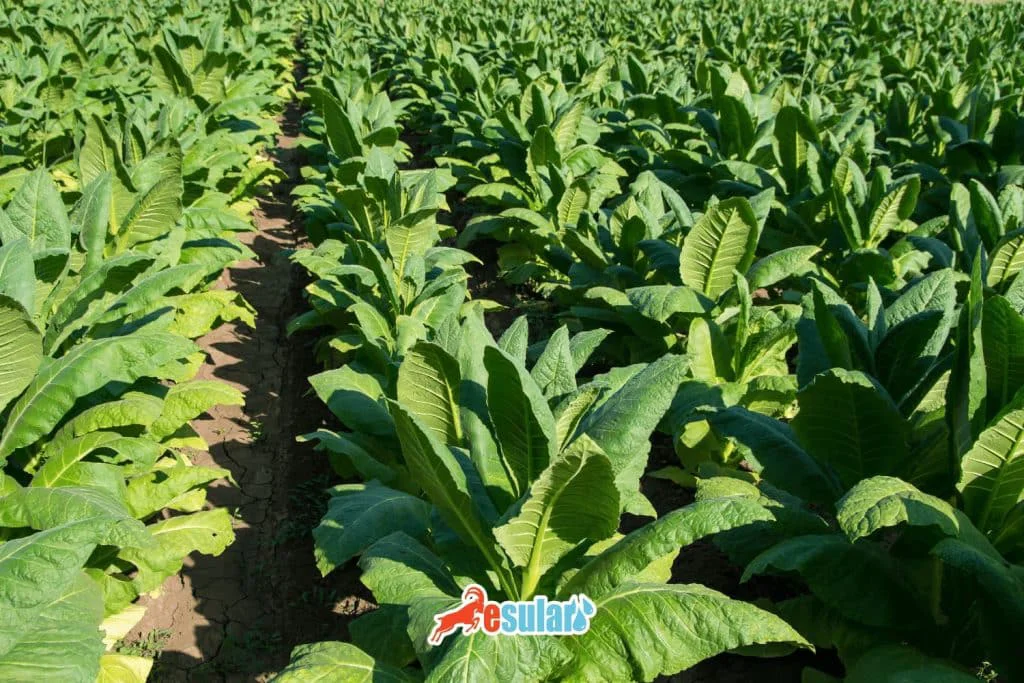
Tobacco quality is shaped under the influence of climate and soil conditions. Therefore, the tobacco plant must be grown in a specific environment. Sandy-loamy, humus-rich, and well-drained soils are ideal for healthy tobacco cultivation. In Turkey, tobacco sowing is carried out in various geographical regions such as the Aegean, Black Sea, Thrace, Marmara, and Eastern Anatolia. These regions, each with its own unique climate and soil characteristics, allow for the growth of different tobacco varieties.
In our country, high-quality tobaccos that are generally fine-leaved, small-sized, and offer a pleasant aroma are grown. These types of tobaccos are drought-compatible varieties called Oriental type and do not require irrigation. While these valuable tobaccos are used in the production of various tobacco products such as chewing, pipe, and hookah tobacco, cigarette tobacco is also obtained from these high-quality Oriental type tobaccos. This situation allows Turkey to provide a suitable ground for ensuring the quality and diversity of different tobacco products.
How is Tobacco Planting Done?
Planting time should be determined based on the region's climate, soil condition, and the development of the seedlings. Early planting poses a risk of late frost danger, while late planting can lead to problems such as the last harvest extending into autumn and the inability to benefit from spring rains. Therefore, it is recommended to plant in April-May in the Aegean, May-early June in Marmara and the Black Sea, and in May-June and even July in Eastern and Southeastern Anatolia.
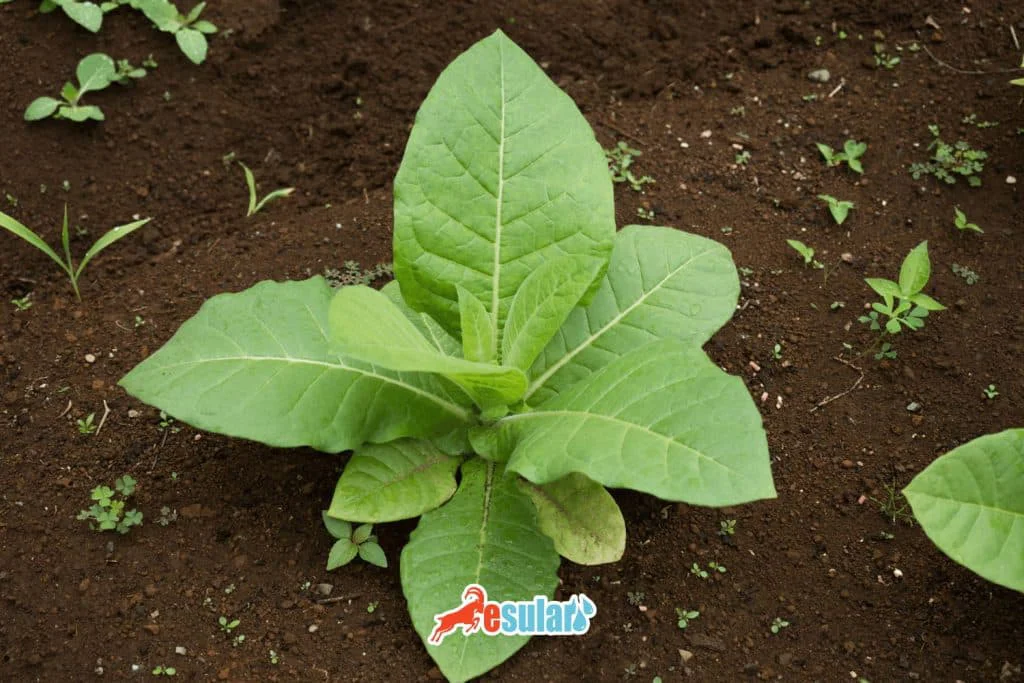
The planting process can be done both manually and by machine. In manual planting, seedlings are carefully placed into the opened holes, fixed by compressing their roots, and given initial watering (life water) immediately. Machine planting, on the other hand, is more efficient in terms of time and labor. The machine places the seedlings into watered holes. In plantings done with a planting machine, it is very important that the field is well-prepared and the seedlings are of appropriate size and hardened-off. Planting density varies according to the tobacco variety and the region. Generally, planting density is determined based on the preparation of the field, the structure of the soil, and the growing conditions of the tobacco. Correct planting density ensures that the plants grow in a healthy and balanced way and facilitates subsequent maintenance operations.
Irrigation in Tobacco Cultivation
In the Aegean and Black Sea Regions, irrigation is generally not needed for tobacco cultivation due to the precipitation regime. However, irrigation may be required in extremely dry or rainless seasons. In these regions, the irrigation need is kept at a minimum level to encourage the growth of the plant. In the Marmara, Eastern, and Southeastern Anatolia Regions, irrigation is applied more frequently. Here, irrigation is generally carried out by giving water to the furrows within the field. However, excessive irrigation that could damage the roots should be avoided. Care should be taken as excessive irrigation can cause the development of fungal diseases. In these regions, the amount of irrigation should be adjusted according to soil moisture and the water requirement of the plant.
Fertilization in Tobacco Cultivation
Fertilization is generally not recommended for Oriental type tobaccos in order to preserve quality. However, fertilizers containing specific amounts of nitrogen, phosphorus, and potassium can be given to soils where tobacco is planted consecutively and which are insufficient in terms of nutrients. In this case, 2-3 kg of nitrogen, 3-5 kg of phosphorus, and 5-8 kg of potassium per decare are applied and mixed into the soil. Additionally, once every 3-5 years, 2-4 tons of farm manure per decare can be added to increase soil productivity.
For Southeastern, Trabzon, Burley, and Virginia tobaccos, fertilization is mandatory and fertilizers containing specific amounts of nitrogen, phosphorus, and potassium must be used. 6-10 kg of nitrogen, 8-12 kg of phosphorus, and 10-15 kg of potassium per decare are applied to increase the nutrient content of the soil. In this way, tobacco plants grow healthily and yield high-quality products.
Tobacco Harvest
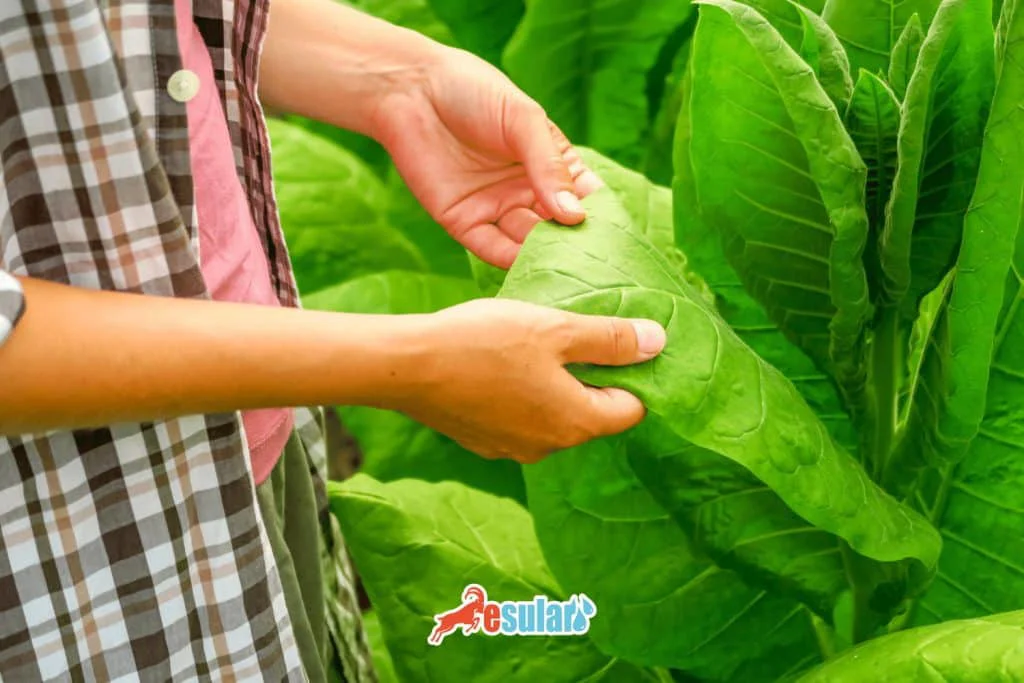
Tobacco harvest is the stage where matured leaves are collected. The maturation process starts from the bottom leaves and progresses upwards and varies according to the varieties. Full maturation of the leaves is very important for tobacco quality. The harvesting process takes place by breaking the matured leaves or cutting them from the stem with the stalk. The appropriate time for harvest is usually the morning hours. In this time period, while matured leaves are taken, unripe leaves are left. The growing period of the tobacco plant usually varies between 90 and 120 days, and harvesting begins as of early July.
Harvested leaves are generally collected by hand in the early hours of the day. In some regions, especially where the air temperature is high, a wilting process lasting 1-4 days is applied to the leaves after harvest. This process is done in the shade and at low temperature and allows for some of the water in the leaves to be evaporated. The wilting period varies depending on the maturity status, the type of leaves, and weather conditions. After the wilting process, harvested tobacco leaves are hung on walls or ceilings to ensure they are exposed to air draft. This process facilitates the drying process and increases the quality of the tobacco leaves. Tobacco harvest is an important stage of the tobacco industry and ensures high-quality products are obtained when carried out at the right time and in the right way.
Diseases and Pests Seen in Tobacco Cultivation
Diseases:
Barn Spot (Çıfıt Alacası): A disease seen on tobacco leaves. It occurs under humid conditions and prolonged yellowing phases. It manifests itself as green, brown, and black spots on the leaves. It reduces the quality of the leaves.
Chlorosis (Frenching): A disease seen in the form of yellowing of the leaf tissue. Generally, thick and irregular yellowing occurs at the leaf edges.
Blue Mold: A disease caused by the fungus named Peronospora tabacina. It spreads in cool and humid weather and forms a whitish or bluish mold layer on the leaves.
Powdery Mildew: A disease caused by the Oidium tabaci fungus. It forms a dirty white colored coating on the leaves.
Brown Spot: A disease caused by the Alternaria longipes fungus. It forms spots on the leaves in the form of brown circles.
Frogeye: A disease caused by the Cercospora nicotianae fungus. It forms small, black spots on the leaves.
Pests:
Aphids: They cause the leaves to turn yellow and dry out.
Tobacco Thrips: They form white spots on tobacco leaves.
Tobacco Budworm: It damages the leaves and stems of the tobacco plant.
Tobacco Pod Borer: A pest that damages the capsules of the tobacco plant. It enters the capsules by piercing them and causes damage.
Tobacco Moth: A butterfly species that damages tobacco in warehouses. It damages tobacco leaves and products by eating them.
These diseases and pests can cause serious economic losses in tobacco cultivation. Therefore, farmers use cultural measures and appropriate chemical control methods to combat these elements.
Yorumlar