Dry bean cultivation is the most produced legume in our country after chickpeas. Dry beans draw significant amounts of nutrients from the soil. Due to being a hoe plant and a legume, it is recommended to be used in crop rotation. More positive results are obtained when included in crop rotation after gramineous plants. By increasing the nitrogen and humus content of the soil, it positively affects the yield of subsequent plants.
How to Grow Dry Beans
Soil Requirement
Beans can be successfully grown in a wide range of lands, from sandy-loam soils with good drainage properties to heavy clay soils. However, it is important to pay attention to the crust layer formed after irrigation and precipitation in heavy clay soils. Beans achieve the best yield in soils rich in organic matter. They do not like acidic pH levels. Salty soils can reduce bean yield. Excessive moisture, over-irrigation, and long-term accumulation of water in the soil can cause damage to the plant and a decrease in yield.
Soil preparation
In bean production, timely and proper tillage contributes to yield increase. In autumn, the plowing depth should be adjusted depending on the amount of weeds in the soil. If the amount of stubble and weeds is high, the plowing depth is determined as 18-20 cm. In spring, when the soil becomes suitable, the second tillage is performed with a cultivator.
Variety and Seed
Among the region-specific varieties approved by the Eskişehir Transitional Zone Agricultural Research Institute are Göynük-98, Akman-98, Karacaşehir-90, and Yunus’90.
Dry Bean Planting Time and Sowing
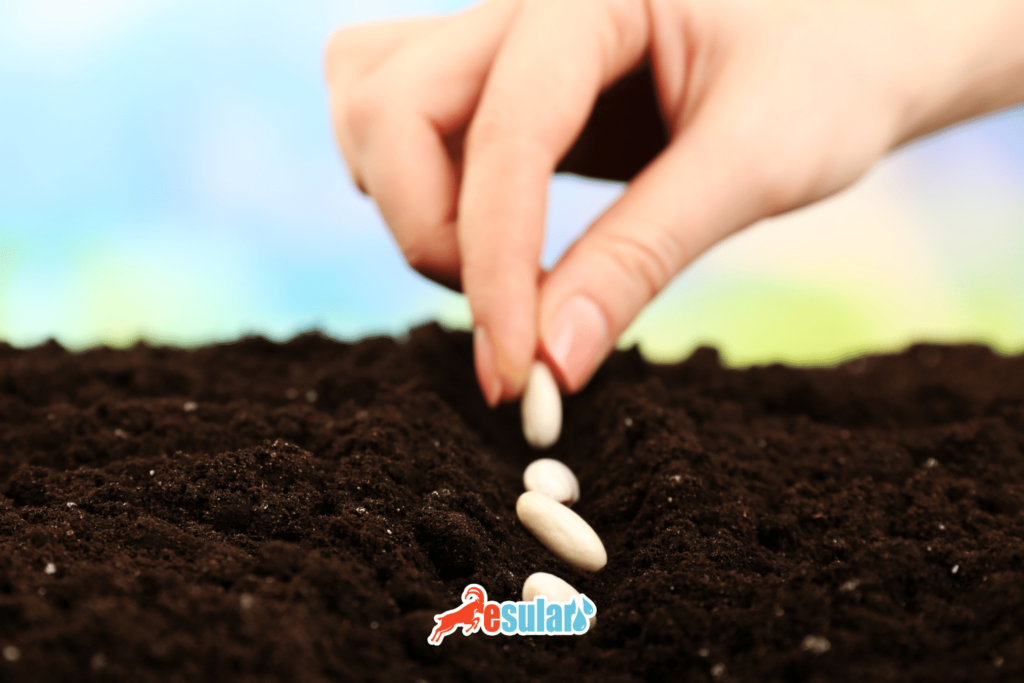
In accordance with the soil temperature in the Aegean region, the planting time usually coincides with the end of April and the beginning of May. The planting process should be carried out with a seeder. The row spacing may vary depending on the variety and growing conditions; typically, a row spacing between 40–60 cm is preferred. The intra-row distance varies between 5 cm–15 cm. The most suitable plant density should be 20–25 plants per m² for dwarf types and 10–15 plants for semi-climbers. If hoeing is to be done by machine, row spacings should be adjusted according to the width of the tractor and the machine. Planting depth should be between 5–10 cm in light soils and large seeds, and between 3.0–5.0 cm in heavy soils and small seeds. The amount of seed varies depending on whether the variety is dwarf or climbing, planting density, planting method, and seed size. In row planting, 6–7 kg/da of seed is used for small-seeded varieties, 7–10 kg/da for medium-sized varieties, and 10–12 kg/da for large-seeded varieties.
In which season do dry beans grow
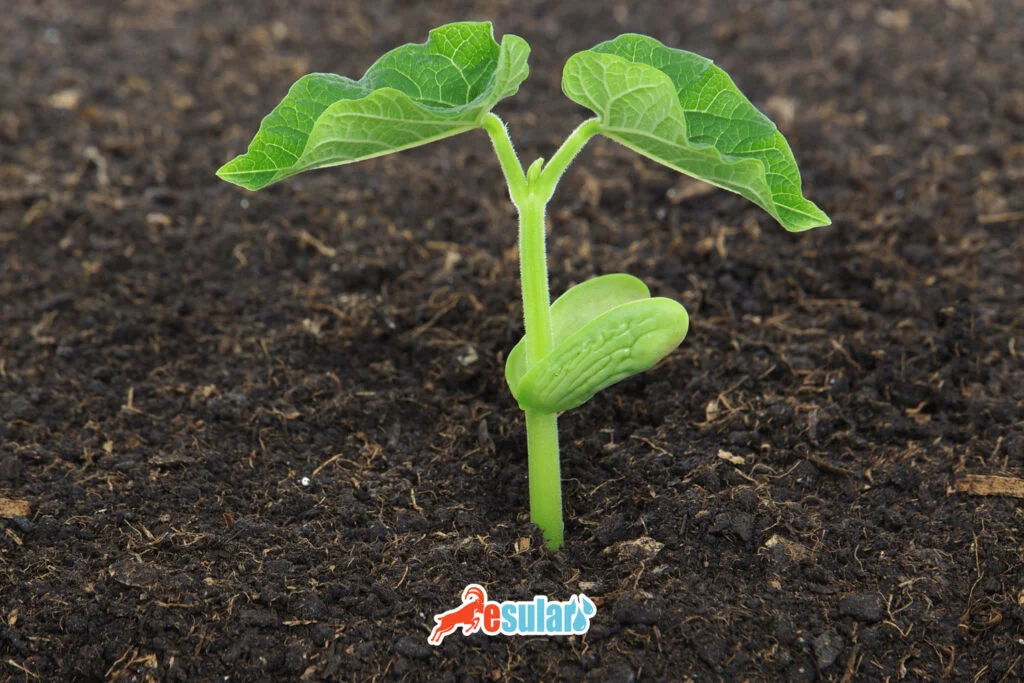
Providing the appropriate climate and soil conditions necessary for bean cultivation is very important. Bean seeds generally tend to germinate between temperatures of 15 to 20 degrees. Germination of seeds after sowing usually occurs within 7-10 days, but at low temperatures, this period can extend up to 20-25 days. The vegetation period of the bean plant varies between 70 and 140 days depending on its type, variety, and planting time. For bean cultivation to be successful, it is important that the soils are loamy, fertile areas without salinity and alkali problems. In addition, the bean plant has a high need for the element zinc. Beans, which are among the warm-climate vegetables, usually start to be grown in open fields during the period from the end of March to April. The planting time can continue gradually until May depending on regional ecological conditions. The bean plant can suffer great damage when the temperature falls below zero, especially at low temperatures such as -2, -3 degrees. Also, it should not be forgotten that wind can damage bean cultivation during the flowering phase.
How many kilos of dry beans are planted per 1 decare
Depending on factors such as the amount of seed used and planting density in dry bean sowing, the amount of dry beans planted per 1 decare may vary. The amount of seed varies according to variety, climate conditions, planting methods, and local agricultural practices. Generally speaking, there are seed amounts that vary according to row spacing. The amount of seed to be sown per decare for small-grained varieties is usually between 6-7 kg/da. While this amount varies between 7-10 kg/da for medium-sized grained varieties, the seed amount for large-grained varieties is determined as 10-12 kg/da. However, these figures are a general estimate and may vary depending on a specific region or agricultural practice. To get the most accurate information, it is recommended to consult local agricultural experts or agricultural specialists.
Dry Bean Fertilization
Applying 2–3 tons of farm manure per decare before plowing in the spring has a positive effect on plant development and yield by improving soil quality. It is important to perform soil analysis to determine the most suitable fertilizer amount. During soil preparation before planting, 12–16 kg of DAP (Diammonium phosphate) should be applied per decare. In excessively calcareous soils, it can prevent the plant's zinc uptake; in this case, applying approximately 3 kg of zinc sulfate per decare can provide a yield increase. In dry bean cultivation, top-dressing is generally not recommended.
Dry Bean Cultivation Maintenance
After the seeds are sown, germination may become difficult due to the hard layer formed on the soil surface. To overcome this situation, the hard layer on the soil surface should be broken by light sprinkling or using a rake, called tickling. It is important to use herbicides for weed control; these herbicides can be applied both before and after planting. If no herbicide is used, manual hoeing should be done when the plants reach 10–15 cm in height. After the first hoeing process, another hoeing should be applied until flowering. If row spacing is narrow, manual hoeing should be preferred, and if it is wide, machine hoeing should be preferred, and the root collar should be carefully earthed up. Hoeing should mostly be done when the soil reaches tilth after irrigation, thus reducing water loss and breaking the crust layer. The hoeing process contributes to plant development by increasing the nitrogen amount in the soil and encouraging beneficial bacterial activity. However, hoeing should be avoided during the flowering period, as this can cause flower drop.
Dry Bean Irrigation
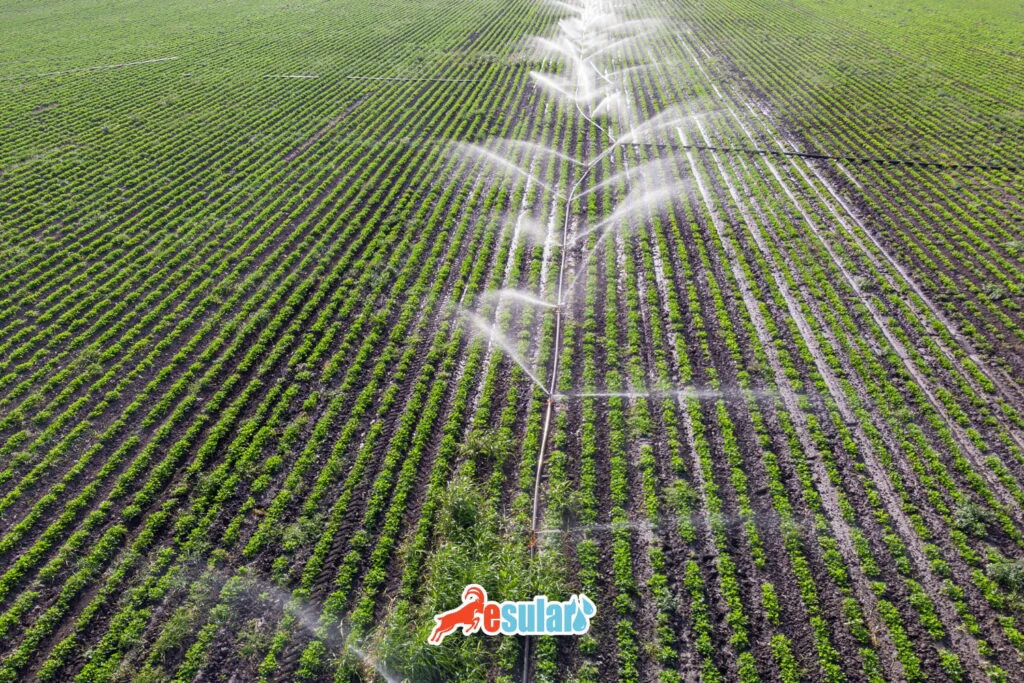
The amount of water required for seed germination should be equal to the seed's own weight. For this reason, if there is not enough moisture in the soil, the field should be moistened with irrigation. Alternatively, if sowing is to be done in a dry environment, the seeds should be irrigated so that they go 4–5 cm below the sowing depth. When growing dry beans, care should be taken to avoid ponding when water is given to the field, as water ponding can increase root rot. The first irrigation is usually done before flowering, and no water is given during flowering. For this reason, attention should be paid to the amount of water given before flowering. If the plant cannot get enough water during flowering and pod formation, flower and pod drop may occur, and at the same time, the number of seeds in the pod may decrease. Following the flowering period, 3–4 more irrigations can be done. In hot weather and sandy-well-drained soils, irrigation frequency should be every 5–10 days, and in cool and clay soils, every 10–15 days. Drip irrigation system provides the best yield. If there is no drip irrigation system, furrow irrigation should be preferred.
Disease and Pest Control
After emergence from the seed, poisoned bran should be applied to protect the bean plant against the mole cricket pest. Among the main diseases frequently seen in dry beans are Anthracnose, Rust Disease, Bean Mosaic Virus, and Root Rot. To protect against these diseases, treated seeds should be used and spraying should be carried out with an appropriate fungicide. Among the most important pests appearing in beans are the bean beetle (Bruchus), aphids, and red spider mites. An appropriate insecticide should be used in the fight against these pests.
Harvest Threshing Yield
Early harvesting of beans can lead to shriveling of the grains due to water loss and loss of yield. Delaying the harvest can cause the pods to crack and grain drop. For these reasons, harvest time should be carried out at a period when the pods are mostly yellowed but not yet completely dry. Manual harvesting can significantly reduce the amount of nitrogen that the bean will leave in the soil, as it is extracted along with the plant roots. Therefore, a harvest method that will ensure the plant roots remain in the soil should be preferred. The grain yield of beans is generally between 180-230 kg/da.
How many days does it take to harvest dry beans?
The harvest period of dry beans may vary depending on variety and growing conditions. Generally, the time from planting to harvest for dry beans can vary between 80 to 120 days. The bean plant develops within this period from the flowering period to the ripening process and becomes suitable for harvest. Harvest time is usually carried out when the ripening process of the pods is completed and the grain color changes and dries.
How many dry beans are produced from 1 decare of land?
Dry bean yield depends on many factors, so it is difficult to give an exact figure. However, with an average estimate, the grain yield of beans is generally between 180-230 kg/da. Yield varies depending on many factors such as regional climate conditions, soil quality, planting methods, fertilizer used, and irrigation. Therefore, it is important to consult local agricultural experts or agricultural expertise to get a more accurate estimate for a specific region and conditions.
What Should Be Done to Increase Bean Yield
The most optimal yield in beans is obtained using the drip irrigation system.
Early harvesting in dry bean production can cause grains to undergo water loss and therefore high yield loss. On the contrary, late harvesting can cause pods to crack and drop, leading to yield loss. Therefore, it is important to carry out the harvest at the appropriate time. Harvest time is understood from the yellowing of the majority of the pods, but care should be taken that the pods are not excessively dry.
Manual harvesting can prevent the nitrogen in the plant roots from reaching the soil. For this reason, in terms of yield, it is of importance to harvest in a way that the roots of the bean remain inside the soil.
In climbing bean cultivation, the use of the trellising method can increase the yield.
Soil pH value being between 5.5 to 6.7 provides a higher yield.
In order to reduce evaporation in hot and dry bean growing regions, when the field is surrounded by high plants such as corn, the yield may increase.
Regular weed control increases the yield.
In cases such as disease, early intervention and appropriate sprayings help the bean to give quality products and affect the yield positively.
World Dry Bean Data
Among legumes, dry beans are the product with the widest cultivation area worldwide and are grown in 105 countries. Cultivation areas of dry beans, which are produced intensively especially on the Asian and American continents, were at the level of 32 million hectares in 2015, reaching 33 million hectares with an increase of 5.8% in 2019. According to 2019 FAO data, dry beans constitute 37% of legume cultivation areas and represent 33% of legume production. As of 2019, 30 million tons of dry beans were produced in an area of 33 million hectares. However, in the 2018-2019 period, dry bean cultivation areas decreased by 7.2% and production by 3.5%. India ranks first in dry bean cultivation areas with 12 million hectares, followed by Myanmar (3.2 million hectares) and Brazil (2.6 million hectares) respectively. In production, Myanmar is in the leading position with 5.8 million tons; India (5.3 million tons) and Brazil (2.9 million tons) follow respectively.
Turkey Dry Bean Data
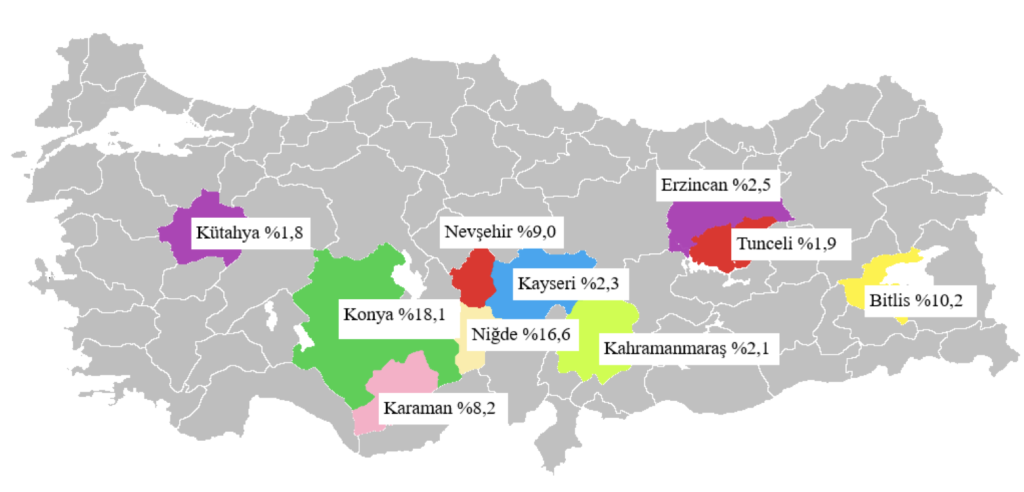
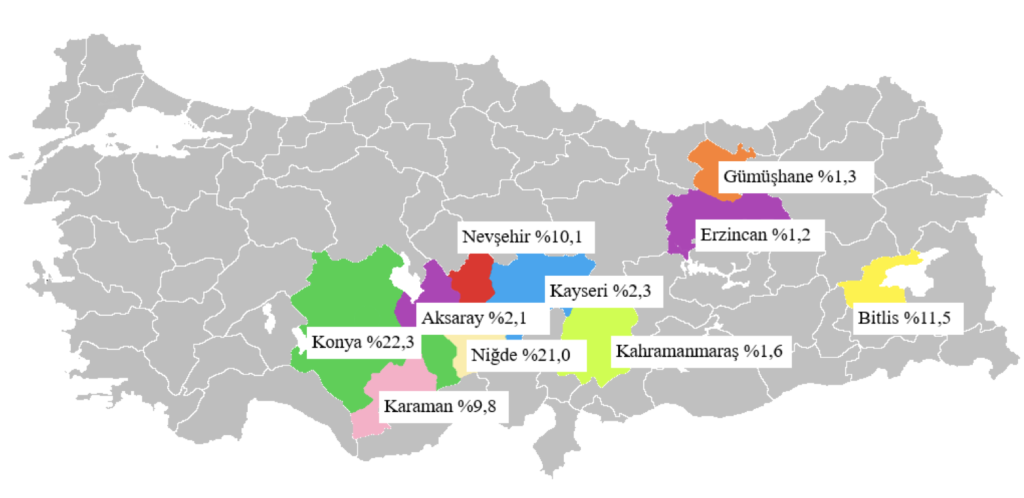
Dry bean cultivation areas; in the 2020/21 production period, took place in an area of 102 thousand hectares in Turkey. Almost 54% of these areas are located in the Central Anatolia Region, and 15% are in the Eastern Anatolia Region. In 2020, dry bean yield increased by 7.1% compared to the previous year. An increase of around 10% was recorded in dry bean cultivation areas in the 2020/21 production period compared to the 2015/16 production period.
Turkey's dry bean production; in the 2020/21 production period, was realized as 280 thousand tons, and 68% of this amount was met from the Central Anatolia Region. Konya province alone met 22.3% of Turkey's dry bean production. Dry bean production in 2020 showed an increase of 24% compared to the previous year.

Yorumlar