
Fungal Diseases in Watermelon
Fungal Diseases in Watermelon are diseases that we frequently see in our country and have difficulty in controlling. For this reason, it is very important to diagnose diseases early. In this article, we will talk about the most common fungal diseases.
Downy Mildew Disease in Watermelon
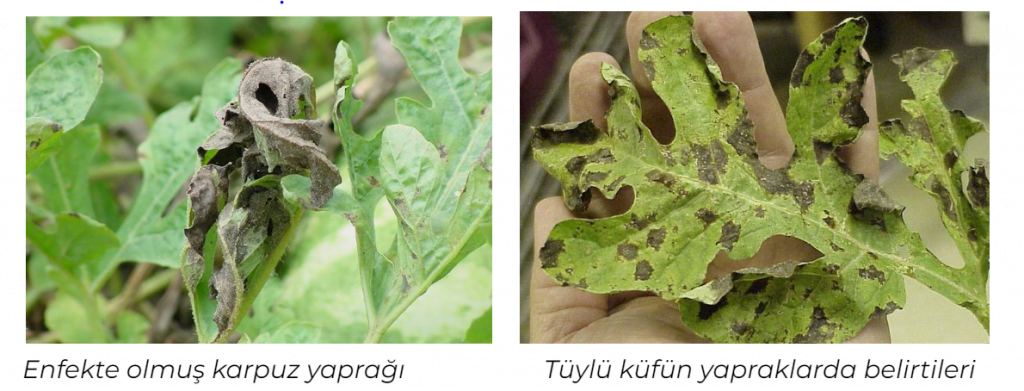
Symptoms
The first symptoms of the disease are pale green areas limited by veins on the leaf. Later, these spots grow, covering the leaf and turning into dark brown necrotic areas. Along with this, the leaves curl inwards.
Agent
Fungal
Development Conditions of the Disease
The disease spreads via airborne spores and water splashing.
Control Method
The most important control is to ensure that leaves do not get wet during irrigation. Especially evening irrigation should be avoided. It is important to plant the plants in a way that allows for ventilation. Plant residues should be removed from the field.
Anthracnose Disease in Watermelon
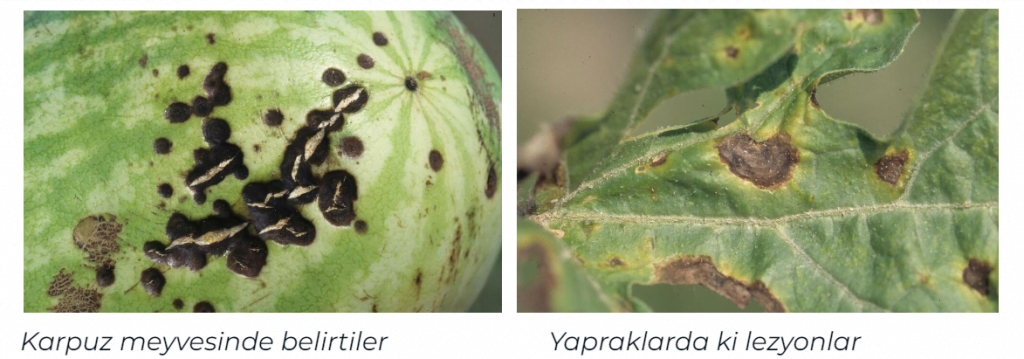
Symptoms
The first symptoms of the disease are black spots seen on the leaves. These spots merge and grow over time, and the leaf begins to shrivel and tear. Symptoms on the fruits are in the form of irregular depressions. These lesions take on an orange color in humid weather conditions.
Agent
Fungus
Development Conditions of the Disease
This agent is carried through diseased plants as well as spreading with wind and rain.
Control Method
The use of clean seeds is very important. Resistant varieties should be sown. Observed diseased plant residues should be removed from the field. A crop rotation of at least 3 years should be applied.
Gummy Stem Blight in Watermelon
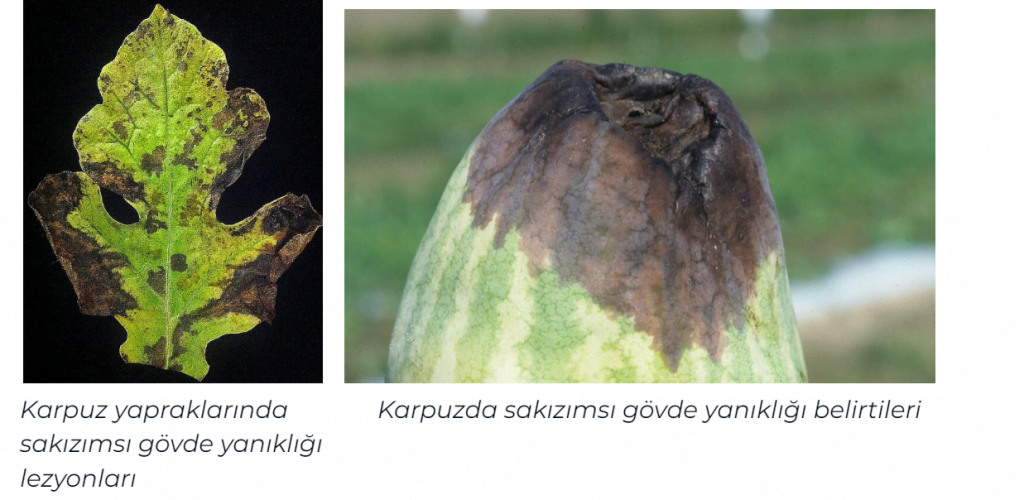
Symptoms
Round dark brown spots are first seen on the edges of the leaves, and these spots spread until the entire leaf darkens. Symptoms in the form of small, water-soaked appearances also appear on the fruits, and gummy discharge is secreted from these.
Agent
Fungus
Development Conditions of the Disease
Hot and humid conditions facilitate the emergence of the disease. The disease survives on plant residues in the soil. The fungus can spread through wind and water splashing.
Control Method
Disease-free seeds should be used. Seeds should be treated before sowing. To reduce disease occurrence in the soil, crop rotation should be applied every 2-3 years.
Powdery Mildew Disease in Watermelon
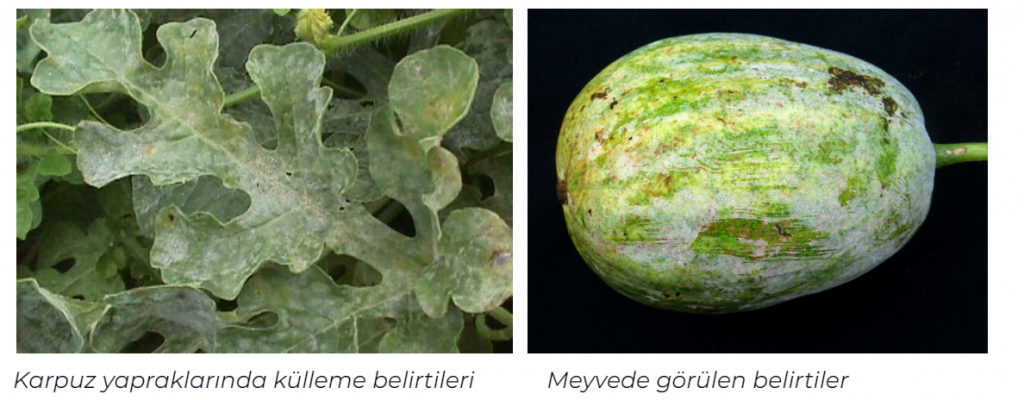
Symptoms
The disease is first seen on old leaves. Initially, fragmented, round spots are seen on the upper surface of the leaf, later these spots merge and cover both surfaces of the leaf, the petiole, and the stem. The spots are white in color and have an appearance as if ash has been sprinkled.
Agent
Fungus
Development Conditions of the Disease
Suitable conditions for the disease agent are dense plants and low light intensity.
Control Method
Plants should be planted in a field that receives sun. Good air circulation should be provided. Equipment should be cleaned regularly.
Fusarium Wilt in Watermelon
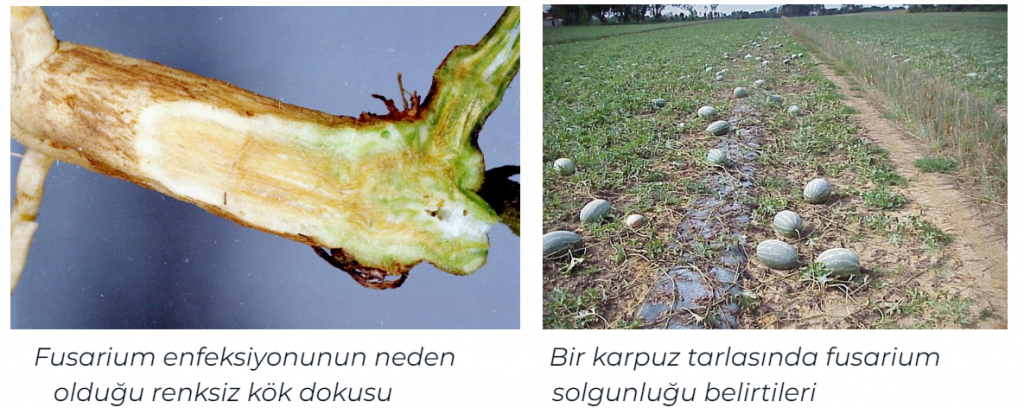
Symptoms
Leaves have a dull gray-green appearance and turn yellow as the disease progresses. Infected seedlings usually dry up. Spots are seen in the plant's vascular bundles and proximity is seen in the root crown.
Agent
Fungus
Development Conditions of the Disease
The disease can spread through infected seeds or contaminated water and/or equipment.
Control Method
Resistant varieties should be preferred. Diseased seedlings should be removed from the field and destroyed. Excessive nitrogen fertilization should be avoided. Grafted seedlings should be used.
Yorumlar