Pomegranate cultivation has been a valuable agricultural practice in many cultures since ancient times. The pomegranate tree generally grows in regions with a Mediterranean climate and requires ideal conditions to produce the pomegranate fruit, which is extremely beneficial for health. Due to its location and climate, it is a fruit species widely grown in our country as well. It is known that pomegranate production is carried out on approximately 300 thousand hectares in our country. The regions that contribute most to production are; Mediterranean, Aegean, and Southeastern Anatolia regions.
Pomegranate
Pomegranate is a subtropical and tropical climate fruit belonging to the Punicaceae family. In the world pomegranate trade, Turkey, Iran, USA, India, and Azerbaijan are the leading countries. The pomegranate species grown in Turkey are mainly; Hicaz Pomegranate, Katırbaşı, Aşinar, Batem Hicrannar, Batem Yılmaznar, and Batem Onurnar.
Climate in Pomegranate Cultivation
The pomegranate tree is a strong plant. It can adapt to a wide variety of climate and soil conditions, however, in tropical or semi-tropical climates, its yield and fruit quality are higher. It needs an average annual rainfall of 500 mm; however, rainfall in the summer months spoils the quality of the fruits and causes them to crack. For this reason, it is quite important for these rains to fall in the spring. The ripening periods of pomegranate vary according to the varieties.
How to Plant Pomegranate Saplings?
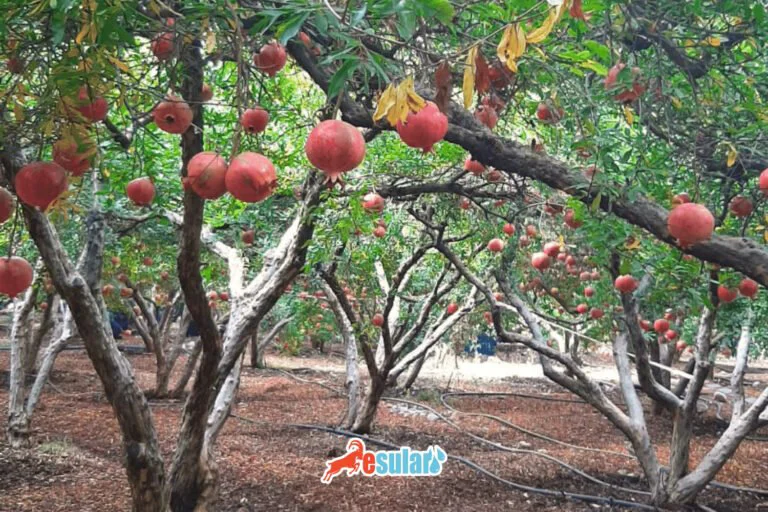
Pomegranate is generally planted in the winter months or in the autumn. The optimum planting interval for pomegranate saplings depends on the soil type and climate. The generally used planting interval is 2-6 m. For better ventilation and sun exposure of the orchards, the row direction should generally be in the north-south direction. Before planting, weak shoots are cut and the tops of the shoots are pruned at 50-60 cm. Then, the cutting part of the sapling is placed in previously dug trenches so that it remains in the soil. The trenches are filled with a mixture of soil and fertilizer, and life water is given.
Soil Tillage in Pomegranate Cultivation
Soil tillage in pomegranate orchards is the same as in other fruit trees. In the first years, deep plowing is done to support the growth of the tree. In other years, shallow plowing or herbicides for weed control will be sufficient.
Irrigation in Pomegranate Cultivation
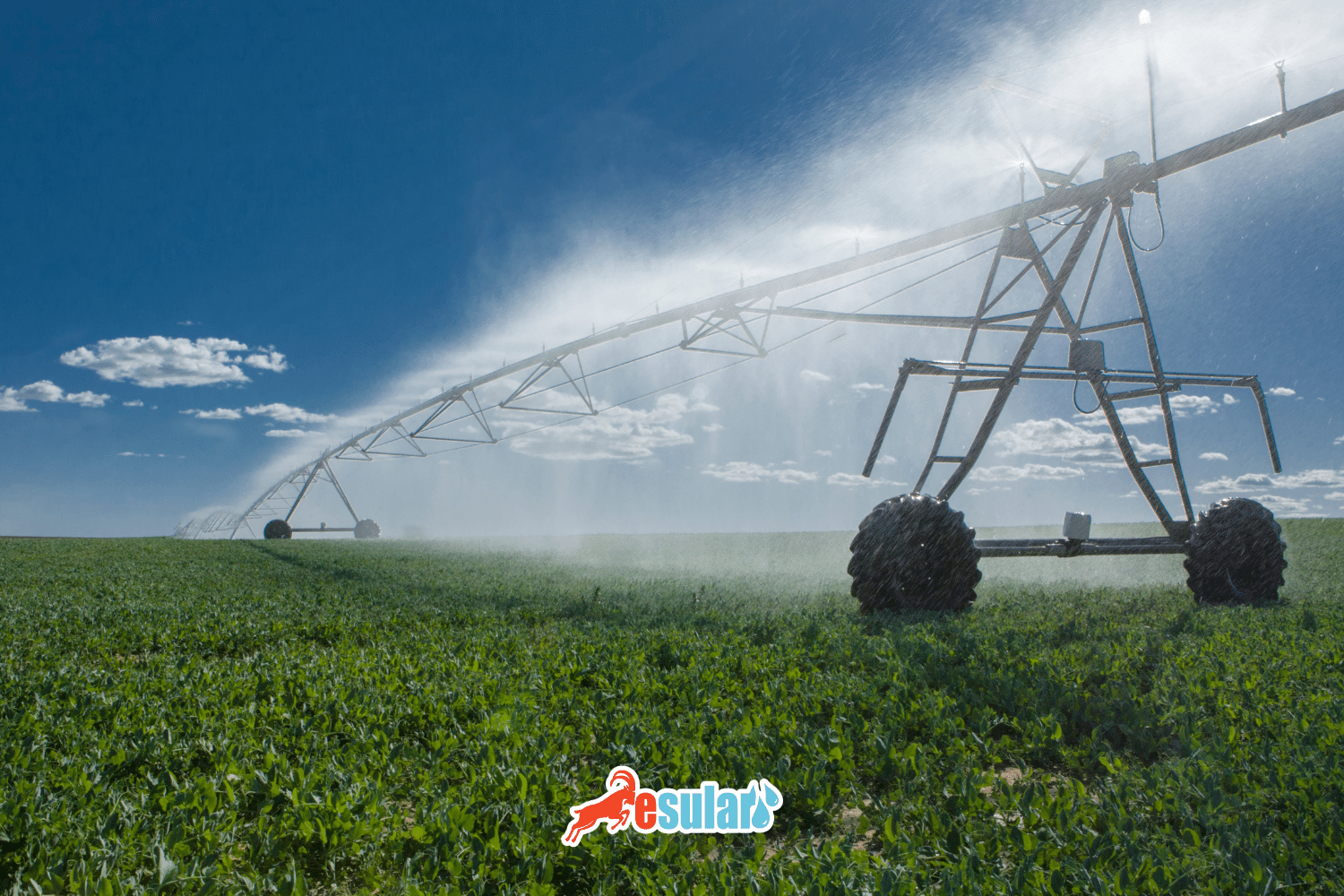
Pomegranate likes cool and moist soil conditions. For this reason, irrigation should be done in regions where rainfall is insufficient. Irrigation is generally done for a period of 7-10 days depending on the rainfall. During ripening, irrigation is gradually reduced to reduce cracking and increase taste and color development. It is completely finished 10-15 days before the harvest.
How Should Pomegranate Be Fertilized?
In general, well-rotted farmyard manure is recommended in pomegranate cultivation. In the first years, 10-15 m3/da per tree, and in subsequent periods, 25-30 m3/da of farmyard manure will be sufficient for nourishing the soil. If agricultural fertilizers are to be used, fertilizers containing nitrogen, phosphorus, and potassium (NPK) can be used. You can review our article for detailed information about NPK fertilizers.
Pomegranate Harvest
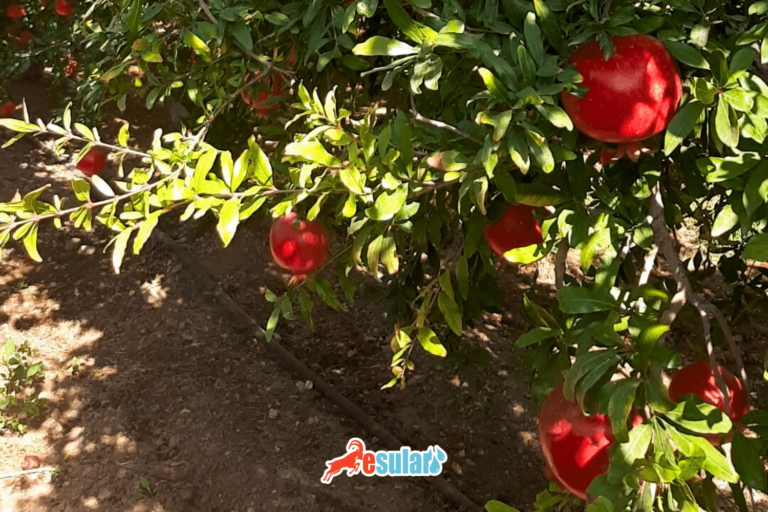
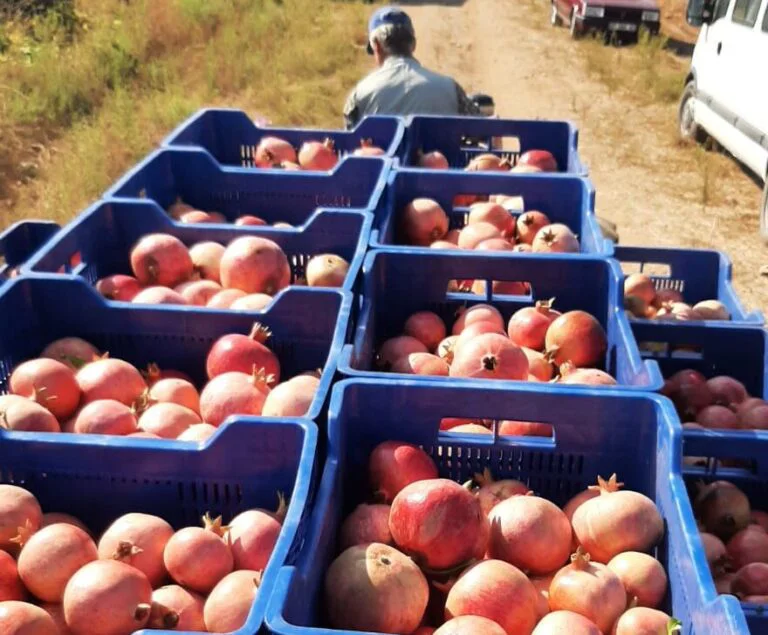
Harvest time varies according to the climate and soil conditions of the growing region. However, this process generally takes place in the period from the end of August until the end of November. Additionally, the turning of the fruit color to dark rose pink and the inward turning of the calyx at the bottom of the fruit is a sign that the harvest time has come.

Yorumlar