
Tüm Yazılar
What is an Agricultural Irrigation Pool?
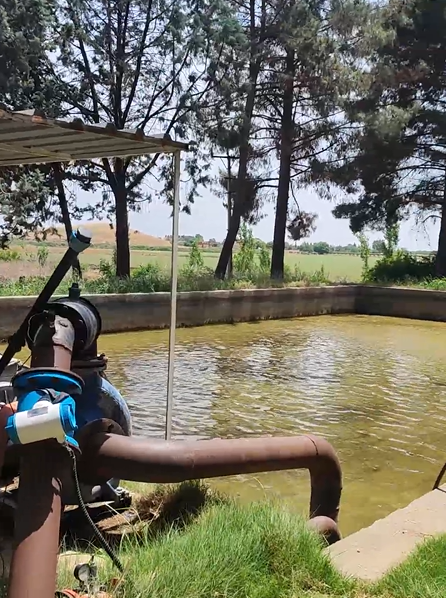
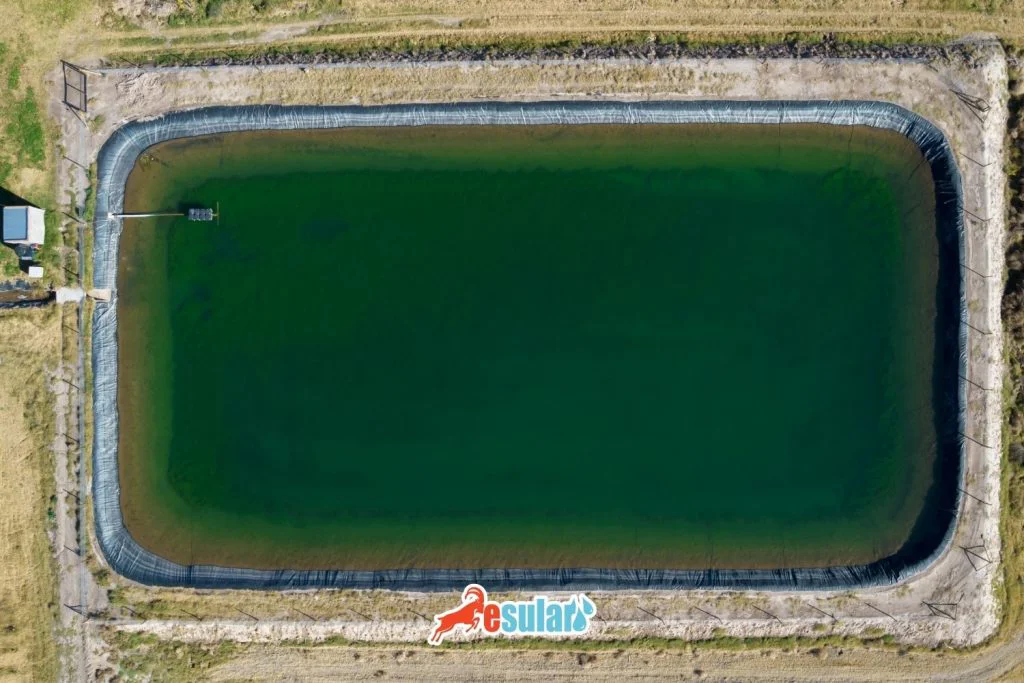
Agricultural irrigation pools stand out as an important element of water management in the agricultural sector. These pools are used to meet the irrigation needs during drought periods by collecting and storing water during rainy periods. Usually fed by natural water sources in agricultural lands, these pools also provide water savings by collecting rainwater and guarantee the continuity of agricultural production. Equipped with modern technologies, agricultural irrigation pools are fitted with smart sensors and automatic control systems. These systems continuously monitor the water level inside the pool, water pressure, and usage amount, and effectively manage irrigation pumps based on this data. In this way, farmers use water resources more efficiently while making their agricultural production more sustainable. Consequently, agricultural irrigation pools are one of the indispensable elements of modern agriculture because they increase agricultural productivity by ensuring the efficient and effective management of water resources and offer long-term solutions to farmers.
Construction Stages of Agricultural Irrigation Pools
Planning and Design: The first step is to determine the location of the pool and create its design. At this stage, factors such as the topography of the land, access to water resources, and the location of agricultural areas in need of irrigation are considered. The dimensions, depth, and water capacity of the pool are planned.
Excavation and Preparation: Excavation work is carried out in the designated area. Earthworks are performed to ensure the pool has the desired depth and size. During the excavation process, the stability of the ground and water permeability are also taken into account.
Ground Preparation and Insulation: A suitable insulation material is applied to the floor of the pool. This is usually a special polymer material called a geomembrane.
System Installation: Sensors and control systems are installed inside the pool to monitor water level, pressure, and other parameters. Smart irrigation systems automatically control pumps and valves to ensure efficient water use.
Filling and Testing: After the pool is constructed, it is filled with water, and all systems are tested to see if they are working correctly.
Commissioning and Maintenance: After the pool is completed, regular maintenance and control procedures are performed.
The construction stages of agricultural irrigation pools are a detailed process requiring technical knowledge and, when applied correctly, can operate effectively for many years. In this process, the selection of high-quality materials and correct planning are very important for the efficiency and durability of the pool.
Types of Agricultural Pools
Agricultural irrigation pools can vary according to their intended use and construction materials. Here are some types of agricultural pools:
Concrete Pools: These are traditional pools made by excavating the ground and pouring concrete. Concrete pools are generally durable and long-lasting, but their construction processes can be longer than other methods.
Geomembrane Pools: These are pools made from materials such as polyethylene or PVC and are usually lined with special insulation materials after excavation. Geomembrane pools prevent water leakage and ensure the water remains clean.
Fiberglass Pools: Pools made of fiberglass are lightweight and easily portable. They have good insulation and are generally longer-lasting than concrete pools.
Cement-Coated Brick Pools: These are pools built using bricks and cement. This type of pool combines traditional construction techniques with modern materials.
Each type of pool offers advantages based on its purpose of use and local conditions. Pool selection should be determined based on factors such as water storage capacity, durability, assembly time, and maintenance requirements.
Insulation Methods in Agricultural Pools
Insulation in agricultural pools is very important for preventing water leakage and protecting water quality. Insulation materials are selected and applied according to the material the pool is made of and its purpose of use. Here are some insulation methods and materials used in agricultural pools:
Geomembrane: Geomembranes made from materials such as polyethylene (PE) or polyvinyl chloride (PVC) are laid on the floor and side walls of the pool to prevent water leakage. These materials are durable, resistant to chemical effects, and provide long-lasting use.
Bentonite: Bentonite is a natural clay mineral that expands upon contact with water to provide sealing. Bentonite layers are laid on the pool floor and prevent the passage of water. This method is preferred especially due to its low cost and environmental friendliness.
Epoxy Coating: Epoxy coatings used in concrete or metal pools create an excellent barrier against water. They are known for their ease of application and durability, but due to their high costs, they are generally preferred for small-scale pools.
Cement Coating: In concrete pools, a layer of cement is an effective method for preventing water leakage. When well-applied, it provides long-term protection and creates a durable surface.
Fiberglass Insulation: Fiberglass or polyethylene insulation materials are applied to the inner surface of the pool to provide waterproofing. These materials are lightweight, flexible, and easy to install.
The choice of insulation material should be made based on factors such as pool size, local conditions, purpose of use, and budget. By choosing the correct insulation method and material, pool efficiency can be increased and long-lasting use can be ensured.
Advantages of Agricultural Irrigation Pools
Agricultural irrigation pools can provide many advantages to farmers. Here are some of them:
Pools collect and store water during rainy periods and ensure it is used for irrigation during dry periods. This reduces irrigation water costs by ensuring effective and efficient water use.
They provide a stable source of irrigation water regardless of seasonal variations. This helps farmers better plan their irrigation schedules and increase crop productivity.
Providing continuous and regular irrigation increases crop productivity and quality.
More efficient use of water resources, and the retention and use of water in pools, ensures environmental sustainability.
In addition to providing water cost savings for farmers, pools offer the potential to increase crop sales prices and income.
They provide a guarantee against climate changes and uncertainties in precipitation cycles. In case of natural disasters such as drought or excessive rainfall, the water stock in the pools can help farmers protect their crops and minimize losses.
These advantages emphasize the importance and effectiveness of agricultural irrigation pools for farmers.
Agricultural Pool Filling and Control Solutions
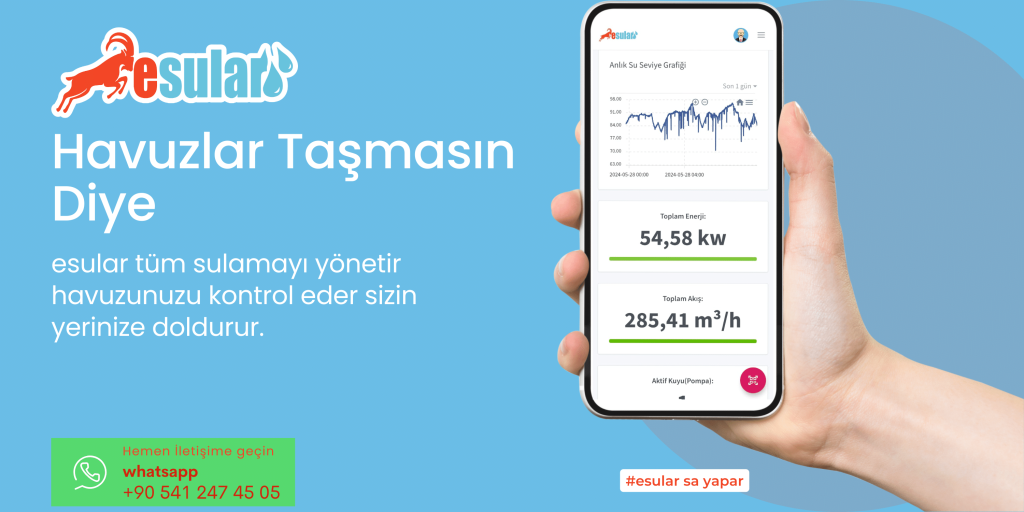
Esular offers advanced technologies to optimize pool filling processes and reduce energy consumption by more than 50%. Here are the main services we offer:
Pump Control Panels: Our pump control panels, which operate over a wireless gateway, work integrated with pressure and water level sensors to ensure efficient operation of the pumps. In this way, water filling processes are managed more precisely.
Well Control Panels and Sensors: We continuously monitor well performance using various sensors such as 0-16 bar pressure sensors, water meters, and hydrostatic level sensors. This information ensures the efficient and effective use of water.
Smart Sensor and Control Solutions: Our wireless smart control solutions, which provide wide area coverage, facilitate energy optimization and lower costs. With these solutions, the management of agricultural irrigation systems becomes more effective.
AI-Powered Data Processing: Our software and artificial intelligence technology analyze the collected data to maximize energy and water optimization. In this way, farmers can reduce their energy consumption by more than 30%.
Contact Us!
If you are looking for more efficient and sustainable solutions in your pool filling processes, you can benefit from Esular's expertise. You can reach us through the following channels to get in touch and receive more information:
- Our Website: www.esular.com.tr
- Contact: info@esular.com.tr
- Phone: +90 850 399 6888
We at Esular are here to provide the best solutions to our farmers by using technology in the field of agriculture. Join us for more efficient agriculture!
Yorumlar