
Tüm Yazılar
Olive Peacock Spot Disease
Olive peacock spot disease is a common fungal infection that occurs on the leaves of olive trees and can lead to serious yield losses. The fungus causing this disease remains alive on olive trees throughout the year and spreads through spores. While the disease spreads rapidly in rainy and humid climatic conditions such as the Aegean region, it is more commonly seen in secluded and water-retaining areas in inland parts. Peacock spot disease forms blackish-gray circular spots on the upper surfaces of the leaves, and over time these spots cause the leaves to fall, fruit set to decrease, and trees to weaken. When effective control methods are not applied, serious decreases in the yield of olive trees may occur. In this article, the definition, symptoms, hosts, and control methods of olive peacock spot disease will be discussed in detail.
Symptoms of Peacock Spot Disease
Symptoms of olive peacock spot disease:
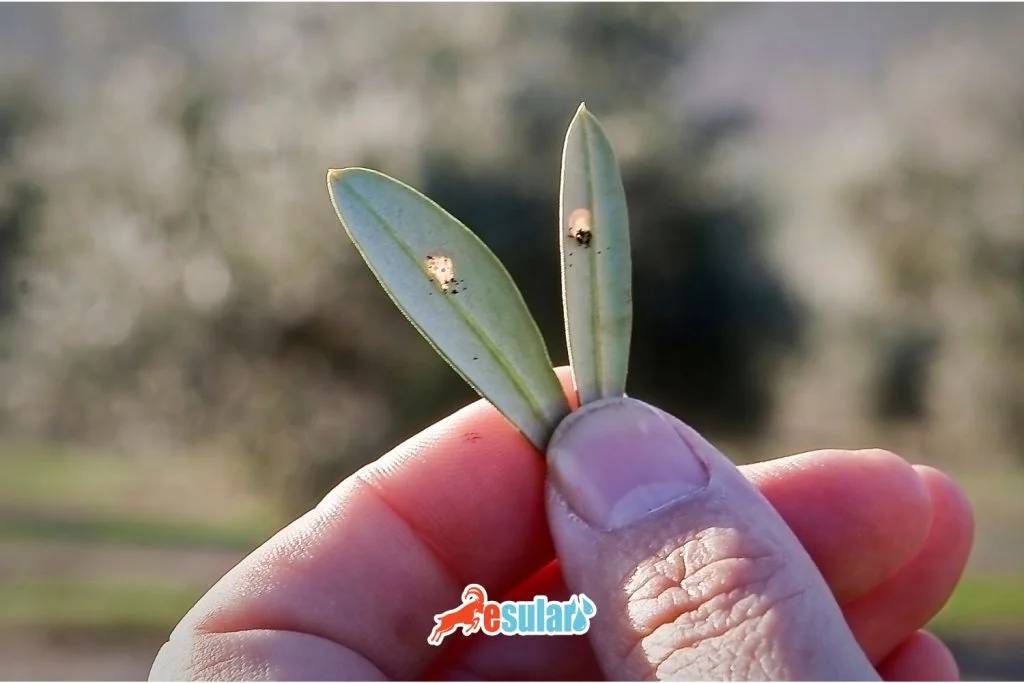
Blackish Gray Spots on Leaves: The first symptoms of the disease appear as blackish-gray circular dots on the upper surfaces of olive leaves.
Light Colored Rings: The color in the center of the spots lightens, and a ring in the normal leaf color forms around it. This ring is surrounded by a second light-colored ring from the outside, and then a dark-colored ring forms again. This appearance causes the disease to be named "peacock spot disease" (ringed spot disease).
Multiple Spots on Leaves: There can be 2-30 spots with diameters ranging between 2-10 mm on a single leaf.
Leaf Fall: Especially in early May, the falling of spotted leaves begins and is completed in June and July. Since the leaves lose their functions, low fruit set and early fruit drop are observed.
Trees Remaining Bare: In epidemic years, trees may remain bare with the complete falling of leaves. In this case, shoots and thin branches may dry out in weakened trees.
Yield Loss: Yield may decrease by 20-25%, and 15-20% of fruit branches may dry out.
Weakening of Trees: Due to leaf fall, trees weaken, and this situation affects the yield.
Spread Conditions and Causes of the Disease
Spread Conditions of the Disease
Temperature: The disease agent shows optimum development at temperatures between 18-20°C. Disease development is limited at temperatures below 9°C and above 30°C.
Precipitation: Frequently rainy weather conditions in the coastal areas of the Aegean Region, especially in spring and autumn months, prepare the ground for the spread of the disease. In inland regions, secluded and water-retaining places are suitable environments for the development of the disease.
Soil Conditions: The disease is more common in water-retaining, airless, and humid soils. These types of soils encourage the spread of the disease.
Organic Matter and Fertilizer Use: Excessive nitrogenous and farm manure use may cause an increase in the disease.
Overwintering Conditions: The disease agent spends the winter in dried leaves fallen on the ground and in diseased leaves on the tree. Contamination occurs through spores and mycelia.
Enclosed Areas and Maintenance Deficiencies: Densely planted, unpruned olive groves that do not receive air and sun are suitable for the development of the disease.
Causes of the Disease
Fungus: The agent of olive peacock spot disease is a type of fungus. This fungus reproduces and spreads with spores and mycelia.
High Bicarbonate Rate: High bicarbonate rate in soil and irrigation water can contribute to the development of the disease.
Excess Humidity: Humid and water-retaining environments facilitate the development and spread of the disease.
Soil pH Changes: The risk of disease may increase in soils poor in lime or in soils with high pH values.
Climatic Conditions: Especially rainy and cool spring conditions can cause the epidemic spread of the disease.
These conditions and causes are important factors determining the spread and impact of olive peacock spot disease.
Effects of Peacock Spot Disease on Olive Trees
Leaf Fall: Peacock spot disease creates significant effects on the leaves of olive trees. With the progression of the disease, blackish-gray spots seen on the leaves can cause leaf fall over time. Especially in epidemic years, diseased leaves begin to fall in early May and can completely fall in June and July. This situation causes the trees to lose a large portion of their leaves and therefore leads to a decrease in photosynthesis capacity.
Yield Loss: Leaf fall and the inability of leaves to perform their functions directly affect the fruit set of olive trees. Low fruit set and early fruit drop can cause yield loss. In epidemic years, yield may decrease by 20-25%. Additionally, drying of 15-20% of fruit branches can be observed.
Weakening of Trees: With the falling of all leaves, trees may remain bare, and this situation can cause the trees to weaken. In weakened trees, shoots and thin branches may dry out, which can affect the overall health and productivity of the trees in the long run.
Aesthetic and Economic Loss: Peacock spot disease in olive trees also creates negative effects from an aesthetic point of view. Diseased trees can spoil the appearance of gardens and olive groves. Furthermore, the decrease in fruit quality and yield loss creates economic damage, leading to financial losses for olive producers.
Long-Term Effects: The continuous spread of the disease and the regular impact on trees can threaten the long-term health and productivity of olive groves. This can cause additional costs and labor for the maintenance and management of olive groves.
These effects are important factors directly affecting the health and productivity of olive trees and make it mandatory to develop effective strategies in the fight against peacock spot disease.
How to Combat Olive Peacock Spot Disease?
For an effective combat against olive peacock spot disease, both cultural and chemical methods should be applied. Among cultural measures, it is important to pay attention to the site selection of olive groves. Olive groves should not be established in heavy, water-retaining soils and in airless, humid places. In olive groves established on water-retaining lands, drainage channels should be opened to ensure the drainage of excess water. This reduces the risk of disease by lowering the soil's moisture rate. Attention should also be paid to fertilization and irrigation techniques. Nitrogenous and farm manure use should be done in a balanced manner, soils poor in lime should be limed or lime-containing fertilizer should be used. Additionally, trees should be pruned in a way that allows them to be ventilated and receive light, and dry branches and twigs should be cleaned by pruning. Spotted leaves fallen on the ground should be collected and burned or buried in the soil by deep plowing. This prevents the spread of the disease.
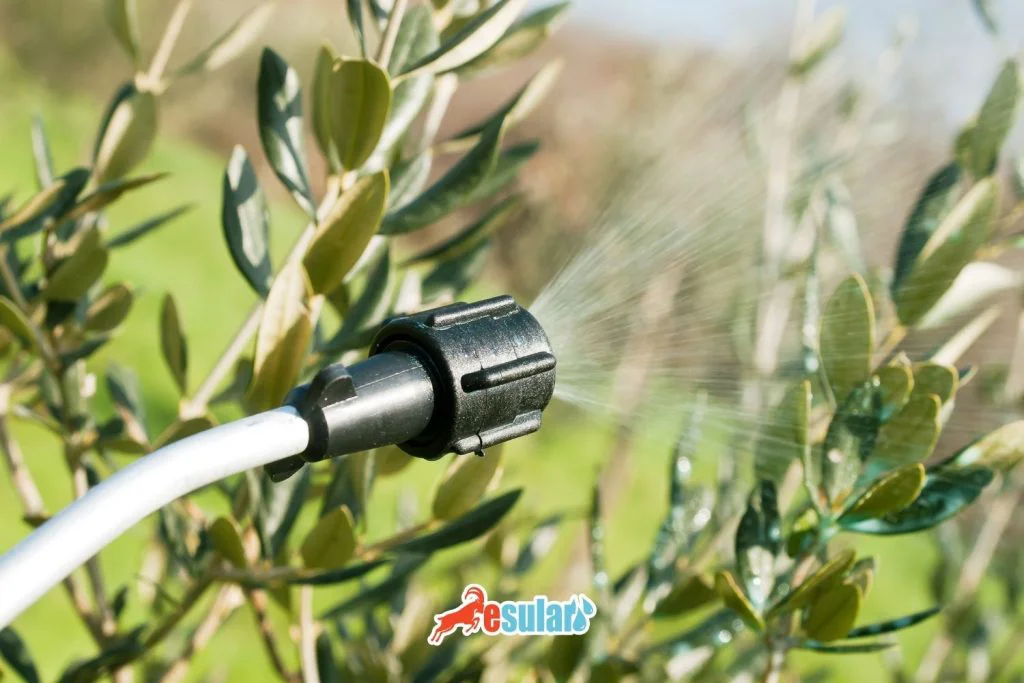
Chemical combat should be applied according to specific schedules in different regions. In the Marmara Region, the first spraying should be done just before the autumn shoots appear, and the second spraying should be done after the flower clusters become distinct, before the flowers open. In the Aegean Region, the first spraying should be done just before the spring shoots appear, and the second spraying should be done after the flower clusters become distinct, before the flowers open. In the Mediterranean Region, the first spraying should be done after the harvest, the second spraying just before the spring shoots appear, and the third spraying after the flower clusters become distinct, before the flowers open.
The pesticides and doses to be used against olive peacock spot disease should be applied according to specific charts. To determine the effect of chemical combat, 200 leaves should be examined randomly from four directions and at eye level from at least five trees, two months after the last spraying and before the leaves fall. To determine the success rate of spraying, counting is performed according to the "0-4 scale". Scale values are applied to Index and Abbott formulas to evaluate the effectiveness of the spraying.
These methods will be effective in taking olive peacock spot disease under control. Both cultural and chemical measures can be used together to combat the disease and protect the health of olive trees.
Yorumlar