
Tüm Yazılar
How to Grow Sugar Beet?
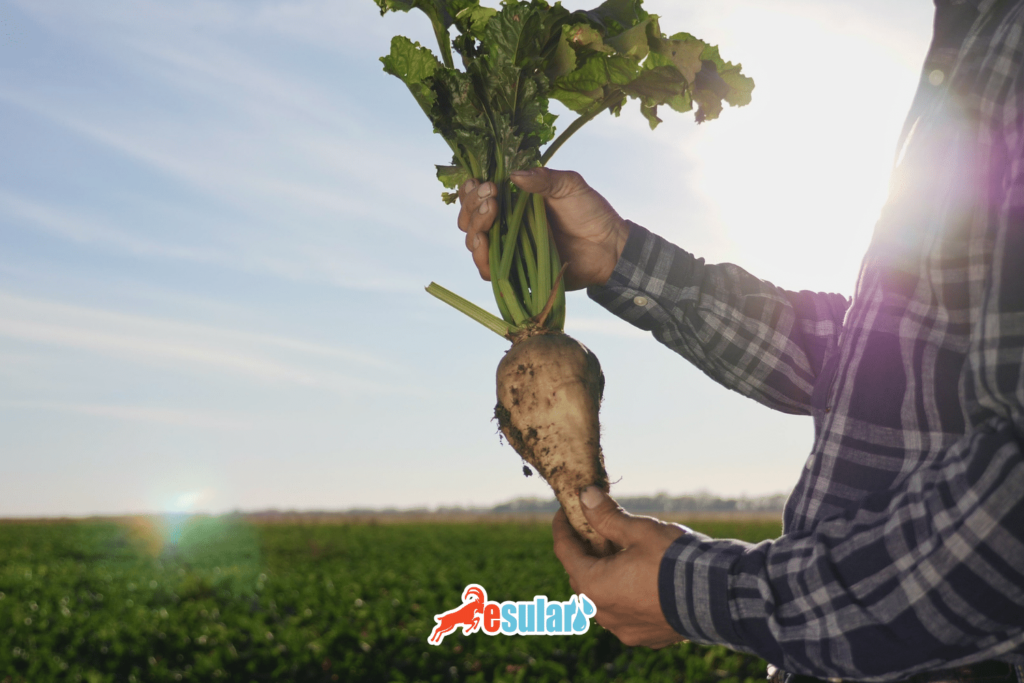
How sugar beet is grown, sugar beet cultivation has strategic importance in agriculture-based industrial production both for our country and the world. Sugar beet constitutes the raw material for many products, primarily sugar.
Sugar beet, as a deep-rooted plant, requires the soil to be deeply loosened. Otherwise, the roots may remain close to the surface, partially branch, cannot grow and develop sufficiently, and the yield and technological quality of the beet decrease. Soil preparation begins by breaking the stubble at a depth of 7-10 cm immediately after the harvest of the previous crop to ensure the biological decomposition of the stalk and to keep late summer and autumn rains in the soil. In heavy-structured soils, to break the compacted plow pan layer, a subsoiler is used in a diamond shape at a depth of 50-60 cm and a width of 90 cm every 4-5 years between July-October.
In sugar beet cultivation, autumn deep plowing must be done for mixing the base fertilizer, destroying perennial weeds, preparing a good seedbed, and ensuring the soil reaches the appropriate tilth. In spring soil preparation, the soil should not be processed deeper than the seed sowing depth to protect the structure in the seedbed and not to disrupt the capillary soil structure.
Where is Sugar Beet Grown
Sugar beet is grown in the provinces of Afyon, Uşak, and Denizli located in the inner-western part of the Aegean region, as well as in the cities of İzmir and Aydın located in the coastal region. In the Central Anatolia region, sugar beet production is carried out in the provinces of Konya, Karaman, Yozgat, Eskişehir, and Ankara. Sugar beet production is also carried out in Antalya and Burdur in the Mediterranean; Bursa in the Marmara region; Elazığ, Kars, and Van in the East; and Kastamonu province in the Western Black Sea.
Sugar Beet Sowing
Turkey is one of the few countries that produce from sugar beet only due to climate conditions. Sugar beet is produced in 55 countries worldwide, and Turkey ranks fifth, right behind Russia, France, the USA, and Germany, with a share of 6.2%. According to FAO 2017 data, the sugar beet sowing area in Turkey is 287,461 ha.
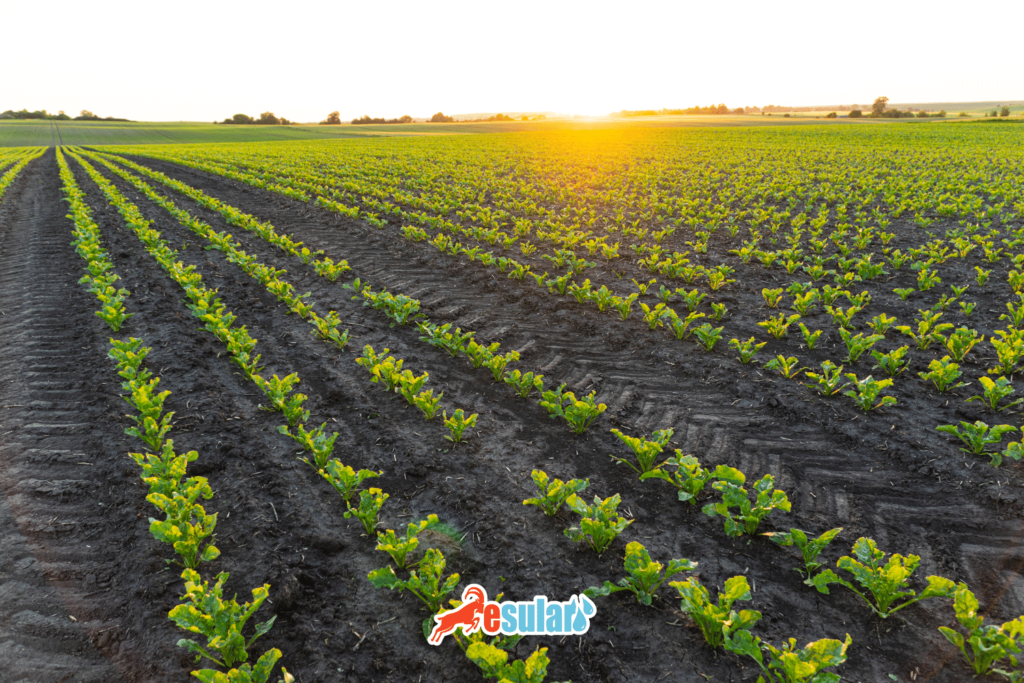
Sugar beet production begins with sowing from the middle of March in Central Anatolia, when the temperature at a depth of 0-5 cm in the soil consistently rises to 5-7 °C and above. Sowing is performed with a seed drill using treated bare or coated genetic monogerm seeds, with a row spacing of 45 cm and a soil depth of 2-4 cm, by adjusting the tractor forward speed to 4-4.5 km/h, and thinning is done at a distance of 22-28 cm on the row.
Sugar Beet Care
After sowing, the surface of the field is left open for approximately 1.5-2 months, and during this time, manual or tractor hoeing is used or herbicide application is performed to prevent the development of weeds. Harvest is carried out with a regular distribution on the rows depending on the location, field, year, and growing conditions, along with high root yield; plant density varies between 7,000-9,000 plants/da.
Sugar Beet Irrigation
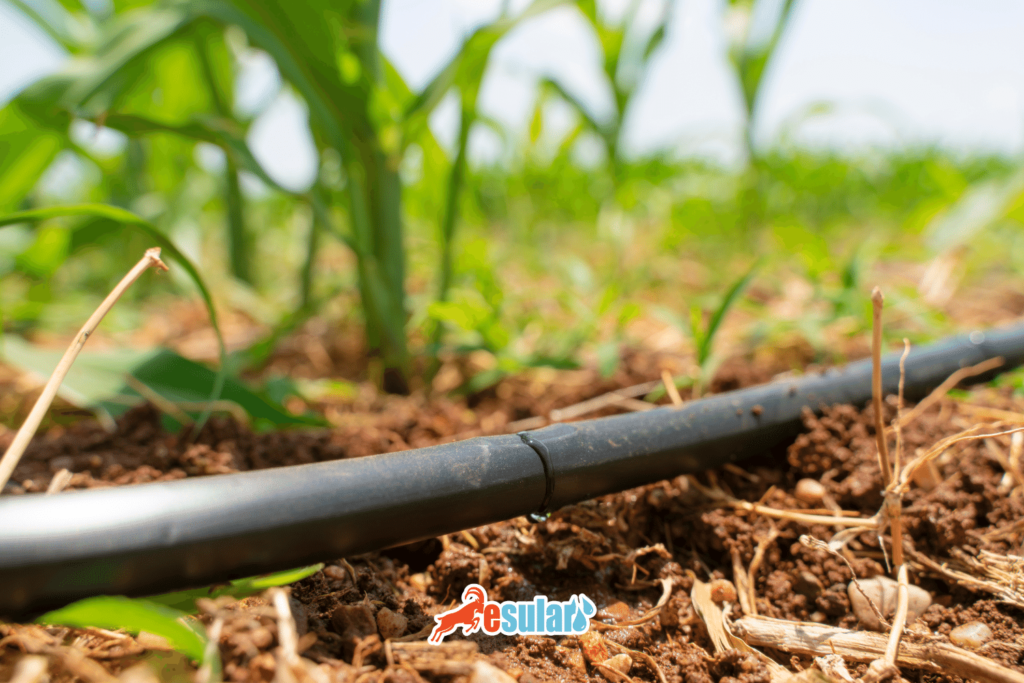
Sugar beet is a plant with high water requirements and can produce high amounts of sugar only under conditions of sufficient rainfall and regular irrigation. Irrigation starts at the earliest 8-10 leaf stage according to the water needs of the plants. In the Central Anatolia region, annual water consumption is a total of 1125 mm, including 60 mm in April, 90 mm in May, 180 mm in June, 270 mm in July, 270 mm in August, 180 mm in September, and 75 mm in October. 300-460 mm of this amount is met by annual precipitation, and 665-825 mm is met by irrigation.
Correct irrigation is the most important element in sugar beet cultivation for high yield and quality. For this, using smart irrigation systems is quite important. You can find detailed information on this topic in our content below:
Sugar Beet Fertilization
Nitrogen (N), phosphorus (P2O5), and potassium (K2O), which are basic nutrients, have great importance in sugar beet nutrition. The field must be supported with these basic nutrients to maintain and increase its productivity. Half to two-thirds of the planned nitrogen is added under the harrow a few days before seedbed preparation, and one-third to half of the remaining nitrogen is applied as top dressing when the plant is at the 4 true-leaf stage. Two-thirds of the phosphorus fertilizer and all of the potassium are spread under the plow before plowing in the autumn. As pure nutrients, 14-18 kg of nitrogen, 11-14 kg of phosphorus, and 4-6 kg of potassium can be given per decare.
Sugar Beet Harvest
In the Central Anatolia region, sugar beet reaches harvest maturity 180-185 days after sowing. After the harvest process, which is done manually or by machine, cleaned beets are delivered to Factory Center or Provincial scales within a determined schedule.
Benefits of Sugar Beet Cultivation
Sugar beet cultivation provides a significant contribution to the Turkish economy. It is possible to summarize these contributions as follows:
- 10% of the fertilizers used in Turkey are used in sugar beet agriculture.
- The oxygen released into the air through photosynthesis by one decare of sugar beet is equivalent to the amount of oxygen consumed by 6 people in one year and produces 3 times more oxygen than 1 decare of forest area. Therefore, sugar beet agriculture, which is an environmentally friendly agricultural industry, stands out as a mandatory activity.
- One decare of sugar beet production provides approximately 10 labor employment. Every year, 350 thousand families are engaged in sugar beet agriculture and provide employment opportunities for 25 thousand people in factories.
- It ranks second among industrial plants in terms of added value provided.
- It provides a 20% yield increase in cereals sown after sugar beet.
- It creates a large market for the transportation sector by creating a transportation volume of approximately 25 million tons per year.
Yorumlar