
Tüm Yazılar
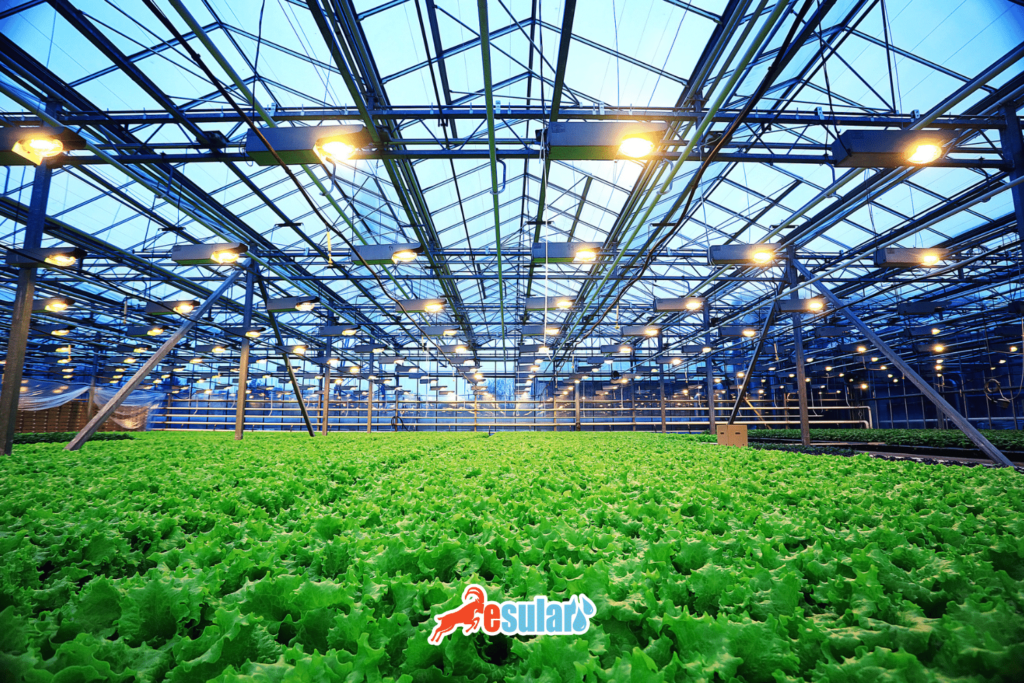

Greenhouse Irrigation Systems
Greenhouse irrigation systems refer to systems designed to provide the water needed by plants in a regular and effective manner. Irrigation, on the other hand, generally refers to delivering water that the plant cannot receive from natural precipitation to the plant root zone through various methods. Irrigation in greenhouses is the process of providing the water required for plant development to the soil through various systems. In order to perform effective irrigation, it is first important to choose the irrigation method suitable for the characteristics of the plant and the soil. Afterwards, it is necessary to determine when, how much, and in what way the water will be given.
What are the Irrigation Systems Used in Greenhouses
Irrigation systems used in greenhouses include various technologies that ensure precise management of the water needed by plants. Systems such as drip irrigation, sprinkler irrigation, and sub-surface irrigation allow for the effective and efficient use of water in greenhouse cultivation, thereby optimizing plant growth and contributing to sustainable agricultural practices. Irrigation systems used in greenhouses:
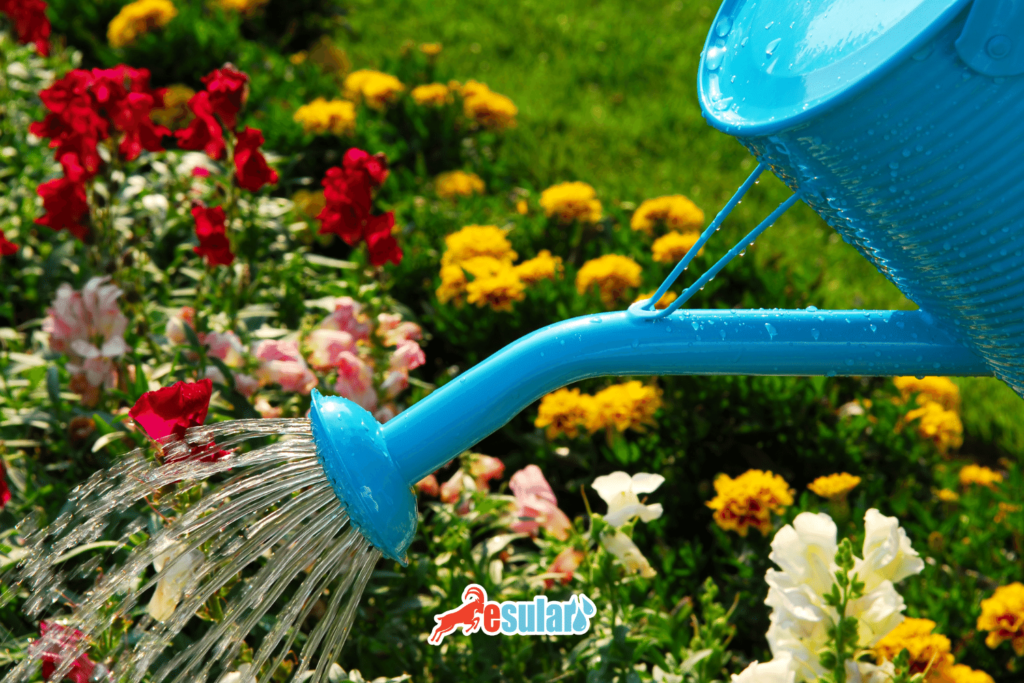
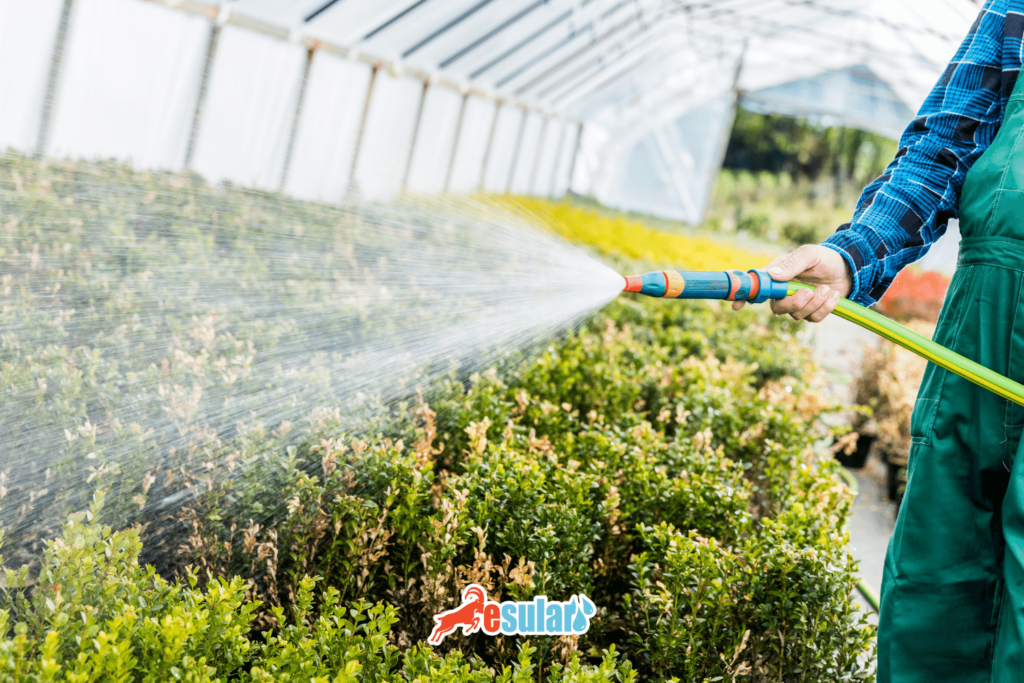
1.Irrigation with Strainer Bucket and Hose: Strainer buckets and hoses with different sprayer types or strainers used in home gardens, greenhouses, and small-scale irrigation needs can be considered as a basic sprinkling tool.
2.Surface Irrigation System: Surface irrigation systems allow for the control of water distribution by the soil surface. In this type of irrigation, the land must be prepared before irrigation. Surface irrigation requires an effective water distribution system. Surface irrigation methods used in greenhouses have the advantage of being able to irrigate a large area quickly. Additionally, they have lower operating costs compared to other methods due to low energy consumption. Surface irrigation systems are generally divided into two categories: basin irrigation and furrow irrigation.
- Basin Irrigation: In the basin irrigation method, the inside of the greenhouse is divided into basin points with dimensions of 1,5×3,0-3,0×5,0-5,0×7,0 m. Basin edges are designed in the form of ridges. Hoeing is required after each irrigation because a crust layer forms due to high water consumption. This method is widely used in the cultivation of spinach, purslane, parsley, dill, and curly lettuce. Additionally, the basin irrigation system is preferred to prevent the leaching of greenhouse soils and to provide an equal amount of water to the soil.
- Furrow Irrigation: Furrow irrigation is more widely used compared to basin irrigation in terms of lower water consumption, less crust surface formation because water flows through furrows between plant rows, and preventing contact of fruits with mud. Furrow irrigation, which is an effective method for irrigating row plants such as tomatoes, onions, and strawberries grown in a greenhouse environment, is also advantageous as it allows for soil tillage after irrigation.
3.Sprinkler Irrigation System: This irrigation system includes a network of pipes with heads that spray water onto the soil surface in the form of fine droplets under a certain pressure. In this irrigation method, water is sprayed from rotating or fixed sprinkler heads under a certain pressure and delivered to the plant or soil surface.
- Overhead Sprinkler System: In this system, laterals and sprinkler heads are positioned to provide an equal water distribution to the entire area to be irrigated. In this way, cut flowers, vegetables, and seedlings on the surface or on growing benches can be easily irrigated. Sprinkler heads can be adjusted as fixed or mobile upon request.
- On-Soil Surface Sprinkling: The water distribution system and sprinkler heads can be designed to be placed at a certain height from the soil surface or directly on the soil surface. The irrigation system on the soil can be arranged as mobile, similar to the overhead sprinkler system. In this system, laterals are hung from the greenhouse roof and move on rails along the greenhouse. Sprinkler heads are connected to the ends of pipes hanging down from above. This system can be used not only for irrigation but also for misting, cooling, liquid fertilization, and pesticide application purposes.
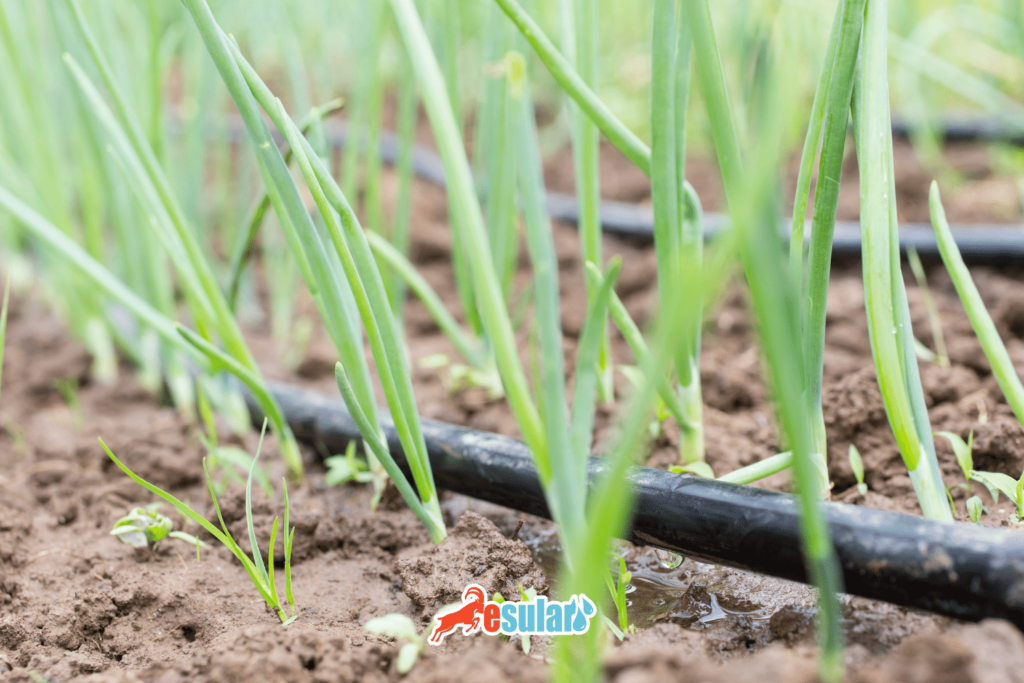
4.Drip Irrigation System: Drip irrigation system is an effective irrigation method in which purified water and fertilizer are delivered to the soil surface by dripping at short intervals under low pressure. In this system, water can be transported to each individual plant through a wide network of pipes. Drippers reduce the pressure in the pipe network using a small orifice or a long flow path, which allows water to flow at a small flow rate of a few liters per hour. The basic elements that make up the drip irrigation system include the pump and power unit, filter systems, pipe systems, and drippers. Various types of drippers have been developed for this method. When growing on benches or beds, drippers placed on the lateral pipe can be used. In pot cultivation, drippers called “octopus” or “capillary tube” are preferred.
5.Irrigation System Made with Perforated Pipes: In this irrigation method, water is provided to the plants through holes opened at intervals of approximately 7 cm on both sides of polyethylene pipes. One end of the pipe used is closed with a blind plug and the other end is connected to the main distribution pipe. When water is supplied to the system, the water in the pipes, which swell and take a cylindrical form under the effect of pressure, comes out of the holes in small jets. This system is quite economical, but requires more attention in application.
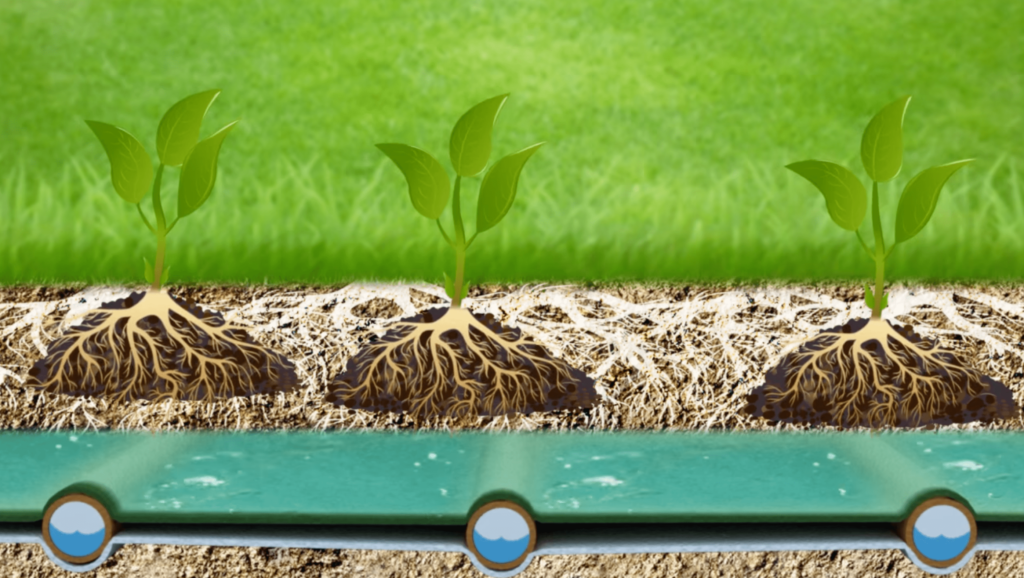
6.Sub-surface Irrigation System (Seepage Irrigation): In this method, water is provided directly to the plant root zone through perforated pipes buried underground. The system prevents the formation of a crust layer because there is no water on the soil surface that could damage the plants. Additionally, with this method, evaporation from the soil surface is minimized and humidity saturation inside the greenhouse is significantly reduced.
7.Sand Culture Irrigation Systems: In addition to the surface and pressurized irrigation systems widely used in irrigating greenhouse plants, sand culture irrigation systems and capillary tube irrigation systems, which are frequently preferred in greenhouses where cut flower cultivation is performed, are based on capillarity principles. Sand culture irrigation systems are based on the capillary rise of water through the holes under a moist sand layer on which the production pots in the greenhouses are located. It is important for the sand used in this system to be coarse-grained so that it can be wetted homogeneously. Humidification of the sand is carried out through pipes passed under the growing benches or through the sand culture.
8.Capillary Irrigation System: In this irrigation method carried out using very small diameter capillary tubes, water delivered to laterals under low pressure is based on the principle of reaching the plants in pots by rising in the capillary tubes connected to these laterals. While the diameters of the laterals used in these irrigation systems can vary between 25-35 mm, the diameters of the capillary tubes providing water delivery to the pots can vary between 1.25-1.50 mm.
Most Efficient Greenhouse Irrigation Systems
The most efficient greenhouse irrigation systems include methods that optimally meet the water needs of greenhouse plants and minimize water waste. The two basic efficient greenhouse irrigation systems are:
Drip Irrigation System: In this system, water is given directly to the root zones of the plants in the form of droplets. This is an efficient irrigation method where water reaches the plant directly and evaporation loss is reduced.
Sprinkler Irrigation System: It is a system in which water sprayed in the form of fine droplets under a certain pressure inside the greenhouse is distributed to the soil surface. In this system, the equal distribution of water and the homogeneous irrigation of the plants are ensured.
These irrigation systems form an important part of modern greenhouse practices aimed at increasing plant health and product yield by using water more efficiently. Additionally, each of the greenhouse irrigation systems mentioned above has its own conveniences and difficulties.
Advantages of Greenhouse Automation Systems
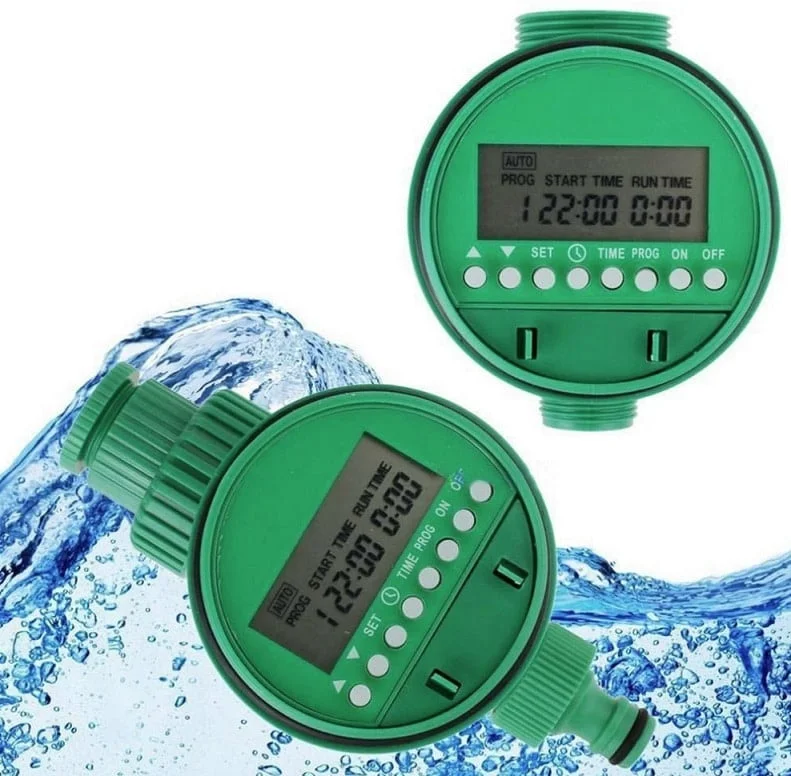
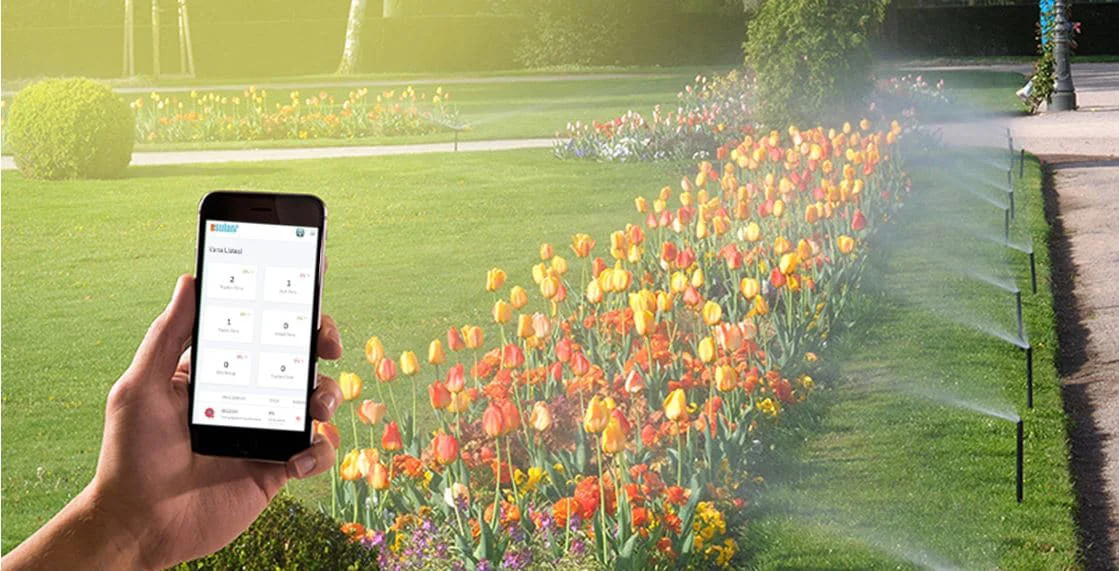
Automatic greenhouse irrigation systems are considered an important investment, especially in terms of efficient use of resources. Among the advantages of automatic greenhouse irrigation systems, the most important factor is that it provides water savings. The use of low-pressure versions offers a more sustainable solution by reducing energy consumption. In addition to savings, automatic irrigation systems can significantly increase yield, sometimes up to 50%. In cases where manual irrigation always results in unequal irrigation outcomes, automatic systems overcome this challenge by providing homogeneous irrigation. Automatic irrigation systems involve a model where the pump operates for a few hours a day with low energy consumption. The irrigation time and duration are predetermined, and irrigation occurs automatically. The programming feature provides farmers with flexibility and control. Farmers can control and direct the modern greenhouse irrigation system through smartphones or tablets.
With Esular's smart irrigation technology that monitors, learns, and manages, you can see not only irrigation but also many data such as fertilization, window control, climate control, greenhouse humidity and temperature data instantly in your greenhouses. Moreover, you can control all of these systems remotely. The best part is that our systems are completely wireless and have long battery life. For more detailed information, do not forget to take a look at our content below and contact us!
Yorumlar