
Tüm Yazılar
Surface and Subsurface Drip Irrigation
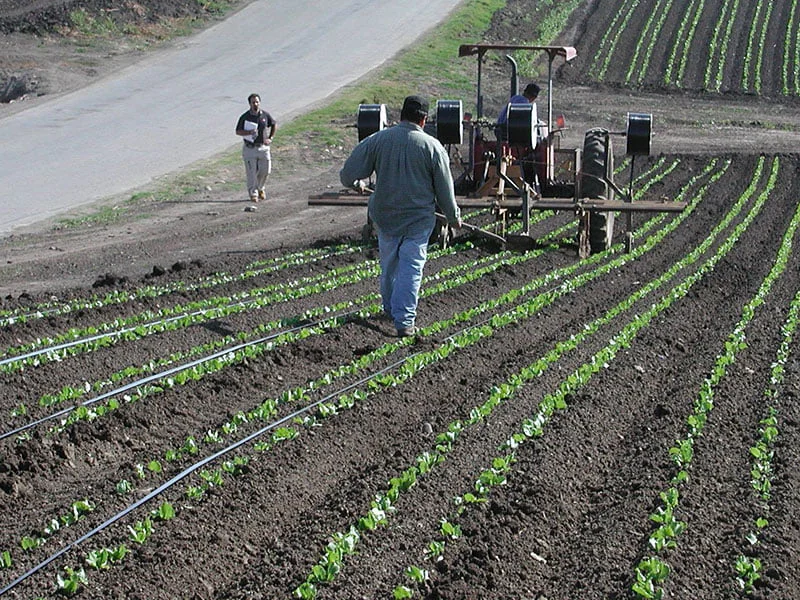
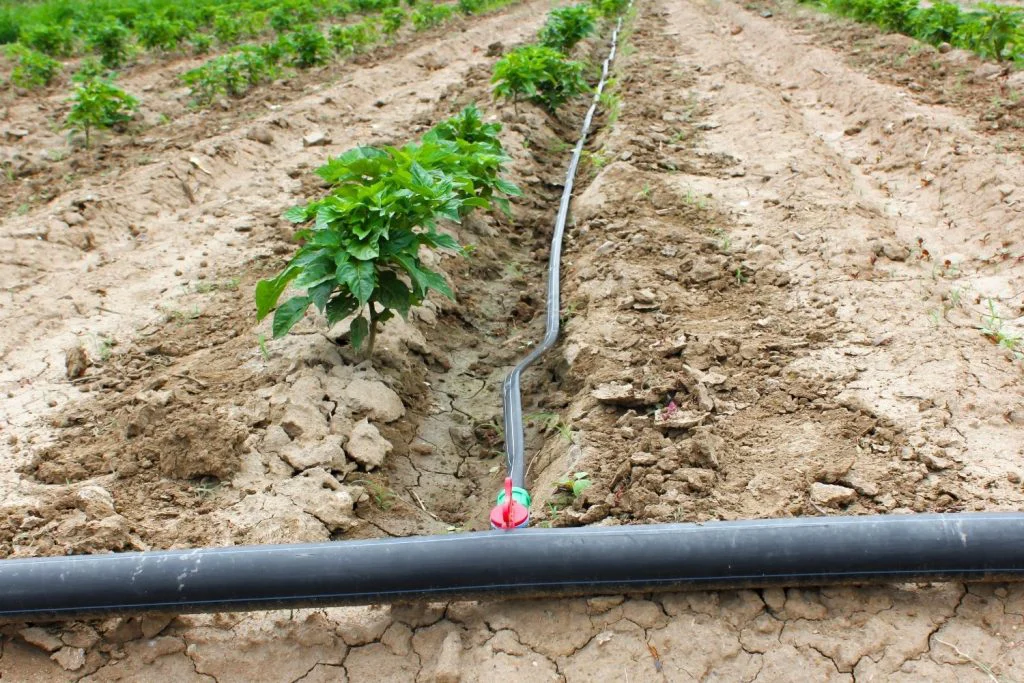
Surface Drip Irrigation: It is the most efficient water and nutrient distribution system for growing plants. It delivers water and nutrients directly to the plant's root zone at the right time through drip pipes laid on the soil surface. Thus, it ensures that each plant receives the water and nutrients it needs at the right time and helps plants grow at an optimum level. Thanks to drip irrigation, farmers can achieve higher yields while saving on water, fertilizers, energy, and even plant protection products.
Subsurface Drip Irrigation: Among pressurized irrigation systems, it is the irrigation method with the least water and energy loss. From the point where water is taken from the source and passed through a suitable filter, the entire system, including the main pipe, parcel valves, manifold, subsurface drip irrigation pipe, and drainage manifold, is completely fixed underground.
Advantages of Surface Drip Irrigation
- The initial installation cost is lower compared to the subsurface drip system.
- Pipe laying is easier on sloping terrains.
- Detection of malfunctions in the system is easier, and the cost of repairing malfunctions is lower.
- One pipe is sufficient at the head of the line.
- When laying pipes underground, the soil needs to be ripped, which can damage the roots and capillary roots of plants.
Disadvantages of Surface Drip Irrigation
- All kinds of cultural and harvest practices in the field are more difficult.
- Since the system is on the surface, maintenance requirements are higher.
- Pipes can be damaged by the sun and other factors such as birds.
- There are labor issues such as collection and installation.
- Water efficiency is lower compared to subsurface drip systems.
- It can be damaged by calcification and algae formation that may occur at the points where the emitter delivers water.
- In this system, since the pipes are on the soil surface, they create visual pollution in green area facilities.
Advantages of Subsurface Drip Irrigation
- It is not affected by UV rays, changes in air temperature, and rodents on the soil surface.
- Underground pipes are not affected by calcification and algae formation that may occur at the points where the emitter delivers water due to heat, light, and evaporation.
- Although it varies depending on the brand of the drip pipe, clogging that can be caused by roots is generally prevented thanks to a special substance regularly secreted from the emitters throughout a 10-year lifespan.
- Since there will be no pipes on the soil surface in this system, cultural practices in the field are carried out more easily, and the irrigation system is not damaged during the entry of machinery such as tractors or harvesting machines into the field.
- Since the subsurface irrigation system is generally buried below the tillage depth, the maintenance requirement is at a minimum level. It does not need to be removed for tillage after harvest and laid again next season. This reduces labor. There is no risk of pipes being damaged by animals or human error, and there is no possibility of theft.
- Problems such as mud or puddles that occur during irrigation are not seen in subsurface irrigation systems.
- In this system, since the pipes are underground, no visual pollution occurs on the soil surface.
- Thanks to the water and plant nutrients delivered directly to the root zone of the plant, plant stress is reduced, healthier development is ensured, and thus yield increases.
- Thanks to the subsurface irrigation system, the fertilizer given to the plant goes directly to the plant root, loss is prevented, and thus insufficient fertilization of the plant is avoided.
Disadvantages of Subsurface Drip Irrigation
- The initial installation cost is high. The pipes used are more expensive than those used in surface drip irrigation.
- There is also a cost for burying these pipes underground.
- Recirculation pipes added to the end of the line also affect the cost.
- Since it is not visible how much water is being delivered during irrigation, unnecessary irrigation may occur.
- It is very difficult to repair malfunctions in the system.
- In a newly established orchard, since the root systems of the trees are not yet developed and the pipes cannot be moved every year, it cannot be used.
- It is very difficult to bury pipes on sloping terrain. Rows get mixed up, and due to the slope, pipes cannot be kept at the same distance.
The Best Irrigation Solution for Your Field: Professional Drip Irrigation Systems From Us!
Yorumlar