
Soil Water Holding Capacity Guide: Field Capacity and Wilting Point Values
Efficient irrigation management starts with recognizing the physical properties of the soil. Every soil type has different water holding capacity, storage, and plant delivery capabilities. As Esular, we have compiled the basic data we use in our precision agriculture technologies and the most critical parameters of soil physics for you in this article.
Whether you have sandy land or clayey; knowing your soil's Field Capacity (FC) and Wilting Point (WP) values is the key to how much and when you should irrigate.
Why is Soil Water Holding Capacity Important?
The water holding capacity of the soil shows how much water can be stored in the root zone of the plant. In correct irrigation planning:
- Avoiding over-irrigation
- Preventing plant stress
- Ensuring yield increase
- Saving water
is only possible by correctly analyzing the physical properties of the soil.
Every soil type behaves differently with water: Sandy soils pass water rapidly, while clayey soils hold more water, but the amount of water available to the plant may be limited. To understand these differences, let's first look at some basic concepts.
Basic Concepts: What Should We Know for Irrigation?
The following terms are the most critical definitions used in irrigation management:
Bulk Density
It is the unit volume weight of dry soil whose natural structure has not been disturbed. It gives an idea about the compaction and porosity of the soil.
Field Capacity (FC)
It is the maximum amount of water the soil can hold against gravity. It shows the amount of water after the free water has drained once the soil is saturated.
Wilting Point (WP)
It is the point where the plant cannot reach this water even if water is still present in the soil. The plant begins to wilt permanently due to water loss.
Available Water (Usable Water)
The actual water reserve the plant can use:
Field Capacity – Wilting Point
Weight Percentage and Bulk Density According to Soil Texture
As the soil texture changes, the water holding capacity also changes. The following table shows the water holding percentages of different soil types on a weight basis (Pw):
| Soil texture | Bulk density, g/cm^3 | Field capacity, Pw (%) | Wilting point, Pw (%) | Water holding capacity, Pw (%) |
|---|---|---|---|---|
|
Sand |
1,67 |
7,5 |
3,2 |
4,3 |
|
Loamy sand |
1,67 |
10,6 |
4,3 |
6,3 |
|
Sandy loam |
1,62 |
14,0 |
5,7 |
8,3 |
|
Fine sandy loam |
1,57 |
18,6 |
7,9 |
10,7 |
|
Loam |
1,52 |
22,9 |
10,0 |
12,9 |
|
Sandy clay loam |
1,47 |
27,4 |
14,2 |
13,2 |
|
Silt loam |
1,47 |
26,9 |
12,3 |
14,6 |
|
Clay loam |
1,47 |
26,6 |
15,9 |
10,7 |
|
Silty clay loam |
1,42 |
28,0 |
14,1 |
13,9 |
|
Silty clay |
1,37 |
28,1 |
18,6 |
9,5 |
|
Clay |
1,32 |
29,0 |
20,6 |
8,4 |
As can be seen:
- Silt Loam has the highest available water capacity with 14,6%.
- Clay soils hold a lot of water, but the water they can offer to the plant is limited.
Therefore, correct determination of the field texture is of critical importance for irrigation.
Volumetric Water Content
The most commonly used parameter in soil moisture sensors and irrigation planning is the volumetric moisture value (Pv). This table is an important guide for determining target moisture limits in irrigation timing.
| Soil texture | Field capacity, Pv (%) | Wilting point, Pv(%) | Water holding capacity, Pv (%) |
|---|---|---|---|
|
Sand |
12,5 |
5,3 |
7,2 |
|
Loamy sand |
17,7 |
7,2 |
10,5 |
|
Sandy loam |
22,7 |
9,2 |
13,5 |
|
Fine sandy loam |
29,2 |
12,3 |
16,9 |
|
Loam |
34,8 |
15,2 |
19,6 |
|
Sandy clay loam |
40,3 |
20,9 |
19,4 |
|
Silt loam |
39,6 |
18,1 |
21,5 |
|
Clay loam |
39,1 |
23,4 |
15,7 |
|
Silty clay loam |
39,7 |
20,0 |
19,7 |
|
Silty clay |
38,6 |
25,4 |
13,2 |
|
Clay |
38,3 |
27,2 |
11,1 |
Important Information
Sandy soils: should be irrigated in small amounts and frequently
Loamy soils: should be irrigated infrequently and effectively
This difference stems directly from the amount of water they can store.
Summary Moisture Ranges According to Soil Texture
The following range values can be used for general planning:
| Soil texture | Field capacity* Pv(%) | Wilting point* Pv(%) | Water holding capacity Pv(%) | Water holding capacity dk (mm/m) |
|---|---|---|---|---|
|
Sand |
9
(6-12) |
4
(2-6) |
5 |
50 |
|
Sandy loam |
14
(10-18) |
6
(4-8) |
8 |
80 |
|
Loam |
22
(18-26) |
10
(8-12) |
12 |
120 |
|
Clay loam |
27
(23-31) |
13
(11-15) |
14 |
140 |
|
Silty clay |
31
(27-35) |
15
(13-17) |
16 |
160 |
|
Clay |
35
(31-39) |
17
(15-19) |
18 |
180 |
* Values in parentheses indicate approximate lower and upper limits.
Conclusion: Accurate Data = Accurate Irrigation
Understanding the water holding capacity of the soil is the basis of smart irrigation planning.
With the right measurement technologies:
- Water usage is optimized,
- Plant health improves,
- Yield increases,
- Resources are protected.
Esular smart irrigation systems analyze your soil's real-time moisture data and offer you a powerful guide for accurate irrigation decisions.
If you would like to receive more information about the soil structure of your land or examine smart irrigation systems, you can contact us.
Irrigate Your Soil by Measuring, Not by Guessing
Every soil type holds water differently. To make correct irrigation decisions, it is necessary to measure in real-time the field capacity and wilting point values.
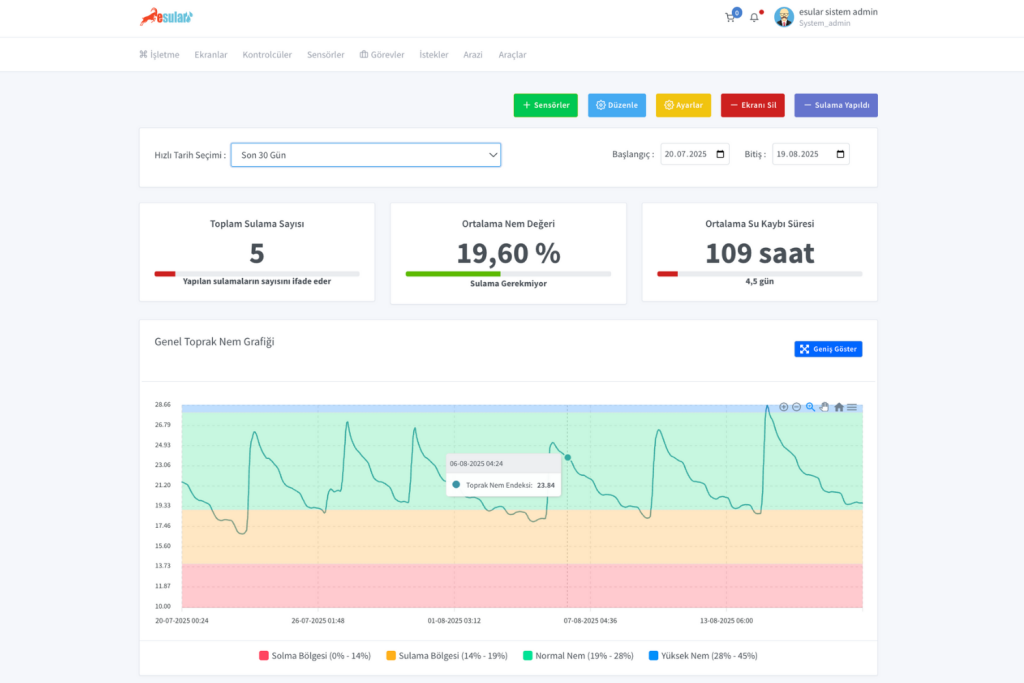
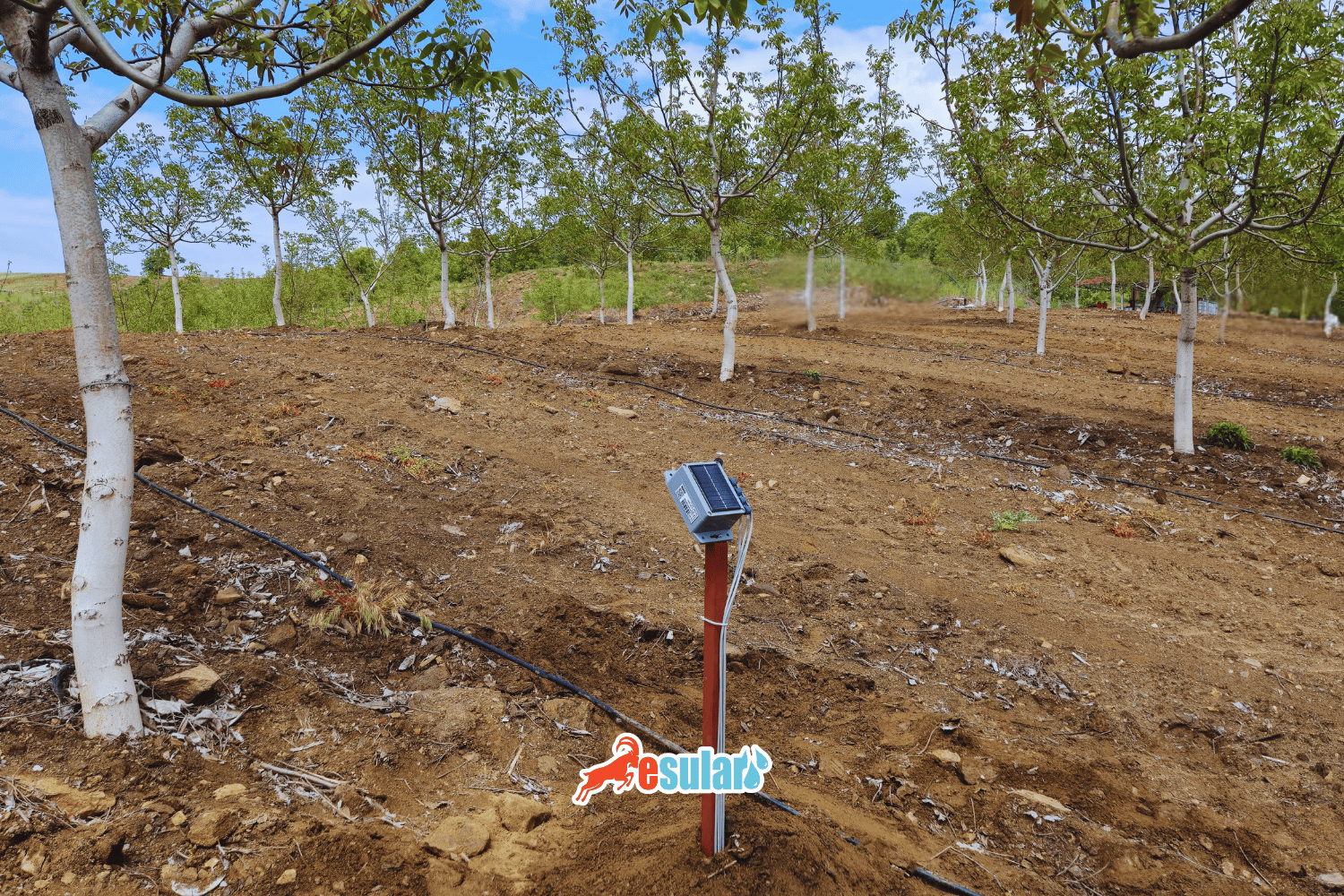
Esular soil moisture sensors offer you the opportunity to irrigate at the right time and in the right amount by continuously monitoring your soil's volumetric moisture values.

Yorumlar