The June bug is an insect species known for its plant-eating habits. It takes its name from emerging from the soil in late spring or early summer. The size of females reaches up to 40 mm. Their antennae are small and the tips are knob-shaped. The male's body length is around 28-30 mm and its antennae are large and fan-shaped. Another distinguishing feature of male June Bugs is that their antennae consist of 7 segments.
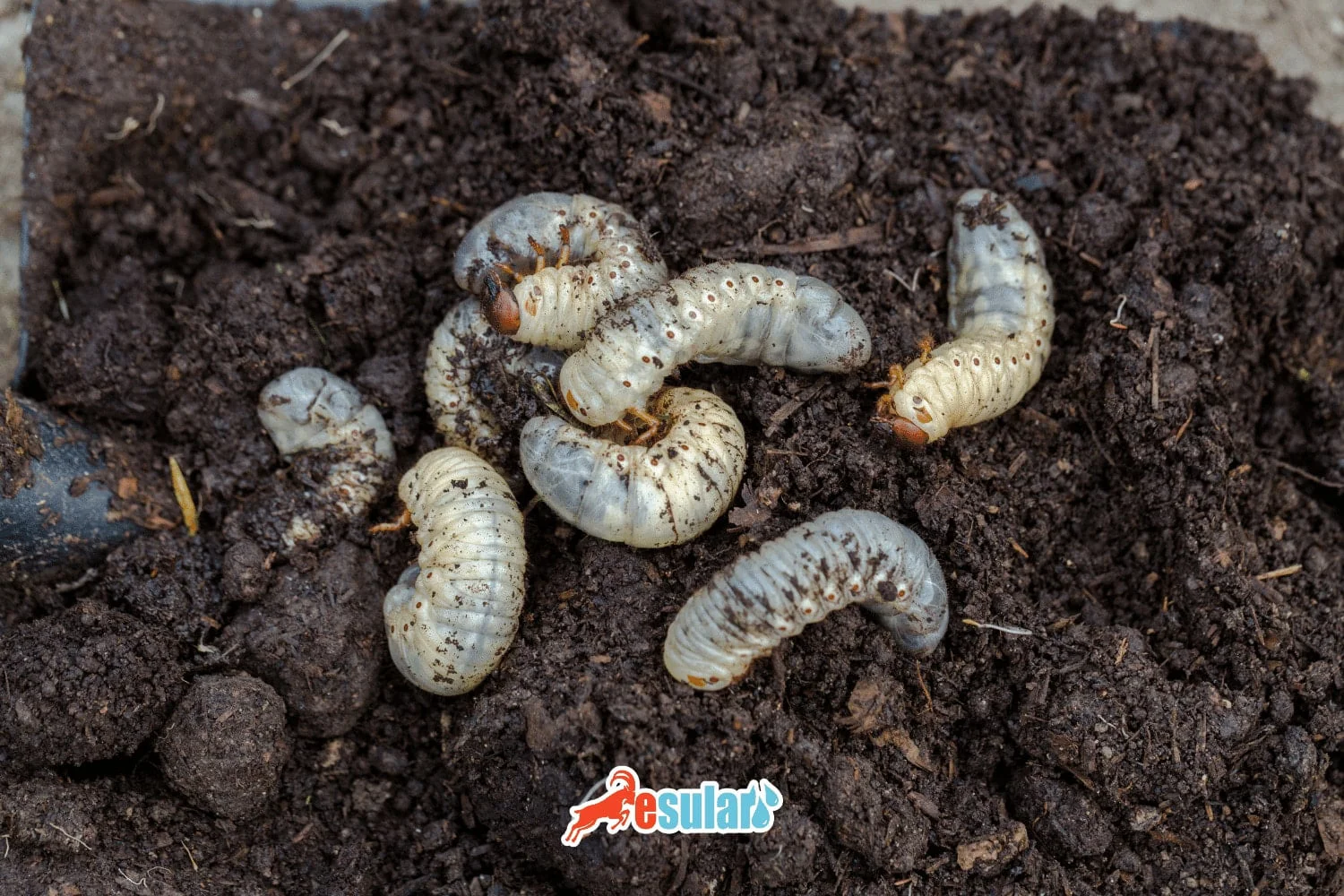
Females bury their eggs just below the soil surface. Larvae hatch within 3 to 4 weeks and feed on grass and plant roots for up to three years. Larvae are c-shaped, cream-colored, and red-headed. They transform into pupae in spring and early summer, and within 3 weeks, these pupae turn into adult June bugs.
Damages of the June Bug
The period when June bugs are most harmful is their larval stage. During this period, care should be taken in orchards and vineyards. Especially by gnawing on newly planted vine cuttings and the underground parts of previously planted vines, they can cause permanent damage. Gnawed cuttings do not take root, and as a result, the damaged vines dry up over time.
Control Methods for the June Bug
Chemical control against this pest species usually occurs through pesticides and insecticides. However, chemical methods are not recommended for the control of this pest. Cultural measures can be listed as follows;
First, weeds in the area where the pests are located are cleared. In this way, the area where the larvae are located becomes vulnerable to sunlight and predators.
June Bugs prefer grassy areas for laying eggs and spread in these areas. For this reason, the soil can be cultivated and left fallow.
During periods when larvae are active (in spring and summer months), deep plowing is performed to ensure the death of larvae and eggs.
Resistant plants against the pest are selected during planting.


Yorumlar