
How to Increase Yield in Viticulture?
Viticulture is a long-term branch of agriculture that requires correct knowledge, experience, and precision. Irrigation is one of the most critical factors directly affecting grape quality and yield. Unconscious irrigation carried out with traditional methods can lead to the waste of water resources, as well as negatively affect the development of the vine, reducing both yield and product quality. So, how can irrigation be optimized to increase yield in viticulture? The answer lies in technology: smart irrigation with soil moisture sensors.
In modern viticulture, irrigation strategies known as “controlled water stress” play a key role in increasing grape quality. At the core of this strategy lies providing the vine with exactly the amount of water it needs at the exact time it needs it. At this point, soil moisture sensors become the greatest assistant to vineyard managers.
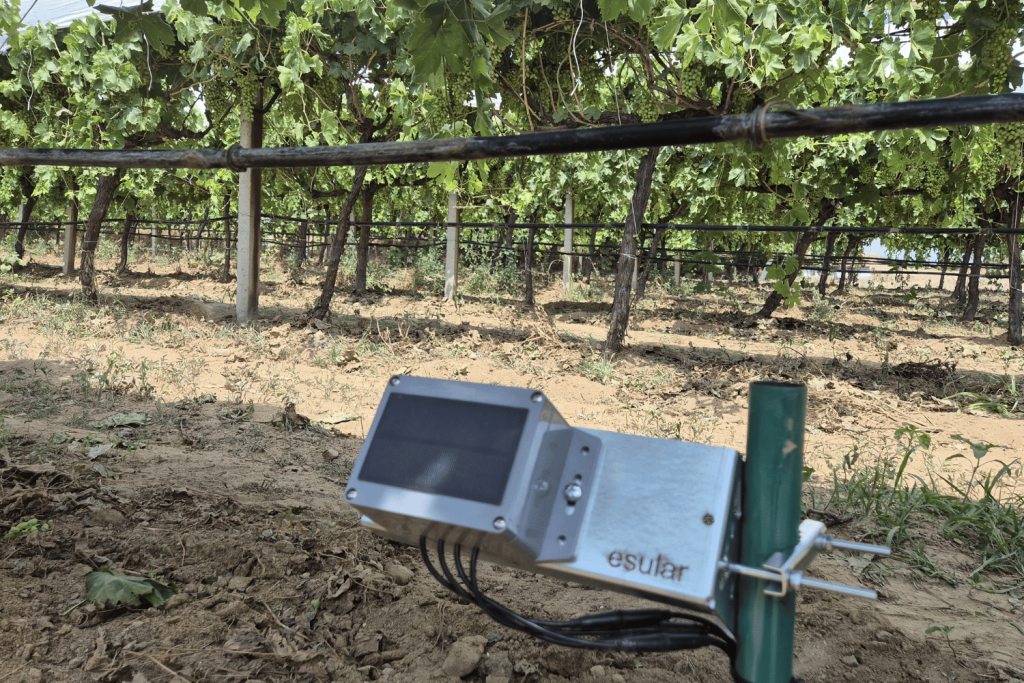
What is a Soil Moisture Sensor and Why is it Vital in Viticulture?
A soil moisture sensor is a technological device that precisely measures the amount of water at different depths of the soil. These sensors are placed vertically in the soil and instantly monitor the moisture levels in different layers where the vine roots are located. The data obtained is transmitted to a control panel or directly to the farmer's mobile device via wireless technologies. You can find detailed information about what a soil moisture sensor is and how it works in this content.
Concrete advantages of using soil moisture sensors in viticulture include:
- Accurate Irrigation Timing: By clearly determining when the vine needs water, it prevents early or late irrigation.
- Optimum Water Amount: By measuring the current moisture in the soil, it ensures that only the missing water is given to the plant and prevents over-irrigation. This situation, in addition to water savings, also reduces the risk of root rot and fungal diseases that excessive water can cause.
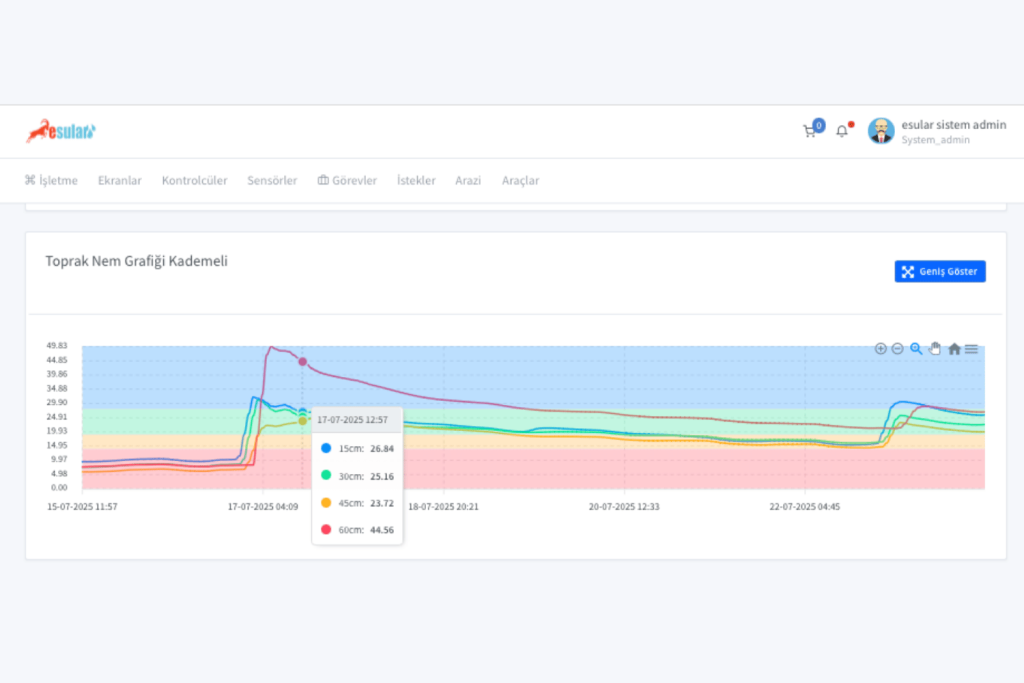
- Monitoring Root Development: Thanks to measurements at different depths, it can be checked whether the irrigation water reaches the root zone. This encourages the development of a healthy and deep root system.
- Yield and Quality Increase: By creating controlled water stress, the plant is ensured to direct its energy towards the fruit instead of leaf and shoot development. This positively affects the sugar content (brix), color, and aroma of the grape berries.
- Cost Savings: It reduces operating costs by significantly reducing the amount of water and energy spent on irrigation.
How to Perform Smart Irrigation with Soil Moisture Sensor?
Data from soil moisture sensors form the brain of smart irrigation systems. These systems can automatically open and close irrigation valves by analyzing sensor data. The vineyard manager can create irrigation scenarios based on determined threshold values. For example, when the moisture rate at a certain depth of the soil falls below the critical level, the system can automatically start irrigation. Here are the smart irrigation steps in practice:
- Strategic Sensor Positioning: Sensors should be placed at strategic points to represent the general structure of the vineyard, taking into account different soil types and slopes.
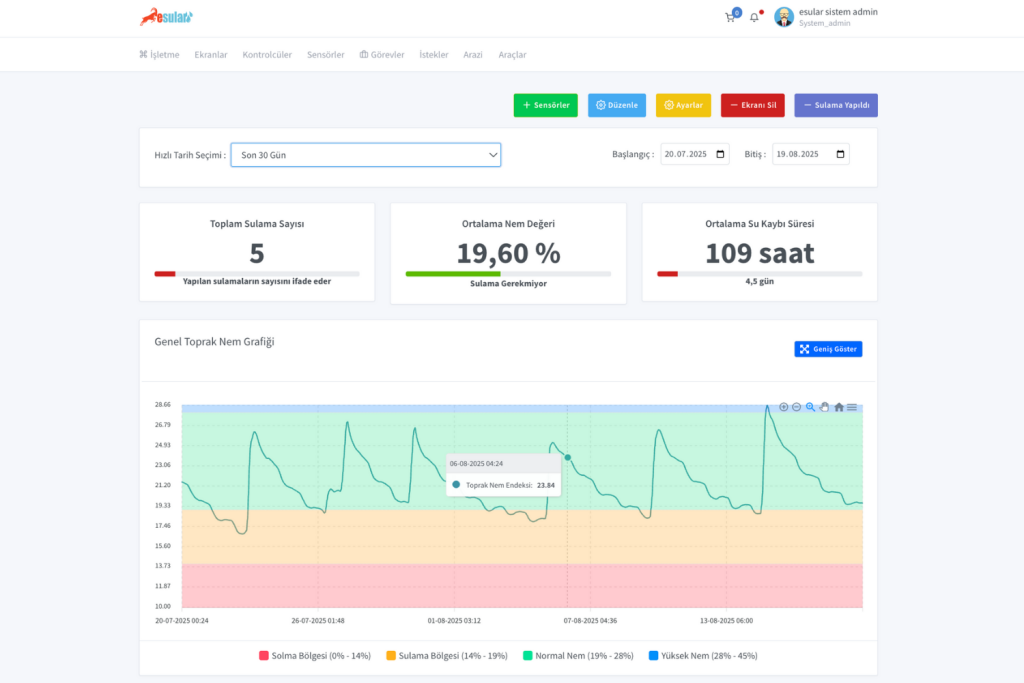
- Determination of Threshold Values: Considering the water needs of the grape variety, the development period (flowering, veraison, pre-harvest, etc.), and the soil structure, the moisture levels at which irrigation will start and stop are determined. This forms the basis of smart irrigation automation. At this point, you can easily calculate information such as the water holding capacity and wilting point of your soil using our tool within the Esular application, utilizing soil analysis data. You can determine the minimum, maximum, and irrigation zones of soil moisture sensors according to the values you calculated. If you have the Esular full system, you can perform your irrigation processes in a fully automatic and smart way according to the soil moisture sensor values.
- Instant Data Tracking and Analysis: Soil moisture levels are monitored instantly via a mobile application or web interface. Graphical data makes it easier to understand the movement of water in the soil and the plant's water use.
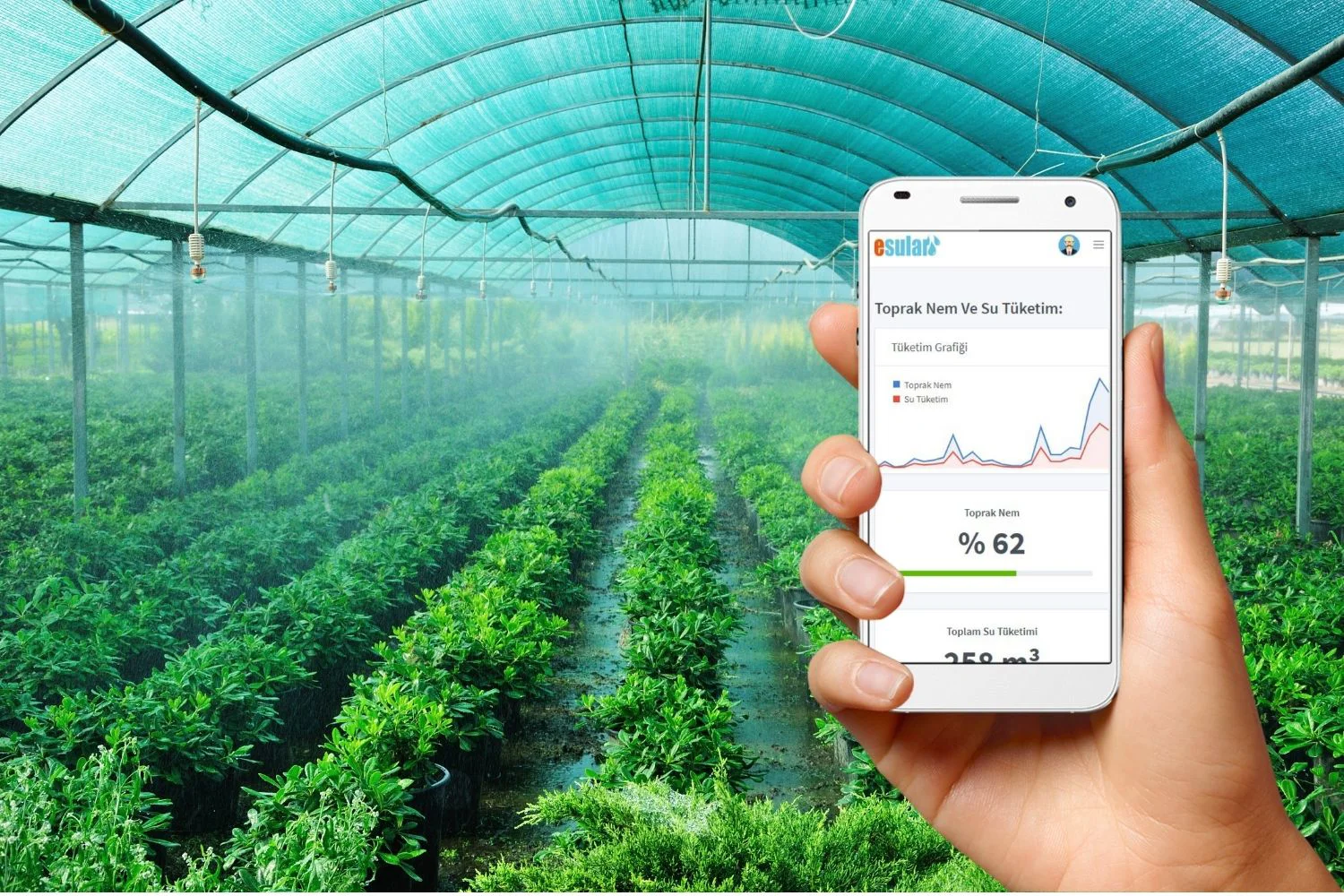
- Automation and Remote Control: Irrigation programs can be set to run automatically according to the collected data. Additionally, there is the possibility of manual intervention in the irrigation system from anywhere there is internet.
In conclusion, in order to achieve high yield and quality targets in viticulture, it is inevitable to abandon traditional irrigation habits and benefit from the opportunities offered by technology. Soil moisture sensors and smart irrigation systems working integrated with them offer a sustainable production model by using water efficiently. This technology both ensures acting with environmental responsibility and maximizes the economic potential of your vineyard.


Yorumlar