
Greenhouse Climate Control Systems: The Key to Modern Greenhouse Farming
In modern agriculture, greenhouse management offers the opportunity for uninterrupted production throughout the year thanks to controlled environmental conditions. However, at the basis of successful greenhouse management lies precise climate control. Greenhouse climate control systems protect plant health and maximize yield by automatically managing critical parameters such as temperature, humidity, CO2 level, and ventilation.
In this guide, we will examine in detail the working principles, components, advantages of greenhouse climate control systems, and Esular‘s smart greenhouse solutions.
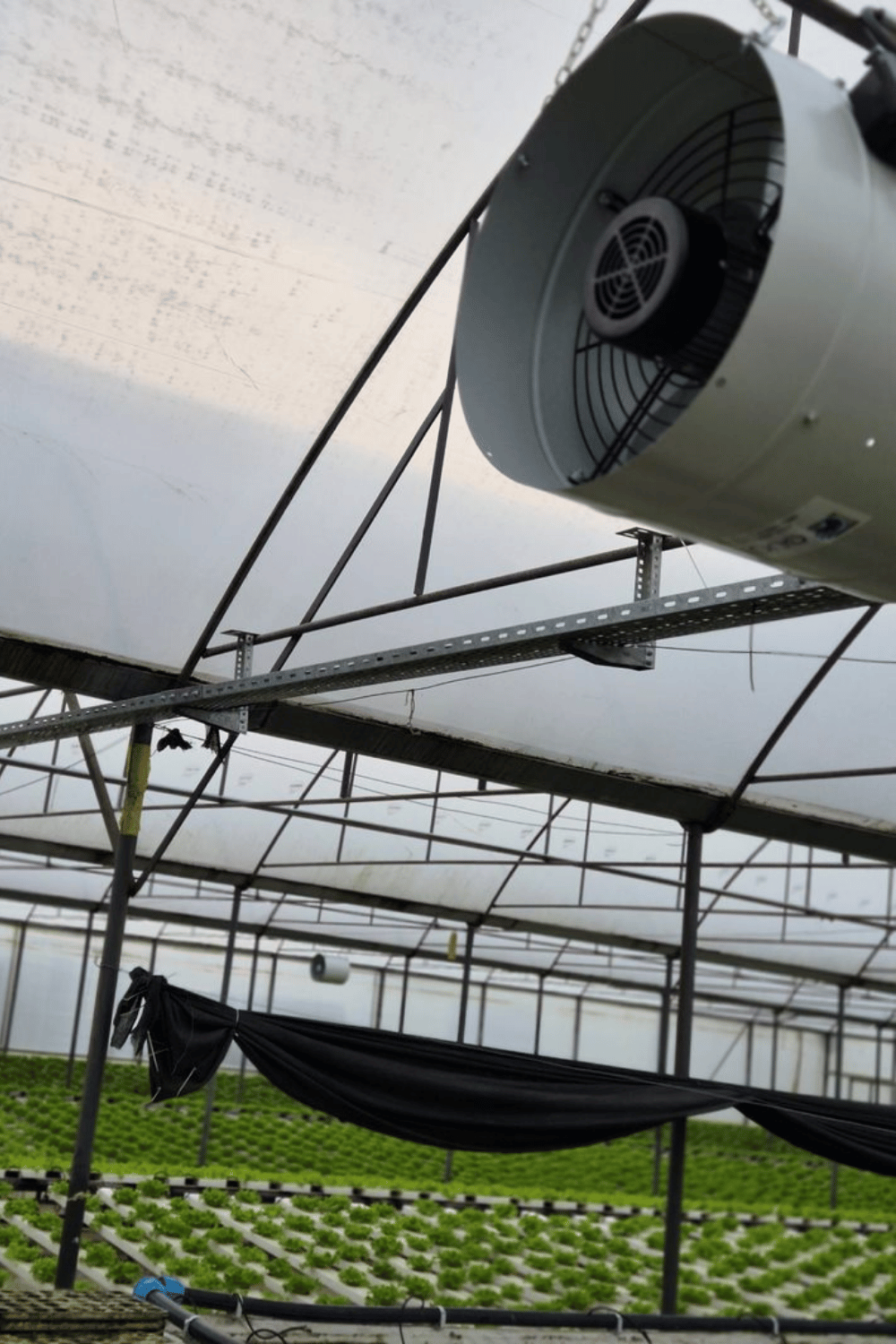
What is a Greenhouse Climate Control System?
A greenhouse climate control system is an integrated technology that controls temperature, humidity, carbon dioxide level, and air circulation to provide optimum growth conditions for plants grown in the greenhouse. These systems continuously monitor greenhouse conditions through sensors and perform automatic interventions based on determined parameters.
Basic Working Principle: Multiple sensors placed inside the greenhouse collect real-time environmental data. The central control unit analyzes this data and automatically activates or deactivates climate control equipment such as windows, fans, heaters, or fogging systems when there is a deviation from ideal values.
Modern greenhouse climate control systems can also take proactive decisions by considering weather forecasts using artificial intelligence-supported algorithms. For example, if it is predicted that the temperature will drop at night, the system can start heating in advance.
Basic Components of a Greenhouse Climate Control System
An effective greenhouse climate control system consists of various components working in harmony with each other:
1. Sensor Systems
Temperature and Humidity Sensors: Measures temperature and humidity levels at different points inside the greenhouse. Multi-point measurement helps ensure homogeneous conditions in all areas of the greenhouse.
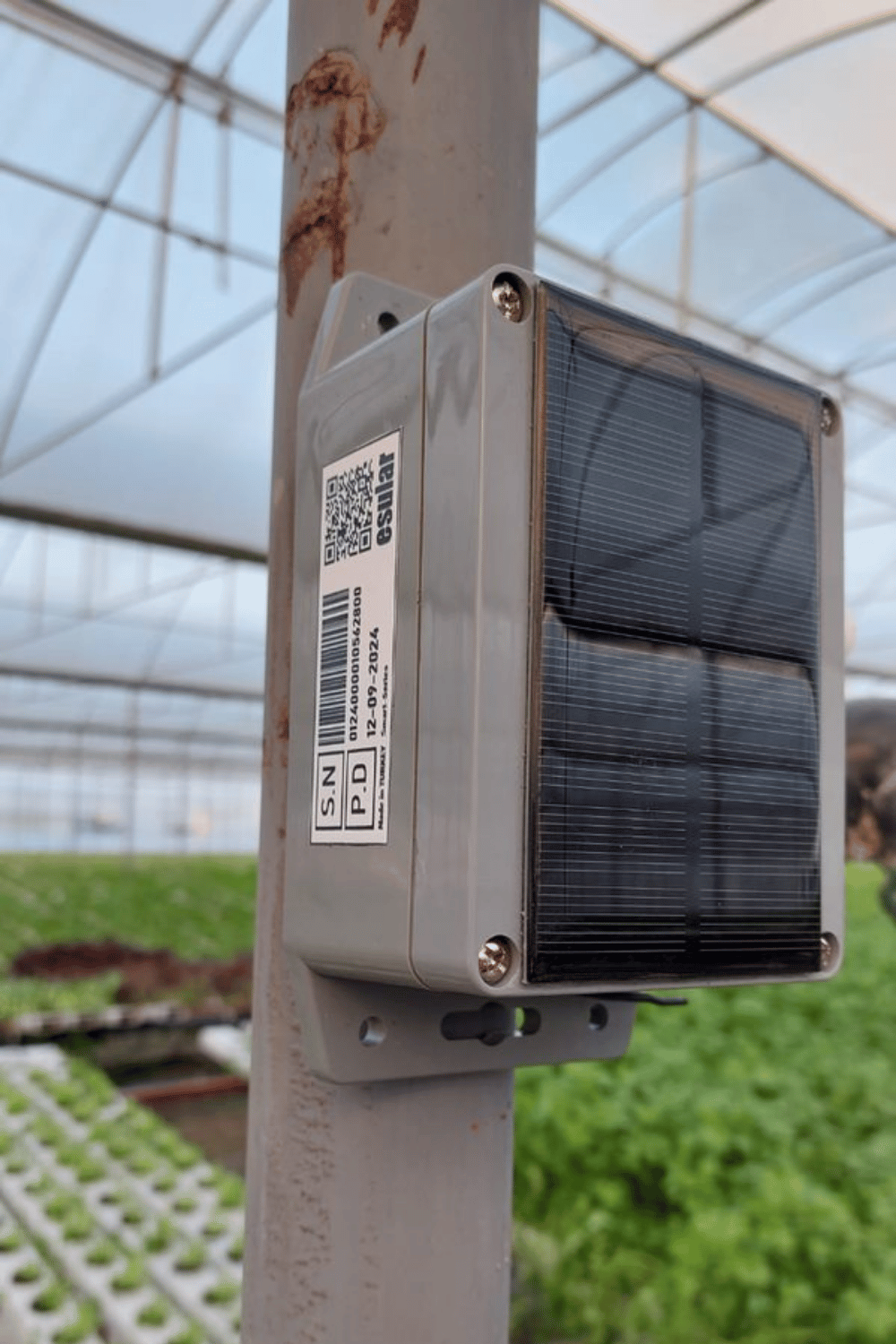
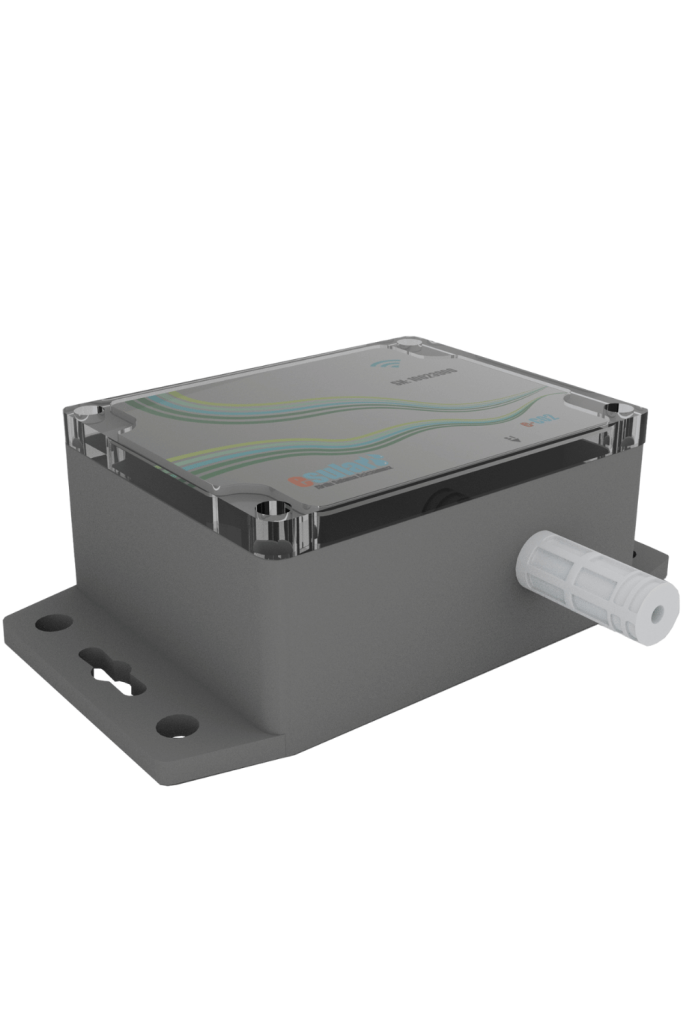
CO2 Sensors: Monitors the carbon dioxide level that plants need for photosynthesis. Esular’s wireless CO2-humidity-temperature sensors perform precise measurements with NDIR (Non-Dispersive Infrared) technology.
Light Sensors: Measures the amount of natural light entering the greenhouse and provides control of shading systems. PAR (Photosynthetically Active Radiation) sensors measure the light spectrum that plants can use.
Outdoor Environment Sensors: Monitors parameters such as outdoor air temperature, wind speed and direction, and precipitation amount, allowing the system to make proactive decisions.
2. Ventilation and Window Control Systems
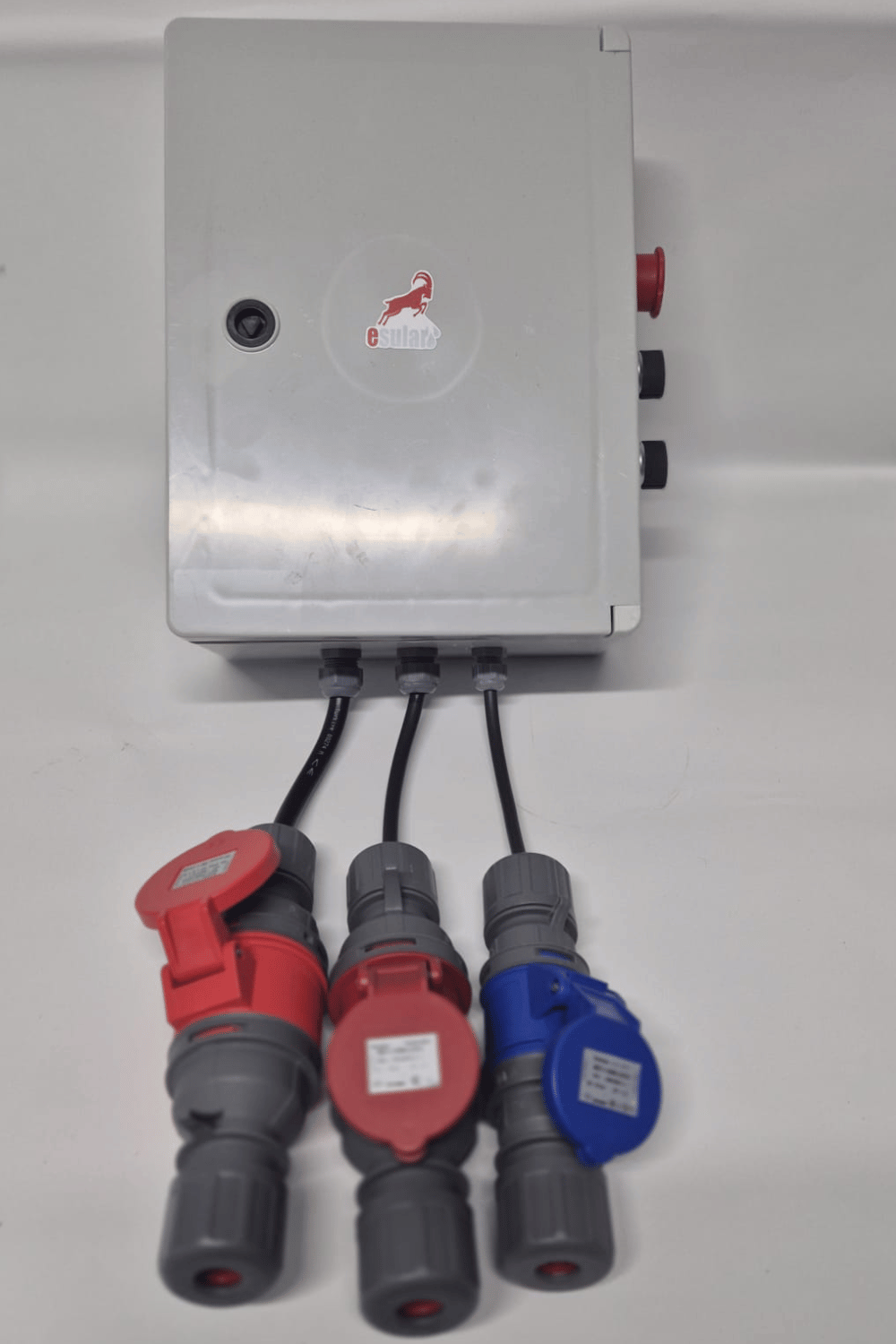
Greenhouse ventilation is one of the most important pillars of climate control. Esular’s smart greenhouse window control panel automatically opens and closes side and roof windows by wirelessly controlling AC asynchronous motors.
Features:
- Single or double window control options
- Gradual opening and precise position control
- Automatic closing safety based on wind speed
- Automatic closing in rain with rain sensor integration
- Wireless LoRa/LoRaWAN communication
3. Temperature Control Systems
Heating Systems: Prevents the greenhouse internal temperature from falling below the minimum level required for plant development. Heating options based on natural gas, electricity, biomass, or geothermal energy sources can be used.
Cooling Systems: Fogging, evaporative cooling, or fan-pad systems are used to reduce the greenhouse internal temperature during high-temperature periods.
Circulation Fans: Ensures homogeneous air distribution within the greenhouse, preventing the formation of hot and cold air pockets. It reduces the risk of disease by removing water vapor from plant surfaces.
4. Humidity Control Systems
Fogging Systems: Sprays water into the air by dividing it into micron-sized droplets via high-pressure pumps. While these droplets evaporate, they absorb heat, providing both cooling and humidification.
Humidifiers: Used to balance humidity levels that drop due to heating, especially in winter months.
Dehumidification Systems: Reduces the humidity level with ventilation or heating in cases of excessive humidity. It minimizes fungal disease risks by preventing condensate water accumulation.
5. CO2 Enrichment Systems
Providing sufficient carbon dioxide levels for plant photosynthesis is of critical importance. In closed greenhouse conditions, CO2 concentration can drop rapidly. Optimal levels (usually 800-1200 ppm) are maintained with CO2 generators or liquid CO2 systems.
Advantages of Greenhouse Climate Control Systems
Modern greenhouse climate control systems provide numerous advantages to greenhouse operators:
Energy Saving
Thanks to smart algorithms, heating, cooling, and ventilation systems are activated only when necessary. It has been observed that up to 40 percent energy savings are achieved in real field applications. Sensor-supported control eliminates energy waste experienced in manual management.
Yield Increase
Plants growing in ideal conditions increase both product quantity and quality. **Up to 35 percent yield increase** can be achieved by preventing temperature stress, optimizing photosynthesis, and balanced humidity control.
The controlled environment accelerates the growth cycle of plants and offers more harvest opportunities within the year. The ability to produce out of season allows for more benefit from market prices.
Labor Savings
Thanks to automation, manual intervention requirements decrease dramatically. Processes such as opening-closing windows, adjusting heaters, and irrigation control are performed automatically. This provides businesses with up to 60 percent labor savings.
Employees can focus on more strategic tasks such as plant health monitoring, harvest planning, and marketing instead of routine operations.
Disease and Pest Control
Maintaining optimal humidity and temperature conditions eliminates the suitable environment for the development of fungal diseases. Especially the prevention of condensate water accumulation on the leaf surface minimizes diseases such as powdery mildew and rot.
Good air circulation makes it difficult for harmful insects to settle and reduces the use of chemical pesticides.
Remote Monitoring and Control
Thanks to the Esular mobile application, greenhouse managers can monitor greenhouse conditions in real-time from anywhere in the world and intervene if necessary. Alarm notifications ensure immediate awareness in critical situations.
Analysis of historical data allows for the determination of seasonal trends and strategic planning for future production periods.
Esular Greenhouse Climate Control Products
Esular, as one of Turkey’s leading agricultural automation companies, offers comprehensive climate control solutions specifically designed for the greenhouse sector.
Wireless CO2-Humidity-Temperature Sensor
Designed for greenhouses and livestock facilities, this sensor combines three critical parameters in a single device:
- CO2 Measurement: Precise measurement in the range of 0-5000 ppm with NDIR technology
- Temperature Measurement: Between -20°C and +60°C with ±0.5°C accuracy
- Humidity Measurement: 0-100% relative humidity with ±3% accuracy
- Solar Powered: Built-in solar panel and rechargeable lithium ion battery
- Wireless Communication: Data transmission up to 5 km with LoRa/LoRaWAN
- IP65 Protection: Design resistant to outdoor conditions
https://store.esular.com/kablosuz-pilli-co2-nem-sicaklik-sensoru-smart-serisi-0
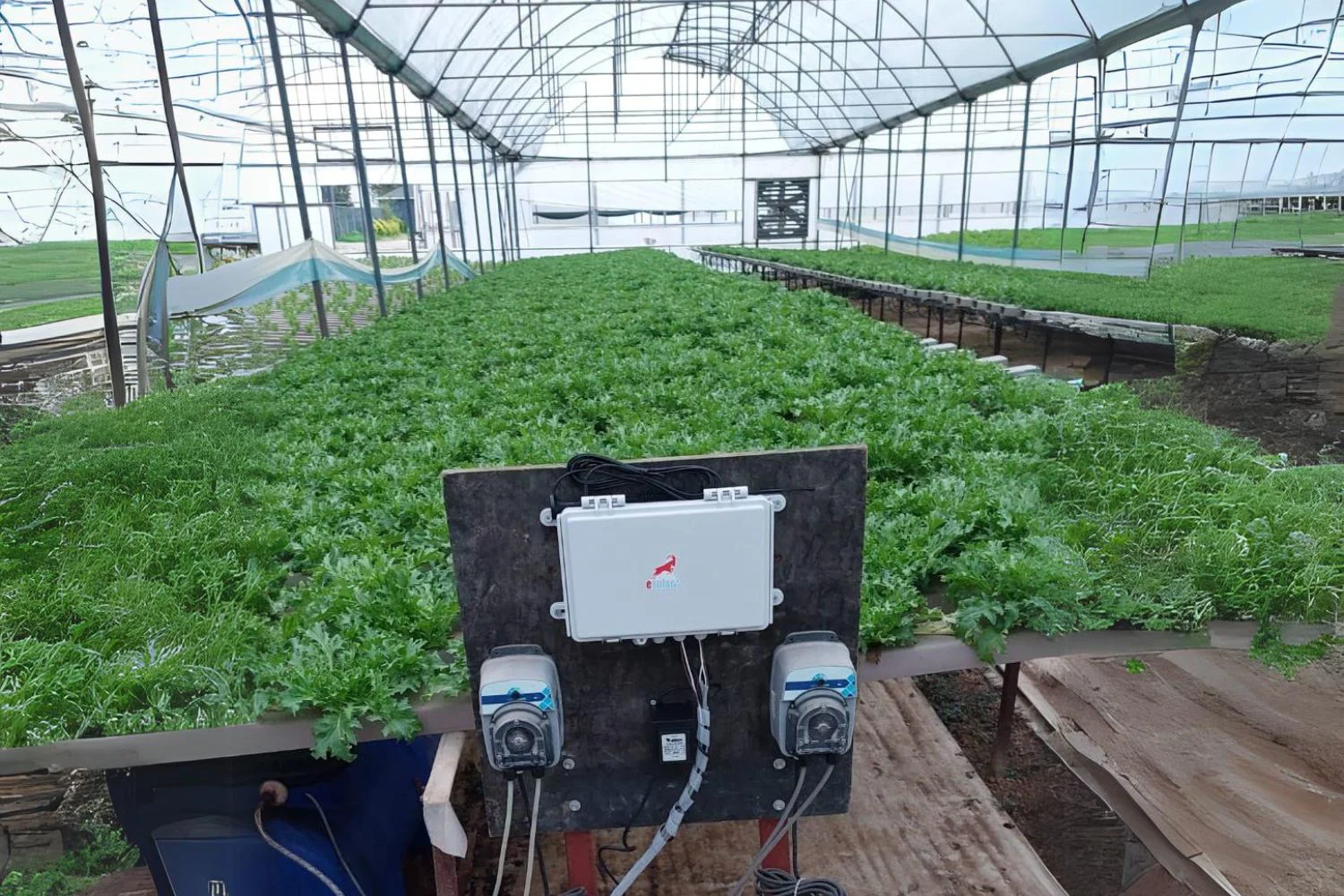
Smart Greenhouse Window Control Panel
This panel, the central product for ventilation control in greenhouse climatization:
- Single or Dual Window Control: Different configurations according to needs
- AC Asynchronous Motor Control: Forward-reverse movement capability
- Wireless Management: Full control via mobile application
- Position Feedback: Real-time tracking of the opening ratio of windows
- Safety Features: Wind and rain sensor integration
- Programmable Scenarios: Time and temperature based automations
Thanks to this system, your greenhouse windows open and close automatically according to indoor and outdoor conditions. It does not require manual intervention and maximizes energy efficiency.
Greenhouse Climatization Package Systems
Esular offers ready-made package systems for different greenhouse sizes and needs:
Basic Package: Temperature and humidity sensors, window control panel, mobile application access
Medium Package: CO2 sensor, circulation fan control, outdoor environment sensors in addition to the basic package
Premium Package: Full automation package – all sensors, irrigation control, heating/cooling control, data analysis and reporting
Installation of Greenhouse Climate Control System
Professional greenhouse climate control system installation is of critical importance for successful operation. The Esular expert team meticulously applies the following steps:
1. Discovery and Needs Analysis
Greenhouse type (glass, polycarbonate, cover), size, grown plant species, regional climate conditions, and existing infrastructure are examined in detail. Customer expectations and budget are determined to design the most suitable system configuration.
2. Sensor Placement Planning
Placing sensors at strategic points is vital for accurate data collection. Usually, the middle of the greenhouse, points far from doors and windows are preferred. Additional sensors are added according to the greenhouse size for multi-point measurement.
3. Installation of Control Equipment
Window motors, fan drives, valve control units, and other actuators are installed. Thanks to the wireless structure, the need for cabling is minimum, which shortens the installation time and reduces the cost.
4. Software Configuration
The central control unit and mobile application are configured. Setpoint values specific to the plant species (ideal temperature, humidity, CO2 levels) are defined. Alarm thresholds and automation scenarios are constructed.
5. Test and Commissioning
The system is tested holistically. All sensors and control equipment are calibrated. It is confirmed that the system works correctly by performing different scenario tests.
6. User Training
Greenhouse managers and operators receive comprehensive training on the use of the system. Mobile application features, alarm management, data interpretation, and basic troubleshooting are explained.
Climate Control in Different Greenhouse Types
Each greenhouse type contains its own climate control requirements and challenges:
Glass Greenhouses
Due to high light transmittance, temperature fluctuations are faster. Needs strong ventilation and shading systems. Since thermal energy loss is high, heating costs increase in winter months. Use of thermal curtains is recommended.
Polycarbonate Greenhouses
Double or triple layer polycarbonate structure provides good insulation. There is more homogeneous light distribution thanks to light diffusion. Tends to hold dust due to static electricity, requiring regular cleaning.
Plastic Film (Cover) Greenhouses
The most economical greenhouse type but climate control is more challenging. Light transmittance decreases with the aging of the cover material. Since it is open to wind effects, it needs strong window control systems.
High Technology Greenhouses (Hi-Tech)
Includes fully automatic climate control, CO2 enrichment, artificial lighting integration. Provides maximum efficiency with energy curtains, double-layer structure, and advanced insulation. Works integrated with soilless agriculture systems.
Common Problems and Solutions in Greenhouse Climate Control Systems
Problem 1: Non-homogeneous Temperature Distribution
Solution: Placement of additional circulation fans, use of thermal curtains, and targeted intervention by detecting cold and hot spots with multi-point temperature measurement.
Problem 2: Excessive Humidity and Condensate Formation
Solution: Reducing relative humidity with light heating during night hours, appropriate ventilation strategy, and applying anti-condensate coating to the greenhouse roof.
Problem 3: High Energy Costs
Solution: Use of thermal energy curtains, improvement of greenhouse insulation, integration of solar energy systems, and prevention of unnecessary heating/cooling with smart automation.
Problem 4: Insufficient CO2 Level
Solution: Installation of CO2 generators, controlled ventilation strategy (reducing ventilation during CO2 enrichment), and adjusting the amount of CO2 according to plant density.
Future Trends in Greenhouse Climate Control
Greenhouse technologies are developing rapidly. Innovations we will see in the near future:
Artificial Intelligence and Machine Learning
Systems that learn optimal control strategies by analyzing historical data. Cameras that detect plant stress with visual image analysis. Proactive control using weather forecasts.
IoT and Cloud Based Management
Centralized data management platforms at the farm level. Management of multiple greenhouse locations from a single interface. Blockchain-based product tracking and certification systems.
Energy Efficiency
Fully independent energy with solar panels and energy storage systems. Efficient heating/cooling with heat pump technologies. Geothermal energy integration.
Vertical Integration
Full integration of climate control with irrigation, fertilization, and plant protection systems. Plant-based precision management – customized care for each plant. Harvest and plant care automation with robotic systems.
Conclusion: Climate Control is Essential for Successful Greenhouse Farming
The way to stay competitive and ensure sustainable profitability in modern greenhouse farming is through smart climate control systems. With Esular greenhouse climate control solutions:
- Reduce your energy costs by up to 40 percent
- Increase your product yield by up to 35 percent
- Lower your labor requirements by up to 60 percent
- Increase product quality and market value
- Make environmentally friendly, sustainable production
- Manage your greenhouse from anywhere in the world
Thanks to wireless technology, Esular systems offer solutions suitable for greenhouse operations of all sizes with easy installation, low maintenance requirements, and scalable structure.
Other Esular Smart Agriculture Solutions
Greenhouse climate control is only one part of an integrated agricultural automation system. Esular offers complete solutions:
Automatic irrigation control with soil moisture sensors
Soil Moisture Sensors: Wireless, multi-stage soil moisture measurement
Climate Stations: Outdoor weather monitoring and agricultural frost alarm
Wireless Valve Control: Solar powered, remotely controlled irrigation valves
PH and EC controlled automatic fertilization
Price Warning: The prices mentioned in this article are the list prices as of the content publication date. For current prices and campaigns, please visit the product pages. Prices may vary.
Do You Want a Special Climate Control Solution for Your Greenhouse?
The Esular expert team is ready to design the best greenhouse climate control system suitable for your greenhouse size, plant species, and budget.
📞 Phone: 0312 222 44 55
📧 E-mail: info@esular.com
Frequently Asked Questions
How much are greenhouse climate control system prices?
Greenhouse climate control system cost varies according to greenhouse size, preferred technologies, and automation level. A basic system for 1 decare is on average between 50,000-150,000 TL. Premium systems are higher in cost but pay for themselves in a short time with energy savings and yield increase.
Can I add a climate control system to my existing greenhouse?
Yes, Esular wireless systems can be easily integrated into existing greenhouses. Since it does not require cabling, installation is fast and low-cost. Existing ventilation motors, heaters, and fans can be connected to smart control units.
How long does it take for the system to pay for itself?
Considering energy savings, yield increase, and labor reduction, typically a return on investment is achieved within 2-3 years. In regions where energy costs are high, this period can drop to 1.5-2 years.
Will the system continue to work if the electricity is cut off?
Since Esular sensors work with a combination of solar panels and rechargeable batteries, they are not affected by power outages. They continue to collect and transmit data. It is recommended to use a UPS (uninterruptible power supply) for control units.
For which plant species is it suitable?
Esular greenhouse climate control systems are suitable for all plant species. Customizable setpoint values can be defined for vegetables such as tomatoes, peppers, cucumbers, cut flowers such as roses, gerberas, seedling production, fruit saplings, and ornamental plants.
Does the system require maintenance?
Minimal maintenance is required. Sensors should be calibrated once a year. Ventilation motor mechanisms should be reviewed regularly. Esular offers annual maintenance contracts.
Last Update: October 2025
Related Content:
- 📖
- 📖
- 📖
- 📖
Yorumlar