
Geothermal Greenhouse Farming
Geothermal greenhouse farming is an agricultural practice that stands out as a modern method in agricultural production and uses geothermal energy to create greenhouse environments. This method provides the desired temperature and humidity levels inside the greenhouse by using underground hot water and steam. The use of geothermal energy in this way is considered an environmentally friendly agricultural practice. Geothermal greenhouse farming uses energy obtained from geothermal resources to control plant growing conditions and provide optimum growth conditions. Temperature, humidity, and other environmental factors inside the greenhouse are precisely controlled, which allows fruit, vegetables, and other plant products to be grown more efficiently and with higher quality. This method is used particularly to support agricultural production in cold climate regions or places with unstable climate conditions. Geothermal greenhouse farming stands out with advantages such as providing energy savings, encouraging sustainable agricultural practices, and contributing to local economies.
Why Greenhouse Farming
Considering our country's rich soil assets and high productivity, greenhouse farming is an important production sector that reduces unemployment, allows for more products from a unit area, and economically strengthens agricultural activities in rural areas. Therefore, it plays a role in reducing migration from rural areas to cities for economic reasons. The continuous increase in the world population creates concerns that agricultural lands will become insufficient. With the narrowing of agricultural areas and the increase in population, it is observed that technological developments lead to changes in the agricultural sector, and soilless farming technologies are becoming increasingly widespread. Thanks to agricultural technologies, necessary production can be carried out using soilless farming methods, and significant increases in the yield of the products obtained can be achieved.
Why Geothermal Greenhouse Farming
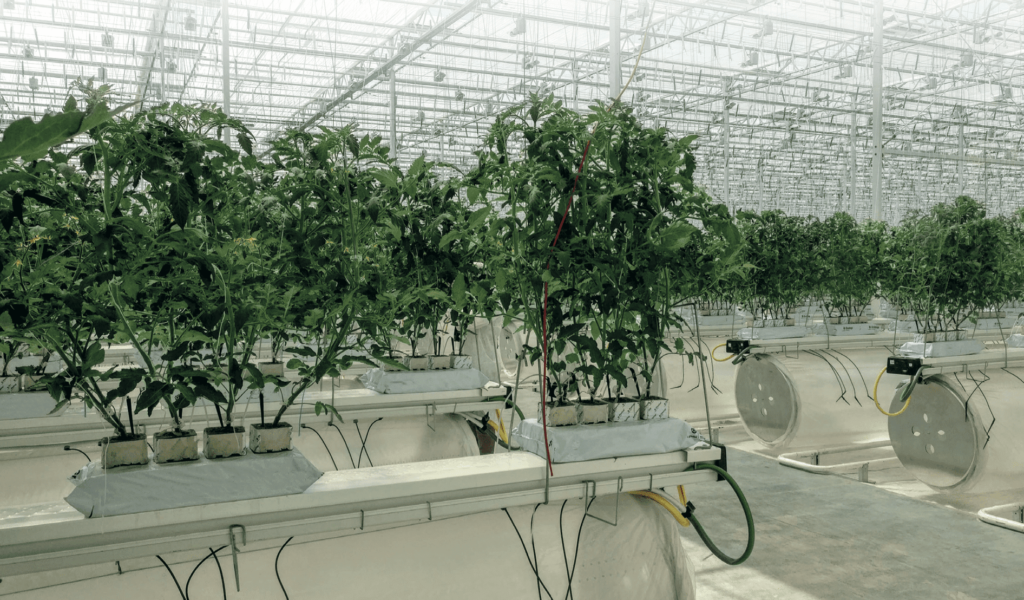
In modern greenhouses where soilless farming is practiced, continuous production can be ensured by appropriately meeting the heating, lighting, ventilation, and carbon dioxide needs of the plants throughout the year. However, heating in particular is the most important cost element and has a limiting effect. In addition to fossil fuels (fuel oil, coal, LPG, natural gas, etc.), renewable energy sources (solar energy, geothermal energy, biomass, etc.) are also used in greenhouse heating. While high-quality coal can be economic among fossil fuels, heating costs decrease even further in regions where geothermal hot water resources are located. The use of geothermal energy in agricultural production not only provides the temperature required by the plants but also allows production to be carried out uninterruptedly throughout every period of the year, except for excessively hot periods. In greenhouses with regular heating, product quality increases and the risk of disease is minimized. Advantages of geothermal greenhouse farming:
- Geothermal energy is a renewable, economic (cheap), environmentally friendly (clean), and domestic energy source.
- Geothermal energy is a more cost-effective option compared to other energy sources, especially increasing the competitive advantage of greenhouse operators.
- Low-temperature resources, waste waters generated during electricity production, can be utilized for greenhouse heating.
- Modern greenhouses must be at least 25-30 decares in size for sustainable production. A reduction in area may increase production costs and complicate marketing processes.
- Geothermal greenhouse operations should be preferred for sustainable and environmentally friendly production and quality, high yield.
Greenhouse Grant Support
In order to support greenhouse investments, the Low-Interest Investment and Operating Loan for Agricultural Production offered by T.R. Ziraat Bank Inc. and Agricultural Credit Cooperatives provides 50% interest support for loans up to 25,000,000 TL. Additionally, 50% grant support is offered within the scope of the Rural Development Investment Support Program, and 55-65% grant supports varying by province are provided within IPARD (European Union Rural Development Program). At the stage of protected cultivation production, there are also TARSİM, organic and good agriculture, biotechnological and biological control supports.
Potential of Geothermal Greenhouse Farming
Agriculture is a traditional activity and economic sector that directly affects economic and social life in our country and the world, determining the lifestyle of society. Agriculture's contribution to national income and employment, providing raw materials to agriculture-based industry, obtaining foreign currency through exports, meeting the nutritional needs of the increasing population, its benefits such as protecting the environment and biological diversity, as well as its feature of reducing negative effects in economic crises, make it a strategic sector.
Today, agriculture is undergoing an industrialization evolution subject to trade, and energy needs are increasing in this process. Along with these developments in the agricultural sector, energy diversity is of great importance. In this context, the use of renewable energy sources in agricultural activities plays a critical role for the sustainable development of the sector. Increasing the use of renewable energy sources in the agricultural sector is important not only for meeting energy needs but also for reducing environmental impacts.
Our country ranks 7th in the world and first in Europe in terms of geothermal energy resources. Geothermal energy resources can be used in various fields such as electricity production, thermal tourism, residential heating, greenhouse farming, drying of fresh fruit and vegetables, and freshwater fishing. Therefore, the effective use of geothermal resources in our country is of great importance for meeting energy needs, economic growth, and sustainable development.
World Geothermal Energy and Greenhouse Farming Data
According to the report of the World Geothermal Congress, there are a total of 70,329 MWt installed geothermal energy plants operating worldwide. According to the International Geothermal Association report, it is aimed to increase this amount to 250,000 MWt by 2050. The installed capacity of greenhouse heating increased by approximately 69% between 1995 and 2015. The total annual use of geothermal energy increased by approximately 423% in the same period. Looking at the distribution of the total 70,329 MWt installed geothermal capacity and 587,786 TJ/year total energy use worldwide by country, it is seen that Turkey has a share of 4% in terms of total installed capacity and 8% in terms of annual usage amount. There are approximately 5 million decares of greenhouse area worldwide, and approximately 1.8 million decares of these greenhouses are located in European countries. 85% of the total greenhouse area consists of plastic-covered greenhouses, while 15% consists of glass greenhouses.
Turkey Geothermal Energy and Greenhouse Farming Data
Turkey is a prominent country worldwide in terms of geothermal energy potential. Geothermal energy is used in a wide variety of fields in Turkey such as "Ambient Heating", "District Heating", "Greenhouse Heating", "Agricultural Drying", "Thermal Spring", and "Geothermal Heat Pumps". The fields where Turkey is a leader in geothermal energy use are respectively thermal springs, district heating, and greenhouse heating. Especially regarding protected cultivation, Turkey is among the top 4 countries worldwide and ranks second in Europe after Spain.
Protected cultivation production areas, which were 540 thousand decares in 2002, reached 790 thousand decares in 2019 with an increase of 47%. While 454 thousand decares of the total protected cultivation area consist of greenhouse area, 13 thousand decares of this consist of modern greenhouse areas. The average size of modern greenhouses is 27 decares.
72% of protected cultivation enterprises consist of high-system (glass and plastic greenhouse, high tunnel), and 28% consist of low tunnels. As of 2020, protected cultivation is carried out in 72 provinces across Turkey. A large part of the activities in this field are concentrated in the provinces of Antalya, Mersin, Adana, Muğla, Aydın, and İzmir, and constitute 91% of the total protected cultivation presence. Vegetables are grown in 93% of the greenhouse areas, fruit in 7%, and ornamental plants in 1%. In recent years, geothermal heated greenhouse farming activities have increased rapidly in Turkey, and production is carried out for 11 months of the year in geothermal greenhouse areas.
Turkey ranks seventh in the world and first in Europe in terms of geothermal energy resource potential. The greenhouse presence heated by geothermal energy in Turkey is 4,344 decares, and there is a potential for 30,000 decares of greenhouse area to be heated by geothermal resources.
How Geothermal Greenhouse Farming is Done
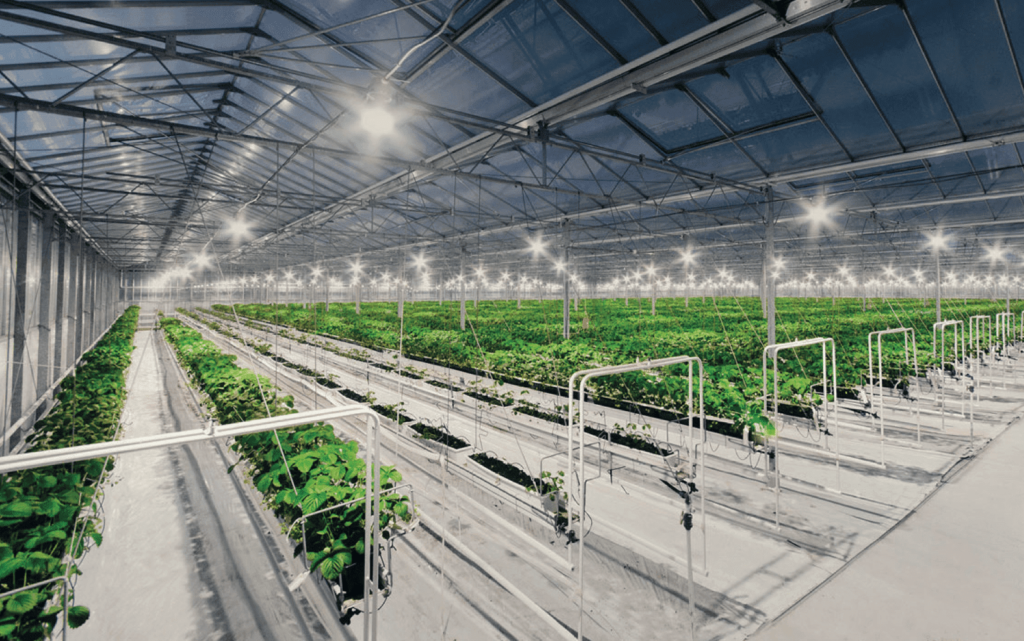
High-temperature water coming from geothermal wells is mixed with cold water (after the temperature of the water is reduced to 75-80°C) and directed to the greenhouses. Depending on daily temperature increases, the temperature of the water supplied to the greenhouses is further reduced and ventilation systems are activated. Ventilation also ensures that the carbon dioxide needed by the plants enters the greenhouse. For the heating process, steel insulated pipes laid inside the greenhouses are used. Heating is usually applied the most during the winter season, when average temperature values are lowest. Although many greenhouses have thermometers, the heating system is not only dependent on thermometer measurement. The goal is not just to protect the plants from frost, but also to provide the temperature necessary for the plants to continue their development. However, many greenhouse heating operations in Turkey are often done not to achieve the optimum temperature desired by the plants, but to prevent damage caused by frost, due to high costs. This is because heating costs are quite high. The temperature remaining below 10-12°C for consecutive days may negatively affect yield and quality. In Turkey, geothermal resources that are generally above 70°C are used in greenhouse farming.
Where Geothermal Greenhouse Farming is Done
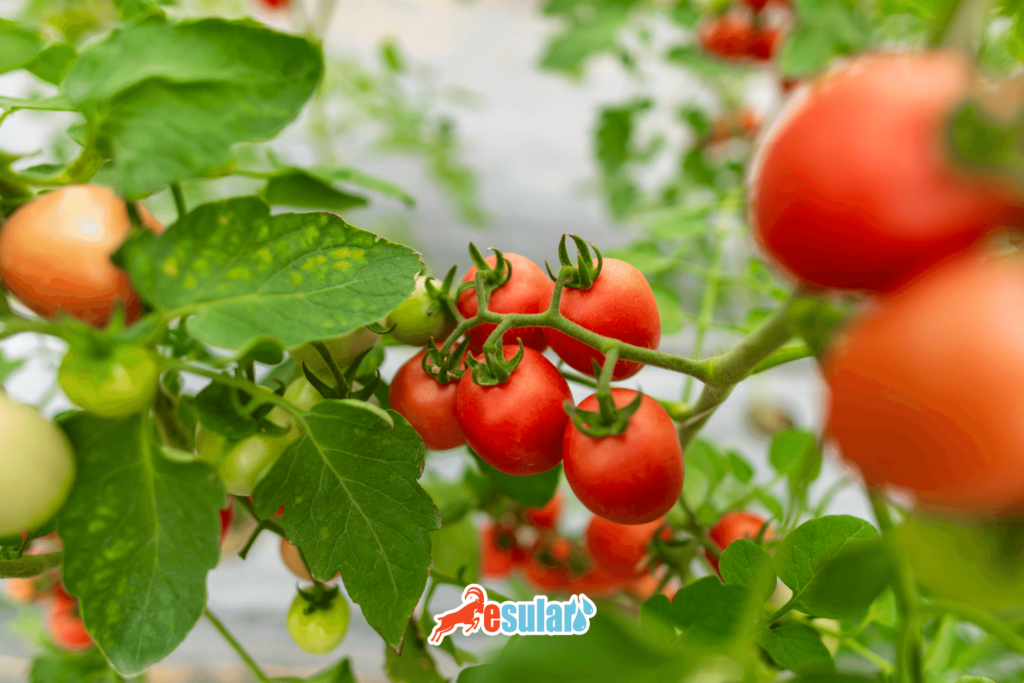
Geothermal greenhouse areas are generally spread across the Aegean, Central Anatolia and Southeastern Anatolia regions. Production is carried out with soilless farming using geothermal energy in the provinces of Adıyaman, Afyonkarahisar, Ağrı, Aksaray, Aydın, Denizli, Balıkesir, Eskişehir, İzmir, Kırşehir, Kütahya, Konya, Manisa, Nevşehir, Sakarya, Şanlıurfa, Uşak, Van, and Yozgat. Tomato is the most produced product and the average operating size of geothermal heated greenhouses is around 21 decares. Plastic covering material is generally preferred in these greenhouses.
Advantages of Geothermal Energy for Greenhouse Heating:
- Suitability of low-temperature fluid for greenhouse use (40-45 °C),
- Greenhouses requiring heating on cold days,
- Geothermal energy being advantageous and local compared to other energy sources,
- Being environmentalist and sustainable, when appropriate measures are taken,
- Low heating costs encouraging producers to spring and autumn cultivation; however, this situation can cause low product supply and rising prices in transition periods.
- By preferring geothermal energy especially for greenhouse use; Production costs decrease, become reliable and traceable,
- High competitive advantage and brand value are obtained,
- It is envisaged to establish Organized Greenhouse Zones for modern and planned production.
Do Geothermal Resources Increase Greenhouse Farming Efficiency?
Yes, geothermal resources increase greenhouse farming efficiency. Geothermal energy is used in greenhouse heating systems to help provide the desired temperature conditions in greenhouses. Geothermal energy, which is a low-cost and environmentally friendly energy source, makes greenhouse farming activities economic and sustainable. This provides an important advantage to optimize plant growth, increase productivity, and provide suitable climate conditions for growing fruit and vegetables.
Geothermal Greenhouse Systems
Geothermal Greenhouse Heating Systems
The basic criterion in system selection is not the effective use or economy of geothermal energy, but the preference of the grower. In other words, yield is taken as the basis for the product to be grown. However, at this point, the resource temperature plays an important role in selection. Geothermal greenhouse heating systems are generally of the following 4 types:
- Finned tube (serpentine) systems: Serpentine systems are mostly created by adding steel or aluminum fins in round and rectangular shapes onto steel pipes. Serpentine systems, based on natural convection principles, are not practical in greenhouse heating because they need a very long layout at low temperatures. Also, they do not provide sufficient efficiency in places requiring forced ventilation. However, they have low maintenance costs and provide electricity savings as they do not use fans.
- Finned serpentine (fan coil) systems, standard heating units, low-temperature heating units
- Under-soil heating systems: Pipes buried under the soil heat the soil first and then the air. The pipe material widely used in this system is polybutylene pipes due to their heat resistance (up to 80° C) and flexibility. PVC pipes, on the other hand, are more rigid and not as resistant to temperature as polybutylene. Although under-soil heating systems provide homogeneous heating, they cannot meet all the heat needs; because even if the source has sufficient temperature, overheating the soil can damage the plants. A secondary heater should be activated at peak loads. The maximum recommended soil temperature in greenhouses where people are present is 30° C. Plants can withstand slightly higher temperatures. An important factor to consider in the application of this system is that if the pipe length is very long, the installation should be divided into parallel lines to reduce pressure losses. Also, to ensure homogeneous heat, if the temperature drop inside the pipe is calculated to be more than approximately 8°C, double-row laying should be done to make the heat flow more homogeneous throughout the greenhouse.
- Heating systems with plain pipes (by natural convection): In these systems, small diameter polybutylene (and similar non-metal pipes) or widely used steel pipes are located in small clusters placed at certain heights. This placement should be as close to the ground as possible. For temperature control and other reasons mentioned above, an intermediate heat exchanger should be used. Temperature control along with the heat exchanger is carried out through valves located at many points.
Geothermal fluid is usually not used directly in greenhouse heating systems; instead, the geothermal and clean water cycles are separated from each other via a heat exchanger. This is done to prevent corrosion and precipitation in steel pipe systems, and for precise temperature control and prevention of precipitation in under-soil heating and plain pipe heating systems (due to natural convection).
Geothermal Greenhouse Irrigation Systems
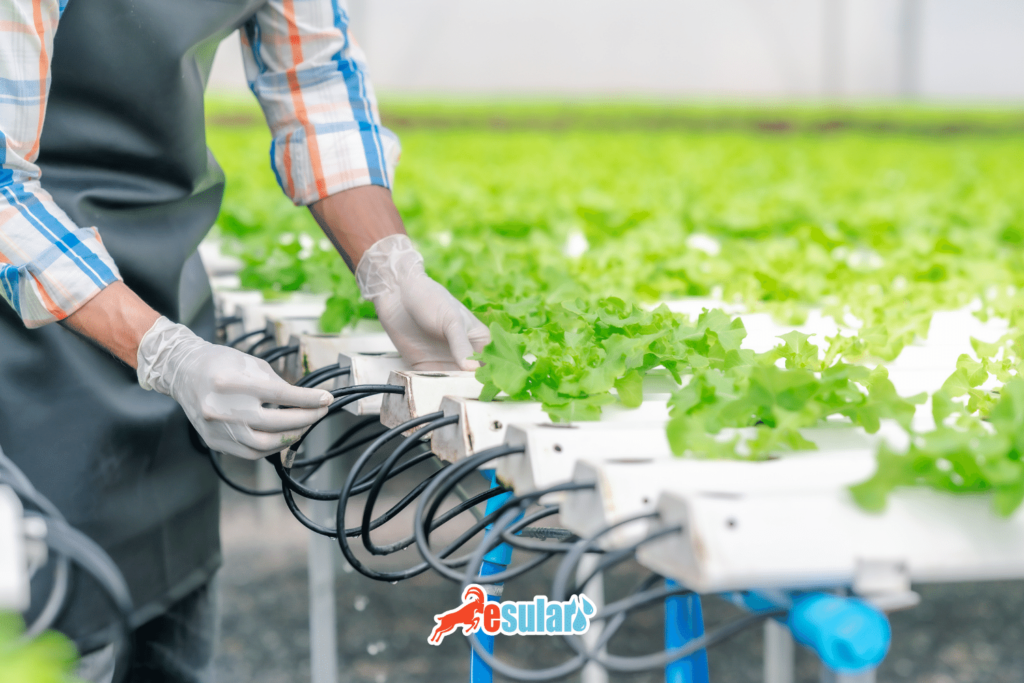
Irrigation is generally the provision of water that the plant cannot meet through natural precipitation to the plant root zone using various methods. Irrigation in greenhouse farming refers to giving the water required for plant development to the soil with various systems. The first step for a successful irrigation is to choose the irrigation method suitable for the characteristics of the plant and the soil. Then, it is important to know when, how much, and how the water will be given. Irrigation systems used in greenhouses:
- Irrigation with watering can and hose
- Surface irrigation system
- Sprinkler irrigation system
- Drip irrigation system
- Irrigation system made with perforated pipes
- Subsurface irrigation system
- Sand culture irrigation system
- Capillary irrigation system
Greenhouse Drainage Systems
Drainage refers to the process of removing excess water from the soil caused by excessive irrigation and precipitation in the greenhouse. Drainage should be applied inside and outside the greenhouse.
Benefits of Drainage:
- It can positively affect root development by providing good aeration to the soil.
- Bacterial and fungal diseases caused by excessive humidity can be prevented.
- It can create a stable environment by preventing the drop in soil temperature caused by excess moisture.
- It provides the opportunity for easy leaching. In this way, it reduces salt accumulation in the soil.
- It can prevent unwanted softness in plants.
Climate Requirements of Greenhouse Plants
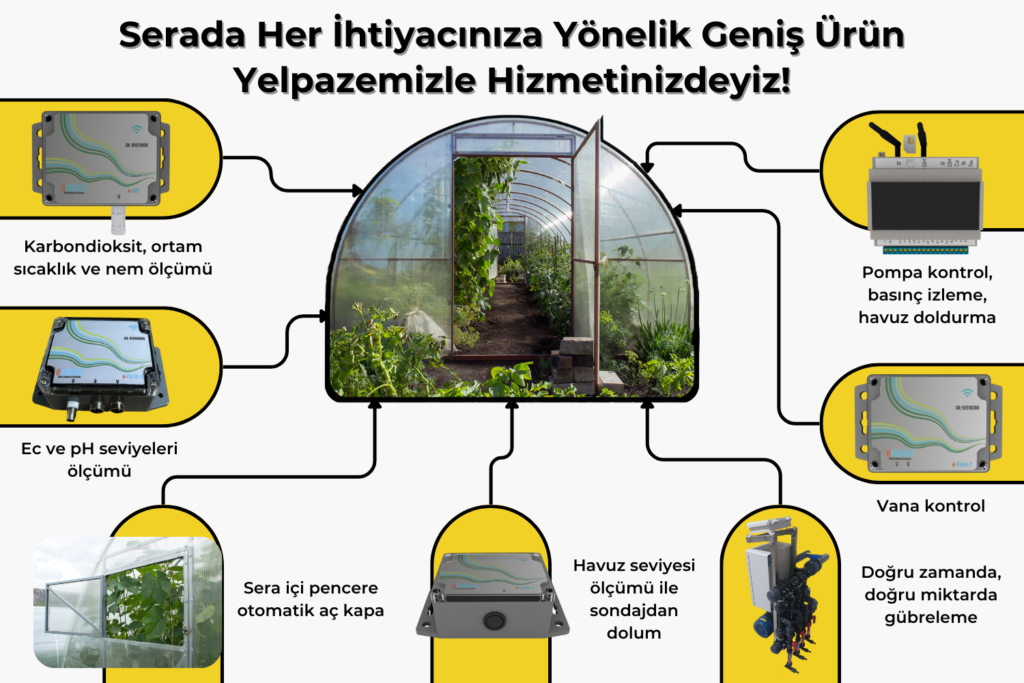
In order to obtain high-quality and efficient products, it is essential to keep factors such as temperature, humidity, light, and CO2 required for the development of plants in the greenhouse environment at optimal levels. Plant species grown in greenhouses are usually warm-season plants. The climate preferences of these plants can be summarized as follows:
- Greenhouse plants are generally well-adapted to temperatures between an average of 17°C and 27°C. Considering the greenhouse effect caused by solar radiation, additional heating is unnecessary when daily average temperature values are between 12°C and 22°C.
- When the daily average temperature falls below 12°C, heating of greenhouses is necessary, especially during night hours.
- When the daily average temperature value rises above 22°C, additional cooling measures should be taken in greenhouses; otherwise, plant growth may stop. A daily average temperature between 12°C and 22°C is sufficient for natural ventilation in greenhouses.
- For good plant development, the temperature difference between night and day should be between 5°C and 7°C.
- When the outside temperature rises above 27°C, evaporative cooling systems (Pad&Fan) should be installed in greenhouses.
- The absolute maximum temperature for plants should not exceed 35°C to 40°C.
- In three months of the year (November, December, January), the total day length should be between 500-550 hours.
- The daily total radiation value should be 2300 Wh.m-2.day-1. The lower limit of total solar radiation for plant growth is 1000 Wh.m-2.day-1, so additional lighting may be required for greenhouse production.
- Minimum soil temperature should be 15°C.
- Air humidity should be between 70%-90%, these values are within the range considered reliable.
One of the important climate factors affecting plant development is solar radiation and sunshine duration.
Yorumlar