
Tüm Yazılar
Electrical and electronics engineer Fatma Aktaş reported that the AI-powered irrigation system they developed manages the process from the source where water emerges in the field until it reaches the plant end-to-end, providing yield increase, energy savings, and a decrease in labor costs with sufficient irrigation at the right time.

Smart irrigation, one of the methods used for water conservation in agriculture, which is the sector where water is consumed the most, covers systems developed to obtain maximum yield from water and production by providing as much water as the plant needs.

Fatma Aktaş, co-founder of E-Sular company and electrical and electronics engineer working on these systems, told the AA correspondent that they have been actively working in the field for 5 years on advanced technological solutions in sustainable agriculture, water, and fertilizer management, serving many farmers in Turkey and Azerbaijan, and that their path crossing with ITU Çekirdek Incubation Center in 2021 moved them far forward.

Noting that software and artificial intelligence solutions that can be used in areas such as irrigation, water management, and fertilization will contribute to making agriculture more sustainable, Aktaş stated that water usage data in Turkey shows the necessity of widespread digital agriculture.

Recalling that according to DSI data, Turkey's total water volume is 112 billion cubic meters and annual water consumption per capita is 1300 cubic meters, Aktaş stated that the limit for being water-poor is 1000 cubic meters and Turkey is moving towards becoming water-poor, and factors such as global warming and climate change increase this pressure.

“We waste as much water in agriculture in just 1 year as we use in industry and homes in 1.5 years”
Emphasizing that 45 billion cubic meters of the 55 billion cubic meters of water used in 1 year in Turkey is spent in agriculture, Aktaş said, “We waste 25 billion cubic meters of this in 1 year due to incorrect irrigation. If we materialize it like this, it will be more understandable; we waste as much water in agriculture in just 1 year as we use in industry and homes in 1.5 years.”

Expressing that AI-powered smart irrigation systems provide significant advantages in agriculture, Aktaş continued: “Farmers can analyze how much water they can use and how much water the plant needs with the data provided by these technologies. It is very difficult for people to manually detect various loss, leakage, and malfunction situations in the system because they are very large areas and it is difficult to manage these large areas manually with human resources. It is getting harder and harder. Therefore, by integrating technologies into these areas, they can achieve significant savings in both the water part and the energy leg thanks to systems that are more predictable, more risk-reducing, and where they can make data-driven decisions and even take action at the end of the day.”

“It provides a yield in the range of 30 to 60 percent”
Explaining that for water and energy optimization in agricultural lands and greenhouses, they digitize the process from the source where water emerges until it reaches the plant end-to-end, making sense of the data here with artificial intelligence technologies and offering farmers the opportunity for more efficient production, Aktaş conveyed that when they go to the field, they first start by managing the source of the water.

Aktaş said, “Subsequently, when we go into the field, there are 20, 30 valves in some fields, and hundreds, thousands in others. These valves need to be managed. Here, for example, we have valve control units. The pool needs to be filled automatically and efficiently. For this, we have pool level sensors. We have various soil moisture sensors, sensors like climate stations. There are various products according to the needs of every field and farmer. ”

Stating that they try to provide maximum yield with minimum resource management with the philosophy of “monitor, learn, manage” with the support of data and artificial intelligence, Aktaş said the following about the reflections of the system on yield and savings: “For example, we have an enterprise. It has 7 to 10 wells. We manage its well and pool. In just one season, we achieved savings of up to 30 percent in the energy leg that we observed in that project output. In the irrigation part, since sufficient irrigation is done at the right time, it provides a yield in the range of 30 to 60 percent. Agriculture has problems like labor, not just water and energy, but remote-manageable digital technologies minimize going to the field, thus reducing costs there.”

How are smart irrigation sensors controlled remotely with a mobile application?
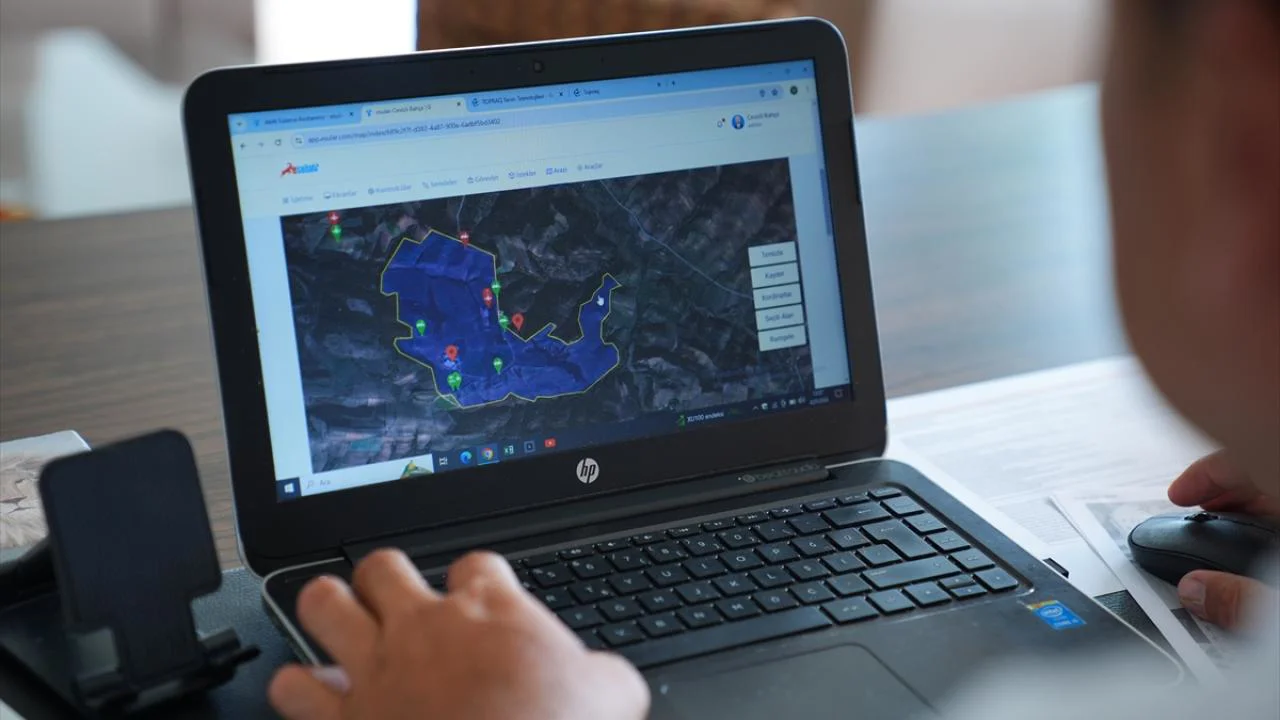
Mentioning that with the sensors they developed, soil moisture, temperature, pressure, flow, salinity, and pH values can be monitored instantaneously, and at the same time, irrigation processes can be managed automatically by analyzing the water needs of plants and soil quality with this data obtained, Aktaş shared the following information: “When the user enters the interface of the mobile application, they first see which devices are in their field, how many valves, sensors, and pumps they have. Then, when they enter the details section, there are both instantaneous and historical weekly, monthly, and yearly data and plenty of graphics. They can report these and see the map of the field. They can add all the devices and follow them instantaneously. We also have background account notification systems. Such as, the valve opened, irrigation started and closed, the pump worked. The farmer can see these from within the application as well. At the same time, we constantly send notifications via Telegram. Since the systems are already smart and are systems that work themselves and take action, we can actually follow the process 24/7 without entering the application at all.”

“I give whatever (the plant) needs and do not cut back on next year's water need”
Agricultural Engineer Gürcan Balcı, who uses the AI-powered irrigation system in a 1300-decare agricultural enterprise named Cevizli Bahçe, said that the installation and use of the system, whose mobile application they also benefit from, is very practical.

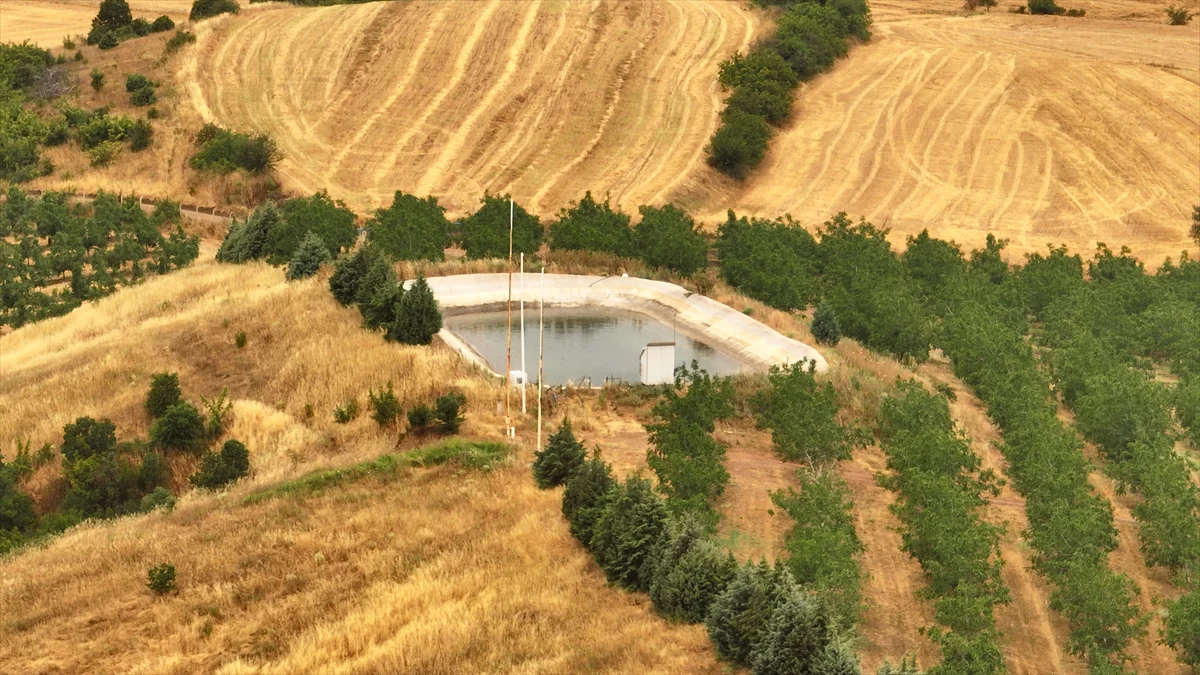
Stating that there are 72 water valves in the field where Chandler walnut trees are located and these valves work autonomously, Balcı used the following expressions: “The biggest thing is already in consumption. With our irrigation control, we try to minimize our water consumption when we measure these moisture values with tensiometers. Whatever the need is, if it's 5 liters, I give 5 liters and do not cut back on my water need for next year. I determine our needs and proceed in line with these needs. The mobile application is very simple, plain, and completely in Turkish. There are valves, pumps, wells, and a soil analysis section. For example, we have two pools, and in the mobile application, I can just press a button to make the motors in the wells work on their own and fill our pool. When the water reaches the level I want, the sensor informs me, and I turn off my pumps.”

Yorumlar